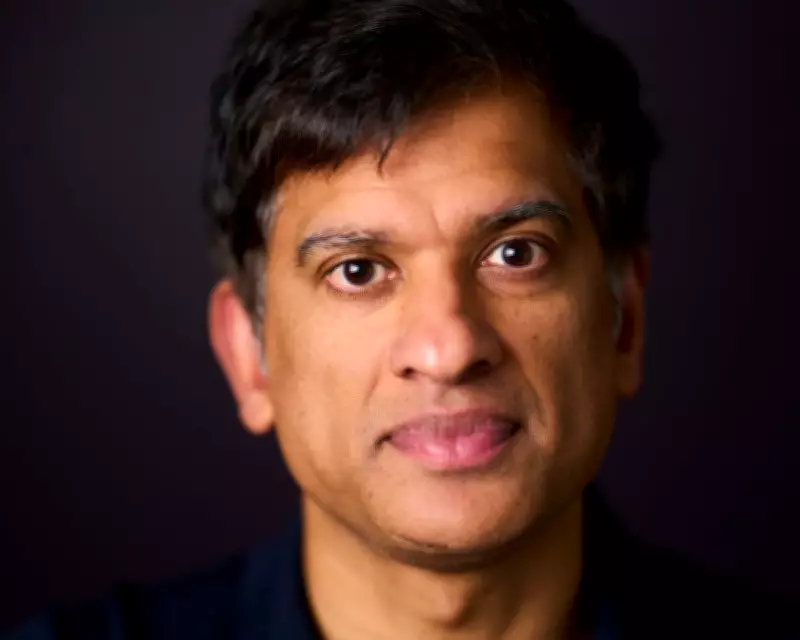
Former GP Sounds Alarm Over Screen Time's Devastating Impact on Youth Mental Health
Dr Rangan Chatterjee, the prominent podcaster and former general practitioner, has issued a stark warning about what he describes as "the most urgent public health issue of our time" – the unchecked proliferation of screens and social media in children's lives. Drawing from his clinical experience and current observations, Chatterjee advocates for a radical societal shift, including banning social media access until age 18.
A Clinical Case That Sparked a Crusade
Chatterjee's concerns crystallized over a decade ago during a routine Monday clinic. A 16-year-old boy, recently discharged from A&E following a self-harm incident, sat before him with a hospital recommendation for antidepressants. "I thought: 'Wait a minute, I can't just start a 16-year-old on antidepressants,'" Chatterjee recalls. Instead of reaching for the prescription pad, he initiated a conversation.
The discussion revealed excessive evening screen use. Chatterjee implemented a gradual digital detox plan, extending screen-free time before bed over six weeks. Within two months, the teenager no longer required appointments. His mother later reported a transformation: her son was re-engaging with friends and exploring new activities, appearing "like a different boy from the one who had ended up in hospital."
"An Experiment No One Consciously Signed Up For"
Chatterjee argues that society is conducting a dangerous, uncontrolled experiment on its youth. "We are in the middle of a widespread experiment that no one consciously signed up to," he states, criticizing successive governments for their "weak" response. He believes they have already failed one generation and risk failing another by allowing tech executives to dictate child wellbeing standards.
"If we're expecting Elon Musk or Mark Zuckerberg to regulate technology better for our children's wellbeing, we're being, frankly, delusional," Chatterjee asserts. "Their whole business model wants more people on their devices for longer." He emphasizes that adults struggle with screen moderation, while children's underdeveloped prefrontal cortexes – not fully mature until age 25 – leave them particularly vulnerable.
The Mounting Evidence of Harm
Chatterjee catalogs the extensive damages linked to excessive screen time:
- Mental Health Decline: Increased anxiety, depression, and suicidal ideation.
- Sleep Disruption: Bright screen light wreaks havoc on circadian rhythms.
- Physical Health Issues: Poor posture, neck and shoulder pain, and emerging eyesight problems. Research indicates every additional hour of screen time increases myopia risk by 21%.
- Developmental Delays: Language acquisition issues in younger children.
- Inappropriate Content Exposure: 10% of nine-year-olds and 27% of 11-year-olds have viewed pornography, with much content featuring violence against women.
"I think we're raising a generation of children who have low self-worth, who don't know how to conduct conversations," Chatterjee laments.
Personal Practice and Policy Proposals
Chatterjee practices what he preaches with his own children, aged 13 and 15. Their smartphones have most apps and browsers disabled, with no social media access. "I'm not judging other parents," he clarifies, acknowledging the immense pressure on families, particularly those facing socioeconomic challenges where screens often become "an easy babysitter."
His policy recommendations are unequivocal:
- Raise the legal age for social media use to 18, aligning it with gambling and pornography restrictions.
- Abolish screen-based homework immediately to protect evening sleep patterns.
- Implement a nationwide digital sunset, with all devices switched off at least one hour before bedtime.
He supports grassroots movements like Smartphone Free Childhood and SafeScreens, and campaigns with Close Screens Open Minds against excessive "ed tech" in schools.
From NHS GP to Public Health Advocate
Chatterjee left general practice nearly two years ago, believing he could effect greater change through broadcasting. His podcast, Feel Better, Live More, has surpassed 350 million listens, while his YouTube channel boasts 1.3 million subscribers. He maintains that 80-90% of modern health issues stem from lifestyle factors, necessitating a preventive approach the NHS isn't structured to provide.
"We need a new approach for prevention," he argues, suggesting every NHS practice employ health coaches alongside doctors. He advocates divorcing the NHS from short-term political cycles in favor of a 30-year strategic plan.
A Legacy of Service and Confronting Discrimination
Chatterjee's medical vocation is familial; his father, Tarun, emigrated from India in 1962 to serve the NHS, facing persistent racism that stalled his career. Chatterjee himself encountered discrimination when a retailer reportedly declined to stock his first book because "they already had a book on their shelves by an Indian doctor."
This experience, coupled with today's divisive political rhetoric, troubles him. "I don't think people understand how toxic some of this language is," he reflects.
Rediscovering Happiness Beyond Metrics
Following his father's death in 2013, Chatterjee reevaluated his life, realizing his self-worth had been overly tied to academic and professional achievement. "I realised that where my happiness comes from is the unmeasurables in life," he says, prioritizing relationships with his mother, wife, children, and friends.
"The No 1 factor for long-term health, happiness and longevity is the quality of your relationships," Chatterjee concludes, warning that constant digital distraction erodes our capacity for presence – the very foundation of meaningful human connection. At 48, having done considerable "inner work," he claims never to have been happier, yet remains fiercely committed to alerting society to the silent crisis unfolding on our screens.