A significant policy shift is underway across California as several law enforcement agencies announce they will no longer respond to certain 911 calls involving individuals experiencing a mental health crisis.
A New Policy for Non-Criminal Emergencies
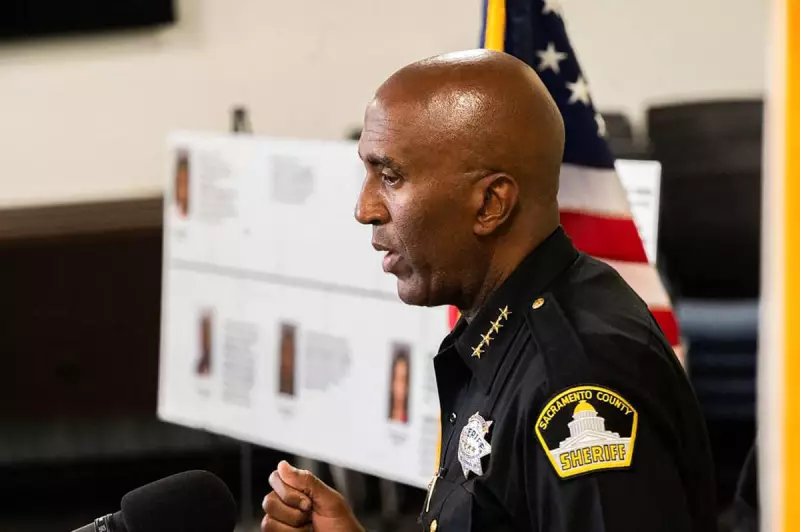
In February 2024, Sacramento County Sheriff Jim Cooper declared his deputies would only attend mental health emergencies if a crime was being committed or if someone other than the person in crisis faced imminent danger. This move was followed in May by a similar decision from El Cajon Police Chief Jeremiah Larson in San Diego County.
Other departments, including the Ventura County Sheriff's Office and Long Beach Police, have stated that while officers may still initially attend calls, they will not remain on scene if no crime is in progress and the individual poses no threat to others.
This trend is driven by stark data on police interactions. According to a Washington Post database, US police shot and killed 2,057 people in a mental health crisis between 2015 and 2024, accounting for 20% of all police killings. In California alone, officers shot and killed at least 274 people suffering from a mental health crisis in that period.
The High Stakes of Police Encounters
The risks are disproportionately high for those with untreated serious mental illness. The Treatment Advocacy Center reports that the risk of being killed during a law enforcement encounter is 16 times higher for these individuals than for other civilians.
Sheriff Cooper's policy was directly influenced by a 2024 federal court ruling. The Ninth Circuit Court of Appeals held Nevada police officers liable for the death of Ray Anthony Scott, a man with schizophrenia, who died after officers used bodyweight force to restrain him. "Any reasonable officer should have known that bodyweight force on the back of a prone, unarmed person who is not suspected of a crime is constitutionally excessive," wrote Judge Roopali Desai.
Chief Larson echoed the sentiment, stating, "Sometimes just the mere presence of a police officer can escalate a situation." He emphasised that in cases where police decline to intervene, call handlers will explain the decision and provide alternative resources, such as the national 988 Suicide & Crisis Lifeline.
Building a Better System of Care
Advocates argue mental health crises should be treated as health issues, not criminal ones. "If you're having a heart attack, we don't send the police, we send an ambulance," said Le Ondra Clark Harvey, CEO of the California Behavioral Health Association. She notes that 988 hotlines successfully de-escalate over 90% of crises without police involvement.
However, the transition reveals gaps in infrastructure. Not all communities have dedicated mental health response teams. In San Diego, the long-standing Psychiatric Emergency Response Team (PERT) pairs clinicians with officers, but availability is limited and deployment is guided by 'heat maps'.
Shannon Scully of the National Alliance on Mental Illness (NAMI) views the police stand-down as a positive step, aligning with public opinion. An Ipsos poll for NAMI found 86% of Americans believe mental health crises warrant a mental health response, not a police one. Yet, Scully cautions, "Systems change a lot slower than I think what community expectation is."
The family of Miles Hall, a 23-year-old fatally shot by police during a 2019 mental health crisis, advocates for redirecting funds from police budgets to trained specialists. California's AB 988 legislation, named after Miles, aims to reform crisis response.
As Chief Larson envisions, "I envision a day when there's a team that's able to handle mental health calls, and the police are essentially out of it." The journey toward that future, however, hinges on building robust, universally accessible crisis care systems across the state.