Blue Heron: A Quietly Devastating Debut
Canadian filmmaker Sophy Romvari's debut feature Blue Heron is a somber, sophisticated portrait of childhood trauma set in 1990s Canada. The film, which premiered at the Locarno Film Festival, grows in resonance upon a second viewing, offering an intimate and unshowy exploration of family dysfunction.
Autofictional Narrative of Family Turmoil
The film is autobiographical, or more precisely autofictional, imbued with a quietism that refuses to amplify its real-life drama. It does not orchestrate agony in the Hollywood style but confides it to the viewer sotto voce. The subject is Romvari's own childhood and her relationship with her deeply troubled older brother, developed from her award-winning 2020 short film Still Processing, which is unselfconsciously built into this new work.
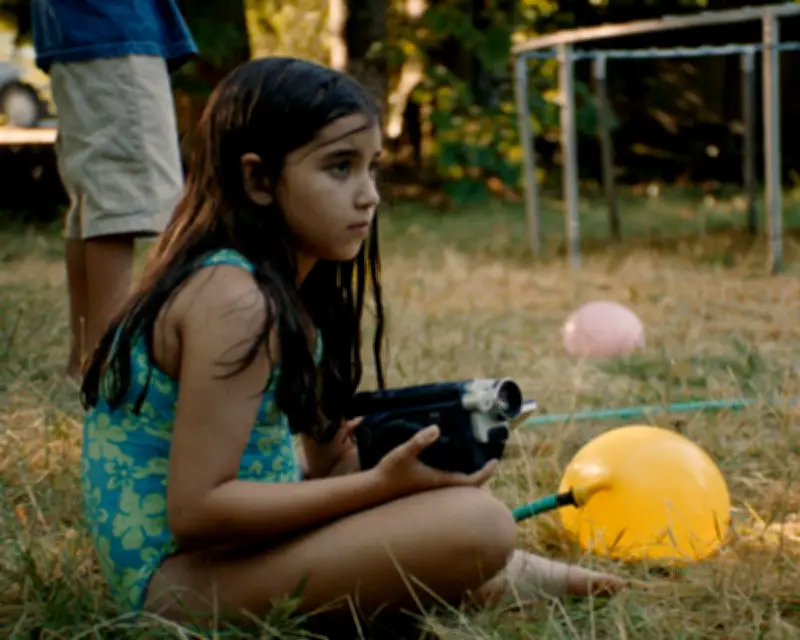
Set in the mid-1990s, the story follows Sasha (Eylul Guven), a 7- or 8-year-old girl living with her two brothers and older teen half-brother Jeremy (Edik Beddoes) on Vancouver Island. The family has just moved into a new house after frequent relocations. Their Hungarian parents (Iringó Réti and Ádám Tompa) switch to their mother tongue when they do not want the children to understand.
Oppositional Defiant Disorder at the Core
Jeremy is deeply troubled, diagnosed with oppositional defiant disorder, a behavioral condition causing him to refuse cooperation with his parents' desperate requests. He behaves destructively and dangerously, threatening to burn the house down, and is often brought home by police in handcuffs. The resulting family dysfunction is insidiously gendered: Sasha is more affected by Jeremy's behavior than her brothers, and their mother resents being the sole disciplinarian while her husband retreats into work. The mother's burden is compounded by the unspoken assumption that Jeremy is her responsibility because he is her son from a previous relationship.
Search for Meaning Amidst Trauma
The film asks: What caused Jeremy's condition? It remains a baffling mystery that wounds Sasha as a child and even more as an adult. In flashforward scenes, an adult Sasha, played by New York writer and comic Amy Zimmer, is seen videoing a quasi-fictional panel of social workers discussing Jeremy as a cold case. The film grapples with whether to seek the cause of Jeremy's disruption or focus on its impact on others. Edik Beddoes portrays Jeremy with a disquietingly opaque, smug smirk that may mask deep fear and unhappiness—or nothing at all.
What is so painful for Sasha, and surely for the filmmaker, is negotiating feelings of hurt and rage at Jeremy for causing lasting unhappiness, alongside hurt and rage on his behalf at society and social services for insufficient support, and at a universe that inexplicably afflicted the family with this trauma.
Final Verdict
Blue Heron is built metatextually on two levels that collapse into each other in a striking final coup de cinéma. Romvari's sophistication does not prevent the film from being subtly moving. It is an intelligent, valuable piece of filmmaking. According to the review, the film is in UK and Irish cinemas from 26 June.