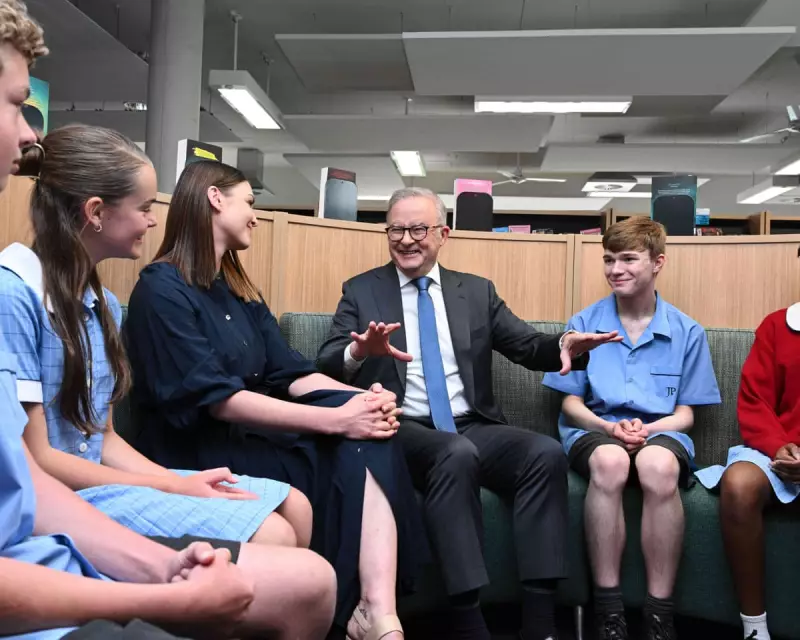
Australia's landmark social media ban for children under 16 has resulted in more than 4.7 million accounts being taken offline, Prime Minister Anthony Albanese has announced. However, officials and analysts caution that tangible evidence proving the policy's success in safeguarding teen mental health is still months, if not years, away.
Early Claims and Cautious Realities
Speaking recently, PM Albanese pointed to three indicators of the ban's initial impact. He cited positive feedback from parents, support from older teenagers who wished the rules had existed when they were younger, and international interest in replicating the Australian model. UK Prime Minister Keir Starmer confirmed he is observing the Australian experiment "with interest" as pressure builds for similar action in Britain.
Despite the swift compliance from major platforms and the sheer volume of accounts removed, the Australian eSafety Commissioner, Julie Inman Grant, stated the numbers were "potentially lower than expected." She emphasised that the true measure of the policy will not be seen in days or weeks, but over years, through long-term studies on mental health outcomes and academic performance.
The Challenge of Enforcement and Teen Circumvention
A significant hurdle for the ban's effectiveness is widespread circumvention. Anecdotal reports and surveys indicate many teenagers have found ways to bypass age-assurance checks. One in three Australian teens told mental health organisation Headspace they would seek ways around the restrictions.
Common methods include altering birth dates on existing accounts or using virtual private networks (VPNs) to mask their location. Teens are actively sharing tips online to stay connected, driven by fear of missing out (Fomo). Commissioner Inman Grant acknowledged that some age-checking technology needs refinement and vowed to scrutinise the platforms' systems for false positives and calibration errors.
The Long Road to Measurable Results
The immediate future of the policy remains in a data collection phase. The timing of the ban's implementation during the Australian summer school holidays means robust data on its daily impact is scarce. The first significant independent evaluation from eSafety is due in February, which will include research with parents and young people.
Albanese conceded the transition has been difficult for some, linking the policy to a $700m mental health funding package aimed at supporting affected youth. The ultimate verdict on the ban's success hinges on future metrics like youth mental health statistics, educational test scores, and longitudinal behavioural studies.
For now, while the account removal figures present an early administrative win, experts urge caution. Those nations, including the UK, considering following Australia's lead are advised to wait for concrete, long-term evidence before enacting similar legislation.