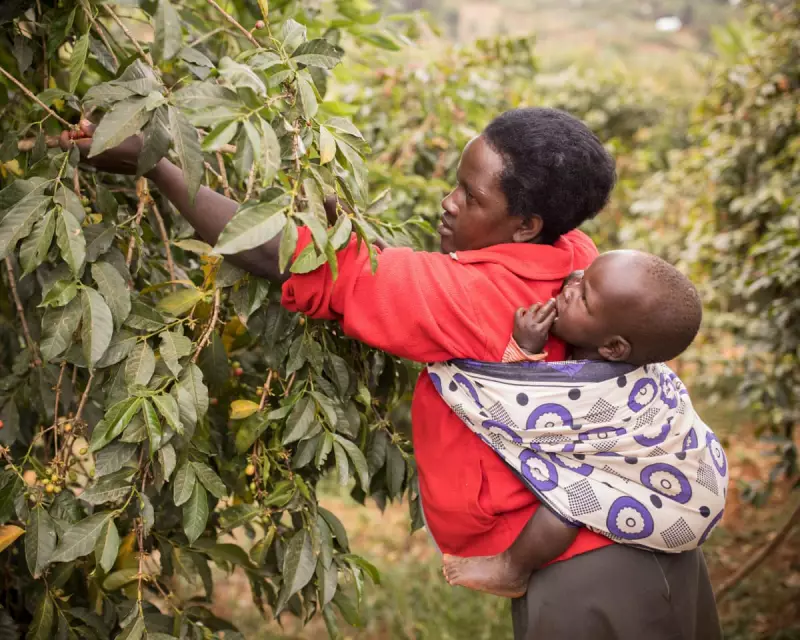
A simple, centuries-old practice of carrying babies in cloth wraps could become a revolutionary new weapon in the global fight against malaria, according to a landmark study from Uganda.
A Lifesaving Soak for Traditional Cloth
Researchers have discovered that treating the traditional fabric wraps, known locally as lesus, with the insect repellent permethrin dramatically reduces malaria rates in the infants carried within them. In a six-month trial involving 400 mothers and their babies in rural Kasese, western Uganda, the results were striking.
Infants carried in treated wraps were two-thirds less likely to develop malaria. The weekly case rate was just 0.73 per 100 babies in the intervention group, compared to 2.14 cases in the control group using untreated wraps.
One mother, who had participated in the community trial, powerfully testified at a results session: "I've had five children. This is the first one that I've carried in a treated wrap, and it's the first time I've had a child who has not had malaria."
Filling a Critical Gap in Protection
The innovation addresses a growing and deadly problem. While insecticide-treated bed nets have been a cornerstone of malaria prevention, mosquitoes are increasingly biting outside of nighttime hours, in the early evening and morning—a potential adaptation to net use.
"Before you go to bed, when you're outdoors... we also need to find a solution ensuring that we can prevent those bites likely to transmit malaria," explained co-lead investigator Professor Edgar Mugema Mulogo from Mbarara University of Science and Technology.
These wraps are ubiquitous in daily life, used not only for carrying babies but also as shawls, aprons, and bedsheets. Integrating a protective treatment into them offers continuous, portable defence during vulnerable daytime and evening hours, especially as protection from maternal antibodies wanes in infants before they are eligible for vaccination.
Pathway to Wider Implementation
The research team, co-led by Dr Ross Boyce from the University of North Carolina, was astounded by the efficacy of the low-tech solution. "We took some cloth and we soaked it. And it's dirt cheap," said Dr Boyce, highlighting the intervention's simplicity and potential for scalability.
Permethrin has a strong safety profile and has been used for years to treat textiles, notably by the US military. In the study, a slightly higher incidence of minor rashes was noted in the treatment group (8.5% vs 6%), but no participants withdrew as a result.
Health officials in Uganda and global leaders at the World Health Organization (WHO) have expressed interest. The findings build on earlier successful research treating shawls in Afghan refugee camps, and WHO guidelines already recognise the role of permethrin-treated clothing.
Professor Mulogo sees potential for local production, calling it "a very good business opportunity." However, researchers caution that further studies are needed to confirm the results in different settings and to fully establish long-term safety, though benefits are expected to far outweigh any minimal risks.
The next steps, including potential trials on treating school uniforms, require funding. Yet, this ingenious fusion of traditional practice with modern science offers a beacon of hope in the urgent mission to protect children from a disease that still claims over 600,000 lives annually, predominantly young children in Africa.