NASA has made the decision to bring a crew of astronauts home from the International Space Station (ISS) ahead of schedule following the emergence of a medical issue with one of its crew members. The agency has stressed that the situation is not an emergency but is being handled with an abundance of caution.
Mission Cut Short as Precaution
Crew-11, which has been living and working aboard the orbiting laboratory since August 2025, was originally scheduled to conclude its mission and return to Earth around May of this year. That timeline has now been accelerated, with the four-person crew set to depart in the coming days.
The decision follows the cancellation of a planned spacewalk on Thursday, 8 January 2026. The 6.5-hour extravehicular activity (EVA), which was to be conducted by NASA astronauts Mike Fincke and Zena Cardman to install hardware outside the station, was called off hours before it was due to begin.
A NASA spokeswoman confirmed the agency was evaluating all options for an early end to the mission, with safety as the "highest priority." The affected astronaut, whose identity has been withheld for medical privacy reasons, is reported to be in a stable condition on the ISS.
Safety First: A Principled Approach
"It's not an emergency evacuation, but we are erring on the side of caution for the crew member," explained Dr James Polk, NASA's chief health and medical officer. This cautious approach is standard protocol for the space agency, particularly where crew health is concerned.
Spacewalks are inherently risky and meticulously planned operations, and last-minute cancellations are not unusual. In recent years, EVAs have been scrapped for reasons including an astronaut's "spacesuit discomfort" in 2024 and a pinched nerve suffered by astronaut Mark Vande Hei in 2021.
The early return of Crew-11 will require careful coordination with its replacement crew to ensure the International Space Station maintains its continuous human presence, which has now lasted for over 25 years. While missions can extend beyond a year, they typically last between six and eight months.
The Crew and Their Work
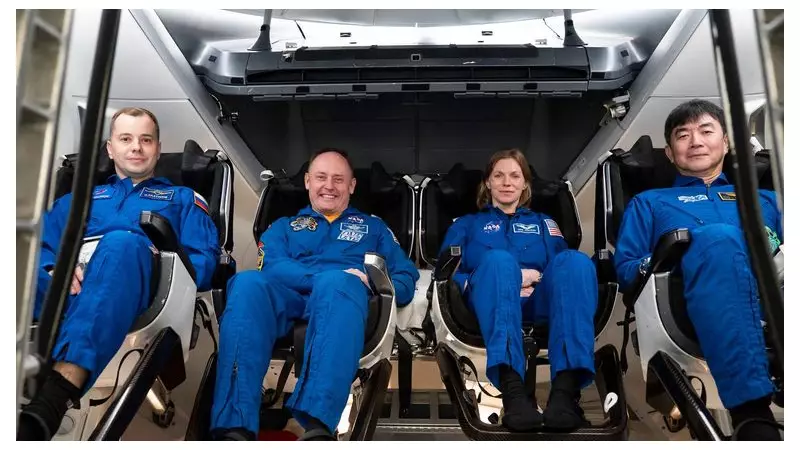
Crew-11 is a four-person team comprising NASA astronauts Zena Cardman and Mike Fincke (the station's commander), along with JAXA astronaut Kimiya Yui from Japan and Roscosmos cosmonaut Oleg Platonov from Russia.
During their time on station, the crew has been involved in a range of scientific activities. Some members volunteered for experiments designed to address health challenges faced on future deep-space missions, including simulated moon landings, eye and brain tests, and MRI scans. NASA has stated there is no suggestion these experiments are linked to the current medical situation.
The incident underscores the complex and challenging environment of spaceflight, where ground teams must constantly balance ambitious scientific goals with the paramount importance of astronaut wellbeing.