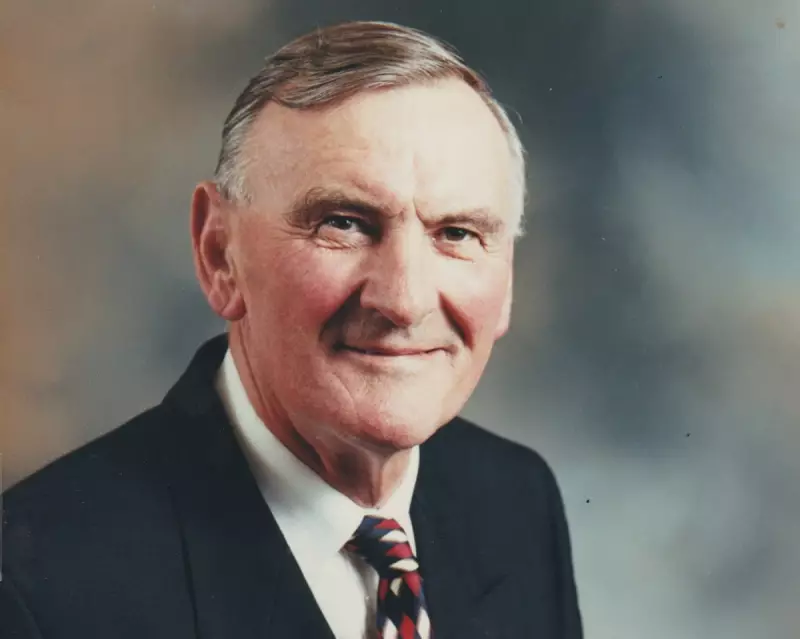
The scientific community mourns the loss of John Lewis, a visionary chemist whose work led to the development of buprenorphine, a medication that has transformed the treatment of opioid addiction across the globe. Dr Lewis has died at the age of 92.
From Laboratory to Lifeline
John Lewis's most significant contribution came during his tenure as research and development director at Reckitt & Colman pharmaceuticals from 1965 to 1989. It was here, alongside pharmacologist Alan Cowan, that he identified the unique potential of buprenorphine.
He astutely recognised its characteristics made it ideally suited for treating opioid dependence, specifically heroin addiction. Initially used as a powerful post-operative painkiller, an alternative to morphine, its application was successfully expanded to offer a safer option for addicts, serving as an alternative to methadone.
A Legacy Forged in British Universities
After leaving Reckitt & Colman, Lewis's commitment to the field remained unwavering. In 1989, he moved to Bristol University to establish the Reckitt & Colman psychopharmacology unit, which was later led by Professor David Nutt.
The research unit later moved to the University of Bath in 2000, under the leadership of Steve Husbands, with Lewis continuing his active involvement and support until his retirement in 2018.
Professors Nutt and Husbands paid tribute, stating: "The development of buprenorphine is John Lewis’s greatest scientific legacy." They highlighted his crucial support for work demonstrating how to transfer patients from methadone to buprenorphine.
Global Impact and Accolades
With backing from the US National Institute on Drug Abuse (Nida), buprenorphine, marketed as Subutex, and a buprenorphine-naloxone combination, Suboxone, have become the leading medications for opioid substitution therapy in the western world.
His international reputation was cemented in 1998 when he received the prestigious Nathan B Eddy award from the US College on Problems of Drug Dependence. This honour prompted congratulatory letters from both Queen Elizabeth II and President Bill Clinton.
Charles O’Keefe of the Friends of NIDA remarked that Lewis's contributions to science were "only exceeded by the results of them: discoveries that have provided treatment and hope to millions of patients and their families."
Born in Gloucester, John Lewis excelled academically, winning a place at Merton College, Oxford, where he achieved a first-class honours degree and a doctorate in chemistry. His career included roles at Albright & Wilson and as a chemistry lecturer at Loughborough University, where he also captained the university's rugby club.
He is survived by his wife, Joy, whom he married in 1955, their three children, Kate, Richard, and the author of the original obituary, eight grandchildren, and two great-grandchildren.