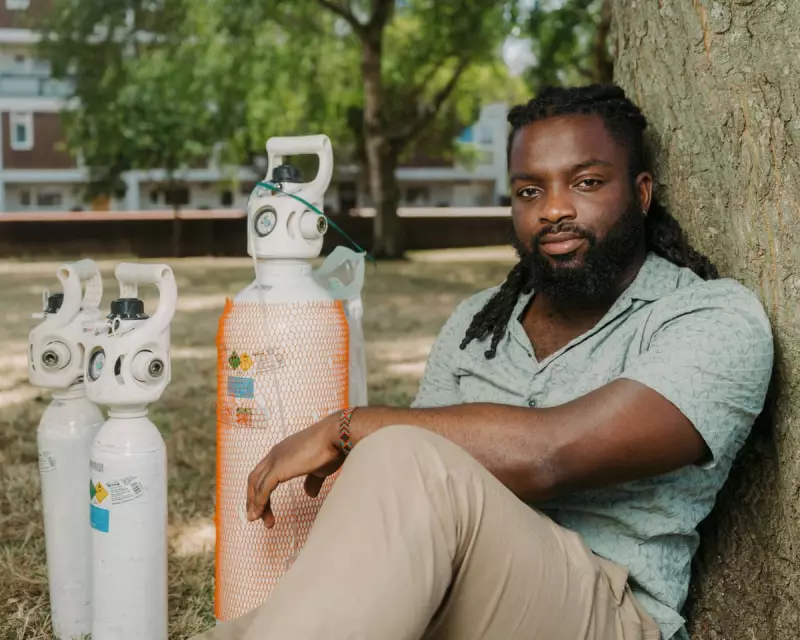
For Morgan Ofori, a former teacher, the first sign of the debilitating pain arrived on a dreary Monday morning in September 2016. A sharp, blooming sensation behind his right eye was quickly followed by jolts resembling electric shocks. The pattern repeated throughout the day, forcing him to leave his class multiple times to douse his face in cold water. Over-the-counter painkillers proved useless against what would later be diagnosed as cluster headaches.
The Unbearable Cycle of Pain
Ofori's headaches established a cruel annual rhythm, peaking each autumn and spring. By 9.30am on teaching days, he would be in 'full-blown agony'. It took until late 2019 for a GP referral to a neurologist to provide a name for his suffering. Cluster headaches affect about one in 1,000 people, with men more frequently diagnosed. The episodic form, which Ofori has, arrives in seasonal bouts; others suffer a chronic version with no long pain-free periods.
The defining feature is the pain's sheer intensity. One study rated it at 9.7 out of 10, surpassing broken bones or pancreatitis. Research published in the journal *Headache* found that 64% of patients experienced suicidal thoughts during attacks, a figure that plummeted to 4% during remission.
Val Hobbs, 74 from Pembrokeshire, understands this desperation. Her attacks began at age two, leading her to bang her head on the floor—behaviour mistakenly labelled as tantrums. Misunderstood for decades, her family often thought her episodes were drunkenness. She faced dismissal from a clerical job due to absences and lived with the frustration of an unpredictable condition that robbed her of simple freedoms, like attending the Queen's golden jubilee concert without an attack striking.
A Long History and Slow Path to Diagnosis
Headaches have been documented since ancient times. The Ebers Papyrus (1550BC) suggested wrapping a crocodile around the head for relief. The first detailed description of what we now call cluster headaches came from Dutch physician Nicolaes Tulp in 1641. Yet, it was only in 1988 that the condition was officially recognised by the International Headache Society.
Professor Peter Goadsby, a leading specialist, explains that from the 1960s to 1990s, the cause was wrongly thought to be a carotid artery issue. A landmark 1998 study by Goadsby and neuroscientist Arne May, published in *The Lancet*, used brain scans to show activation in the hypothalamus during attacks, linking the pain to the brain's circadian rhythm centre.
Despite this, diagnosis remains painfully slow. Jamie Charteris suffered for 28 years, undergoing four unnecessary sinus surgeries, before a doctor finally diagnosed him in 2014 after Googling his symptoms. Dr Nicholas Silver, a neurologist at Liverpool's Walton Centre, says delays occur because patients are rarely seen mid-attack, when symptoms are most visible.
The Fight for Effective Treatment
Current National Institute for Health and Care Excellence (NICE) guidelines recommend high-flow oxygen and/or injectable or nasal spray triptans as first-line acute treatments. Preventative options include verapamil, a blood pressure medication. However, consultant neurologist Dr Giorgio Lambru believes the guidance needs updating to provide GPs with a clearer pathway and to stop misprescribing ineffective painkillers.
For Ofori, greater occipital nerve blocks became a key preventive. When a bout begins, he calls the headache clinic at London's St Thomas' Hospital for an injection. For acute attacks, he uses high-flow medical oxygen at home. A 2009 study by Prof Goadsby and Dr Anna Cohen showed oxygen could make patients pain-free within 15 minutes. It works by constricting dilated blood vessels in the brain, reducing pressure.
Yet, access remains a major issue. Charity Organisation for the Understanding of Cluster Headache (OUCH) estimates only one in ten UK patients has access to oxygen, despite its proven efficacy. The charity campaigns for better access to equipment like demand-valve masks, which deliver oxygen more rapidly.
Patients and innovators are taking matters into their own hands. Web developer Darshan Ramanagoudra, 37, created the free 'MyClusters' app to track attacks, triggers, and treatments. Within a month, users from over a dozen countries logged thousands of attacks, generating data that could reduce misdiagnosis.
As author Tom Zeller Jr notes in his 2025 book, while an estimated 6.5% of a population may suffer, cluster headaches receive disproportionately little research funding given the profound disability they cause. For sufferers like Morgan Ofori, who has just emerged from his latest autumn bout, it is a lifelong, recurring season of pain. The winter brings respite, but the cycle, he knows, will always begin again.