Scientists have announced a potential 'breakthrough' in Alzheimer's disease detection: a simple blood test that can be self-administered at home. The new method promises to make identifying the early warning signs of the progressive brain disorder significantly more accessible, particularly for people in remote areas or those who find traditional tests challenging.
How the Self-Sampling Test Works
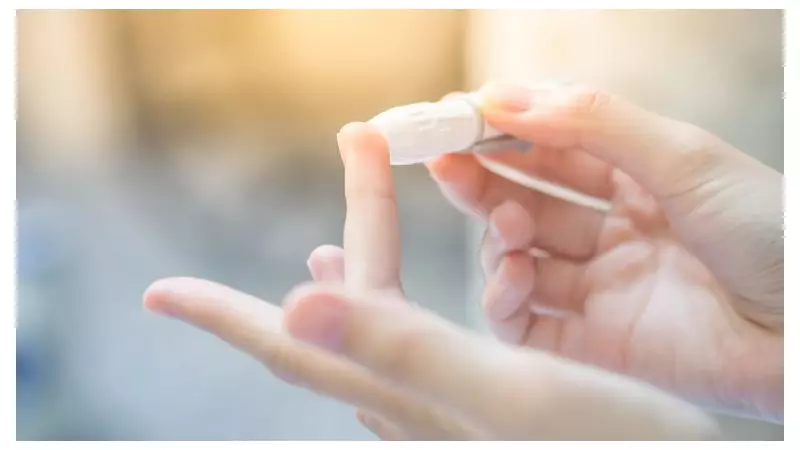
The innovative technique, detailed in research published on Tuesday 6 January 2026, requires just a few drops of blood from a finger prick. The individual collects the sample themselves at home, dries it on a special card, and then posts it to a laboratory for analysis. Crucially, the dried blood sample does not require refrigeration during transit, removing a major logistical barrier that has limited the use of other clinical blood tests.
The study, led by Professor Nicholas Ashton of the Banner Health Institute in Arizona and the University of Gothenburg's Sahlgrenska Academy, involved 337 people. Researchers successfully measured proteins linked to Alzheimer's disease and other brain changes from the dried blood spots. The results showed a strong correlation with findings from more traditional and invasive methods, such as brain scans or spinal fluid tests.
A 'Fundamental Change' for Research and Diagnosis
Professor Ashton stated that this advancement could "fundamentally change" Alzheimer's research. "This breakthrough could fundamentally change how we conduct Alzheimer's research by proving that the same biomarkers doctors use to detect Alzheimer's pathology can be measured from a simple finger prick collected at home or in more remote community settings," he explained.
While the test is still years away from routine clinical use, it opens new doors for scientific studies. It enables researchers to include more diverse and historically underrepresented populations in large-scale screening projects, which was previously difficult due to the need for clinic visits and complex sample handling.
Experts Hail a 'Paradigm Shift' in Accessibility
UK experts from the University of Exeter, who contributed to the research, expressed great excitement about the implications. Professor Anne Corbett, a professor in dementia research at Exeter, said: "What excites me most is that this work makes this type of research far more accessible. We're moving toward a future where anyone, anywhere, can contribute to advancing our understanding of brain diseases. This isn't just a technical advancement - it's a paradigm shift in how we conduct neuroscience research."
Her colleague, Professor Clive Ballard from the University of Exeter Medical School, added that ongoing work will explore whether this method could also be valuable for identifying people in the community who should proceed to more detailed diagnostic tests for Alzheimer's disease.
This development marks a significant step forward in the global fight against dementia, offering a glimpse of a future where early and accessible detection could become a reality for millions.