In the fight against cancer, a revolutionary treatment known as CAR T-cell therapy is generating significant excitement among scientists and clinicians. This innovative approach, which involves genetically engineering a patient's own immune cells to better target and destroy cancer cells, has been described as a "game-changer" by immunologists. The therapy recently gained public attention when actor Sam Neill announced that his stage three cancer was in remission after participating in a clinical trial in Sydney, calling the success "science at its best."
Understanding CAR T-Cell Therapy
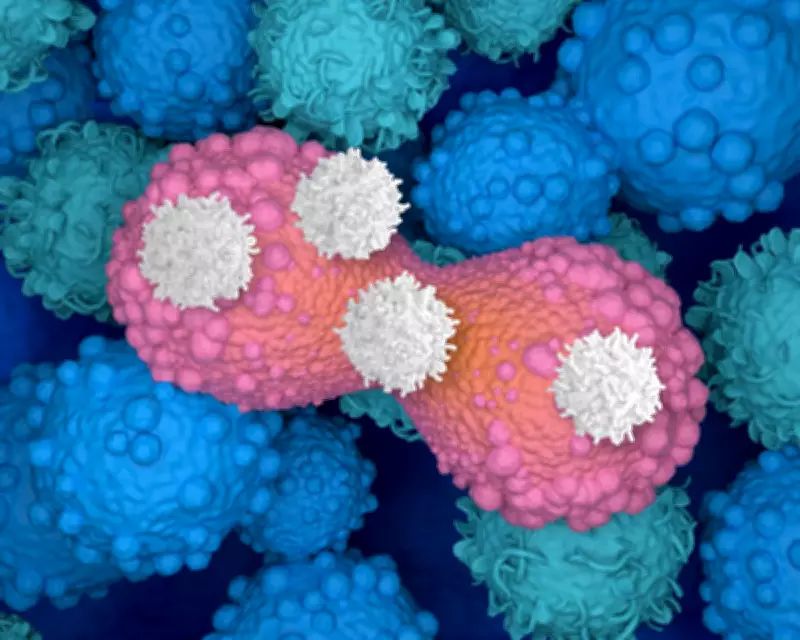
CAR T-cell therapy, short for chimeric antigen receptor T-cell therapy, has its roots in discoveries made over decades. Pioneered in the 1990s, it has exploded in development over the past ten years. Since 2018, four CAR T-cell therapies have been approved by the Therapeutic Goods Administration for use in Australia, all targeting blood cancers. The process begins by extracting T-cells from a patient's blood. These cells are then genetically engineered in a laboratory to produce chimeric antigen receptors on their surface, effectively "adding a GPS" to help them home in on cancer cells. After being multiplied in the lab, the enhanced cells are infused back into the patient, where they continue to proliferate and seek out their targets.
This therapy offers several advantages over traditional treatments like chemotherapy. It can be tailored to specific cancers by targeting proteins unique to tumors, requires only a single infusion, and often involves a shorter hospital stay. Most notably, in best-case scenarios, the protective effect can persist, preventing relapse. "It's like a living drug," explains Dr. Criselle D'Souza, an immunologist at the Peter MacCallum Cancer Centre. "In theory, it can last in a patient forever if memory is created." She points to Emily Whitehead, the first child treated with CAR T-cell therapy in 2012, who remains cancer-free.
Challenges with Solid Tumors
While CAR T-cell therapies have shown remarkable success against blood cancers, progress against solid tumors—such as those of the breast, brain, and prostate—has been slower. Assoc. Prof. Maté Biro from the Garvan Institute of Medical Research compares tackling blood cancers to "shooting fish in a barrel" compared to solid tumors, which are like "formidable fortresses." Solid tumors are difficult for immune cells to penetrate, and they actively suppress T-cell activity. Researchers are developing strategies to arm T-cells with more powerful weapons, including more precise targeting and the ability to secrete drugs or antibodies within the tumor microenvironment.
Early successes have been reported in treating gastrointestinal cancers and pediatric brain tumors, offering hope that these obstacles can be overcome. Prof. Misty Jenkins from the Walter and Eliza Hall Institute of Medical Research notes, "What we can also do now is start to enhance the T-cells to then also secrete drugs or other antibodies into the microenvironment to help keep them alive."
Future Directions and Cost Considerations
The future of CAR T-cell therapy may include in vivo production, where patients receive an injection that enables their bodies to generate CAR T-cells internally, similar to a vaccine. This approach is just beginning clinical trials and could drastically reduce costs. Currently, the therapy is prohibitively expensive, with some treatments costing over half a million Australian dollars per patient. However, recent government funding for Carvykti, a CAR T-cell therapy for multiple myeloma, has made it freely available in public hospitals in Australia, addressing some access issues.
Despite the promise, concerns remain about Australia's ability to keep pace with research and manufacturing. Jenkins emphasizes that breakthroughs require existing expertise and infrastructure in hospitals. Biro adds, "Hope is warranted, but so is impatience." He argues that CAR T-cell therapies exemplify what can be achieved with investment in science, but the health system and policymakers must catch up.
As the field advances, the story of Sam Neill serves as a beacon of hope, illustrating the potential of this emerging therapy. While challenges persist, the collective efforts of researchers and clinicians are steadily transforming CAR T-cell therapy into a major weapon against cancer.