
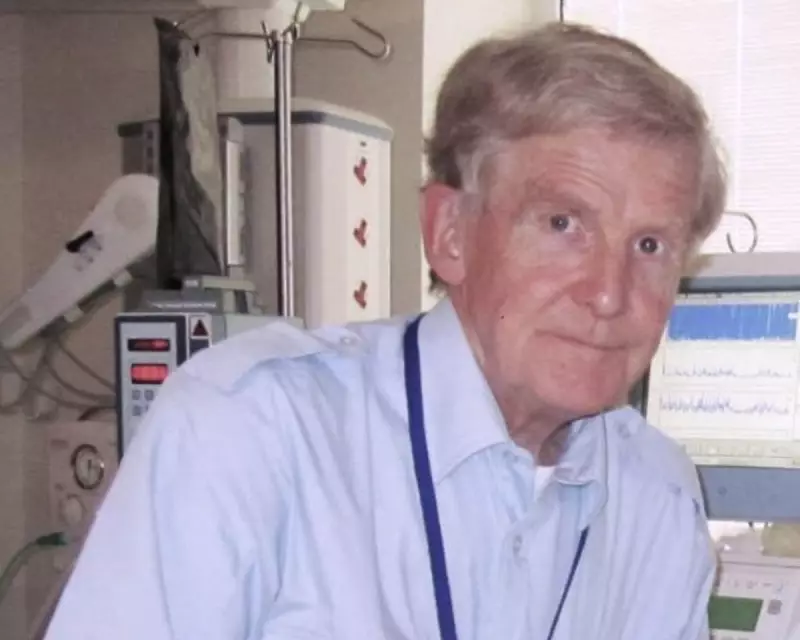
The medical world is mourning the loss of Professor Andy Whitelaw, a visionary neonatologist whose revolutionary techniques transformed the care of premature and oxygen-deprived newborns. He has died at the age of 79.
Pioneering a Path in Neonatal Brain Care
Andy Whitelaw dedicated his career to unlocking the mysteries of the newborn brain, which he once described as a "black box." His work was driven by the advent of advanced scanning technology, which allowed doctors to diagnose and treat conditions in living babies that were previously only identifiable after death.
One of his major breakthroughs was tackling intraventricular haemorrhage, a type of brain bleed in premature infants. Traditional treatment involved inserting a permanent shunt, which carried risks of blockage. Whitelaw, collaborating closely with his second wife, Professor Marianne Thoresen, pioneered the Drift trial (Drainage, Irrigation and Fibrinolytic Therapy) in 2003.
This delicate procedure involved flushing clot-busting fluid through catheters in the brain to clear blockages. "I watched the first baby like a hawk, hardly daring to leave for the first 16 hours," Whitelaw later wrote. His perseverance paid off; a decade-long follow-up study showed treated children had significantly improved IQ scores compared to those who received standard care.
The Life-Saving Power of "Therapeutic Cooling"
Whitelaw's other landmark innovation addressed brain damage caused by oxygen deprivation during birth. He hypothesised that carefully reducing a baby's body temperature could protect the brain.
In 1999, he initiated the CoolCap trial, personally attending hospitals at all hours to explain the then-unconventional procedure to parents and obtain consent. This led to the larger 2002 Toby trial (Total Body Hypothermia), which proved cooling the entire body was highly effective.
Today, therapeutic cooling is a standard, life-saving treatment in neonatal units worldwide, preventing brain swelling and long-term damage in countless newborns.
A Career Dedicated to the Most Vulnerable
Born in Derby in 1946, Whitelaw studied medicine at King's College, Cambridge. His career included pivotal roles at London's Hammersmith Hospital, Great Ormond Street, and a professorship in Oslo, Norway—for which he learned Norwegian.
He served as Professor of Neonatal Medicine at the University of Bristol from 1998 until his retirement in 2011, and was president of the Neonatal Society from 2006 to 2009.
Ever observant, Whitelaw was an early advocate for "kangaroo care" after witnessing its benefits in Colombia in the 1980s. This practice of skin-to-skin contact between parent and premature baby, which he helped validate through research, is now widely endorsed by the NHS.
Andy Whitelaw is survived by his wife Marianne, his four children, two stepchildren, and fourteen grandchildren. His legacy endures in every child whose future was secured by his pioneering, compassionate care.




