
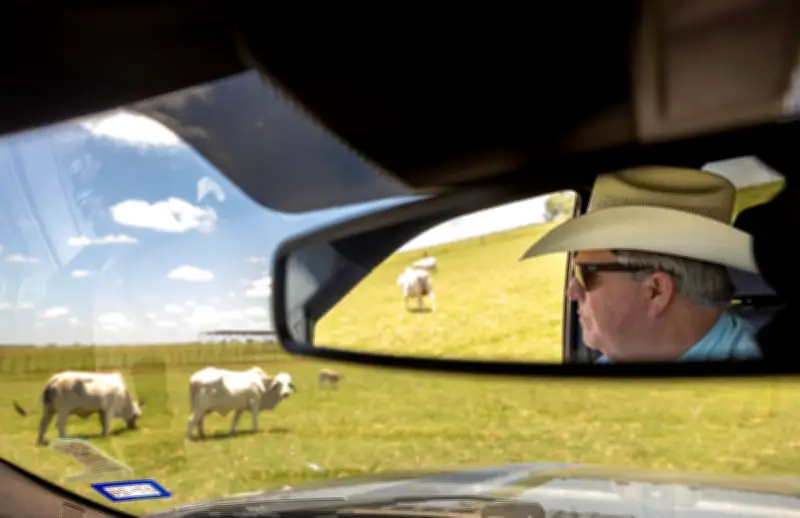
The New World screwworm outbreak in the US south-west poses a heightened risk to agricultural workers, who are more likely to encounter the parasitic fly but often face significant barriers to accessing healthcare. The outbreak has been detected in goats and sheep across three Texas counties, bringing the total to 16 confirmed animal cases, with no human infections reported so far.
Risk to livestock and industry
The primary concern remains the $347.7bn meat and poultry industry. Before the screwworm was eradicated from the US four decades ago, it caused hundreds of millions of dollars in losses. The fly has been moving north through Central America, and livestock producers have been preparing for its arrival. Tom Paterson, president of the New Mexico Cattle Growers’ Association and a cattle rancher in Catron county, said that earlier this year, “we transitioned from describing New World screwworm and what the problems are with it, to advising our cattle producer members about what to do when they get it.”
Farm workers face healthcare barriers
Agricultural workers are at greater risk of infection because they work closely with animals, but they frequently face challenges in accessing public health services. Rebekah Stewart, a clinical educator and care coordinator with the Migrant Clinicians Network and a family nurse practitioner, explained: “If they’re not in touch with the healthcare system, they’re very likely not going to be picked up by any of the surveillance that is being done. It’s like a jungle gym, the number of hoops and barriers that a person has to jump over to get from the farm to a healthcare system.”
Workers often labor long hours after clinics close, live on-site in remote locations, lack insurance or financial resources, and face language barriers. Migrant workers and people of color may also fear seeking healthcare amid immigration enforcement under the Trump administration. About 84% of clinicians who regularly work with immigrant populations reported in a recent survey that they were seeing very serious delays in patients seeking healthcare since January 2025.
Transmission and prevention
The fly lays its eggs in wounds as small as a tick bite. “Cleaning and covering wounds is really important,” Stewart said. Farm workers who rest outside or open unscreened windows may be exposed. Paterson noted that on his ranch, “all my guys wear long-sleeve shirts, long pants, gloves and a hat.” Protective clothing also shields from sun and other insects; insect repellent may help. Paterson’s ranch is off-grid, using solar and batteries, so they rely on screened windows for ventilation.
Industry response and containment
The US Food and Drug Administration has issued emergency use authorizations for anti-parasitic medications for animals, and manufacturers are ramping up production. There are no specific treatments for human cases beyond manual extraction and off-label anti-parasitic drugs. Industry groups in affected areas are informing members of warning signs and urging postponement of elective procedures that create wounds, and ensuring antiparasitic treatment for any livestock with wounds. Paterson recently processed cattle with branding, castrating, vaccinating, and ear-tagging, and gave each animal a shot of Dectomax.
Paterson expressed optimism that the outbreak can be contained, but stressed the importance of aggressive response and international cooperation. “Hopefully, we get our sterile flies in place. We don’t get lax down the road. We cooperate with Mexico, we cooperate with the Central American countries, and we push it back into South America. No one needs this. No one needs this,” he said.




