
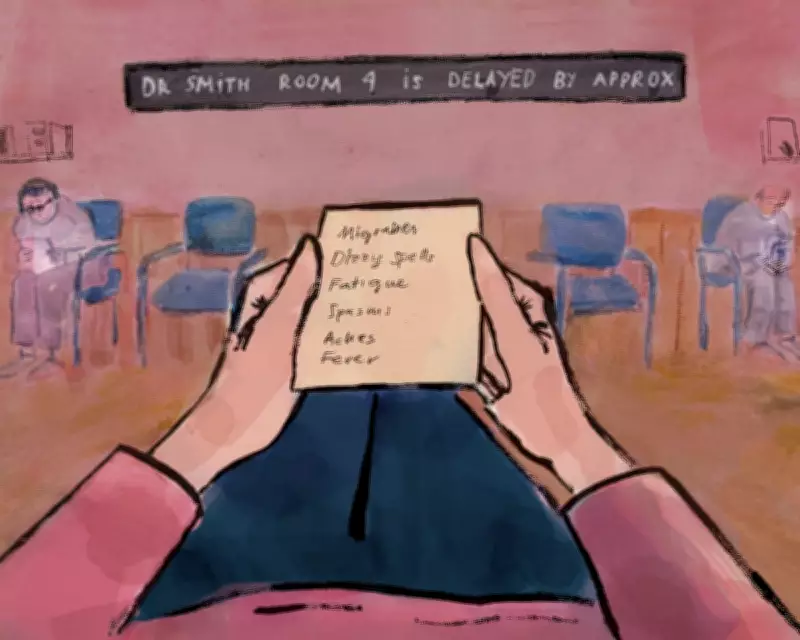
NHS Patients Should Write Their Own Medical Records, Ending Post-it Note Culture
Will Parman, winner of The Guardian Foundation's 2026 Emerging Voices award, argues that NHS patients should be empowered to write up their own medical records, moving beyond unreliable Post-it notes. This proposal aims to address critical communication gaps in healthcare, ensuring that vital information is not lost in the stressful shuffle of medical appointments.
The Problem with Post-it Notes
For patients like Will Parman's mother, who is battling cancer, Post-it notes have become a necessary but flawed tool. She clutches lists of symptoms, such as "cannot stand" and "spasms," to remember key points during consultations. However, these notes are often inadequate, tailored for different consultants, and easily lost in piles of paperwork. The anxiety of forgetting something important during appointments leads to unsettling car rides home, a common experience for many with complex health needs.
In a health system where appointments can take over a year to secure, the precision of these handwritten notes is crucial. Yet, they frequently fail to capture day-to-day changes in medical conditions. This issue is compounded by a lack of a unified digital repository in the NHS, meaning key medical updates are often missed by healthcare workers.
Communication Breakdowns and Inaccuracies
While the NHS provides excellent care, communication breakdowns are a significant concern. A 2025 study from Healthwatch England found that 23% of patients noticed inaccuracies in their NHS medical records, with only 17% of those reporting no impact from these errors. As AI is increasingly trained on patient data to enhance NHS efficiency, accuracy becomes paramount to safeguard patient outcomes.
Coroners have repeatedly warned of patient deaths due to failures in sharing crucial medical information between professionals. This stems from the NHS's fragmented systems, which cannot effectively communicate with each other. Past attempts to address this, like the failed £10bn National Programme for IT, highlight the challenges of creating a unified national record system.
Learning from US Models: OurNotes and Intellipedia
The US offers promising solutions. OurNotes, a system where patients co-author medical records by submitting agendas and interim histories before appointments, has shown success. In a study across 74 clinics, 97% of doctors described agendas as a "good idea," and 35% believed it saved time, suggesting it wouldn't burden the overwhelmed NHS.
However, OurNotes doesn't fully address post-appointment concerns, especially when doctors interrupt patients after an average of 11 seconds. Extending co-authoring to after appointments could give patients a voice in scenarios where empathic listening is limited, without criticizing overworked medical staff.
Another inspiration comes from US intelligence sharing post-9/11. Intellipedia, launched in 2006 and celebrating its 20th anniversary, allows agencies to collaborate on secure, dynamically edited pages. This model avoids the pitfalls of past NHS failures by using established technology that coexists with diverse systems. An NHS Intellipedia could provide a centralised, secure repository for patients and professionals to upload notes, fostering collaboration.
Current NHS Initiatives and the Need for Patient Inclusion
Recent NHS efforts, such as Wes Streeting's three-point plan to modernise the NHS and advancements in the NHS Spine infrastructure, focus on digitising staff communications. The NHS is also trialling Cancer 360, a centralised system to speed up cancer treatment by collating patient information. While these are vital steps, they often marginalise patients who rely on Post-it notes, denying them authorship in their own treatment plans.
Proposals like "patient passports" for unified records remain controversial due to data security and privacy concerns. However, digitisation must not come at the expense of patient voices, especially with public satisfaction in the NHS at a record low.
A Call for Change
Implementing a system where patients can securely upload bullet points before and after appointments would be voluntary, low-commitment, and safe. It would empower millions, including those like Will Parman's mother, to have a proper voice in their healthcare. By learning from US models like OurNotes and Intellipedia, the NHS can end the Post-it note culture, improve accuracy, and save lives through better communication and collaboration.




