
London Couple Launches Campaign After Near-Fatal Childbirth Experience
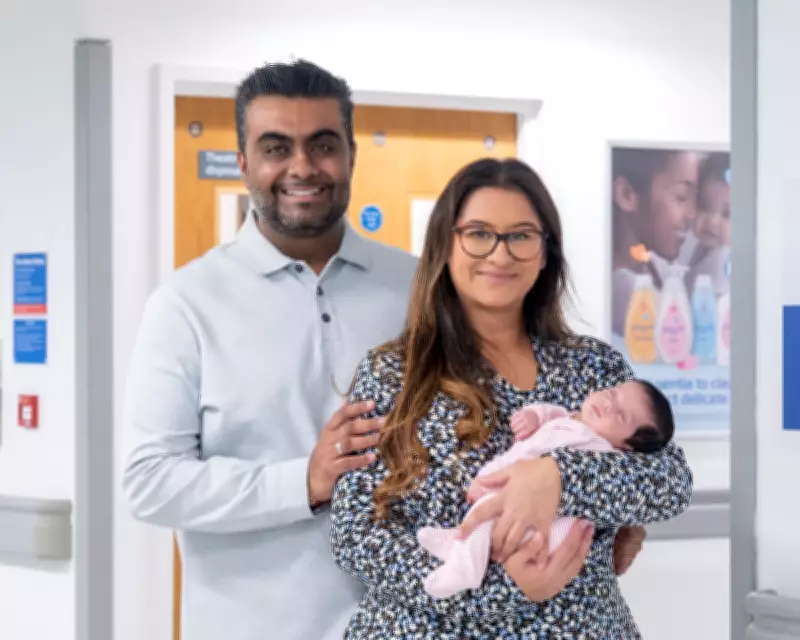
Amisha Adhia and her husband Nik are spearheading a crucial campaign to improve NHS diagnosis of placenta accreta spectrum (PAS), a rare but potentially fatal childbirth complication. Their initiative, Action for Accreta, follows Adhia's harrowing experience where five London hospitals failed to identify her condition before one obstetrician intervened.
The Critical Diagnosis That Saved Lives
Adhia, 36, was repeatedly told by childbirth experts at five different London hospitals that she had almost zero risk of placenta accreta. Medical professionals reassured her that her placenta was high up rather than low lying, dismissing her concerns. However, Dr. Chineze Otigbah, a consultant obstetrician, correctly diagnosed the condition, enabling appropriate care when Adhia gave birth to her daughter Ishaani last September at Queen's Hospital in Romford.
"I am alive today because Dr. Otigbah recognized the danger and acted," Adhia revealed. "I was reassured into danger. I was carrying a condition that could have killed us both. I felt unheard. I thought I was going to die."
During her caesarean section delivery, Adhia lost almost a litre of blood - significantly less than typical placenta accreta cases - and suffered no serious complications thanks to the proper medical intervention.
The Growing Risk Factors and NHS Response
Placenta accreta occurs when the placenta grows too deeply into the uterine wall, potentially blocking the cervix and making placental separation during birth extremely difficult. The NHS estimates between one in 300 and one in 2,000 women develop this condition, but doctors warn numbers are increasing due to rising caesarean section rates and IVF treatments.
In England, more babies are now born by C-section (45%) than vaginally (44%), creating a larger population at risk. The Royal College of Obstetricians and Gynaecologists (RCOG) acknowledges that rates of placenta accreta and placenta praevia have risen and will continue increasing due to higher C-section rates, increased maternal age, and greater use of assisted reproductive technology.
Dr. Otigbah expressed deep concern about systemic gaps: "The main risk factors for PAS are C-sections and IVF, which have risen massively. The NHS has not kept up to date with this reality. Not every hospital has PAS specialists, so subtle warning signs can be overlooked."
Campaign Gains Momentum and Support
Since launching their campaign, approximately 40 women who experienced pregnancy or labour setbacks due to undiagnosed placenta accreta have contacted the Adhias through social media. Eight prominent baby and maternal health groups have endorsed the initiative, including Birthrights and the Birth Trauma Association.
Tommy's and Sands, two leading baby charities, issued a joint statement welcoming the campaign for "helping to highlight important gaps in awareness, surveillance and learning" about serious pregnancy complications.
The Adhias recently provided testimony to Valerie Amos's inquiry into English maternity care, ordered by Health Secretary Wes Streeting. They urged the inclusion of recommendations for improved placenta accreta identification within the NHS system.
Systemic Challenges and Data Gaps
A significant challenge in addressing placenta accreta is the lack of comprehensive data. The NHS does not systematically record how often the condition develops or causes complications, and even the annual MBBRACE-UK report on maternal health contains no specific details. International studies from the United States and Israel suggest prevalence could be as high as one in 111 pregnant women.
An RCOG spokesperson emphasized: "Early identification of placenta accreta through pregnancy scans and appropriate follow-up imaging is extremely important, so that care can be carefully planned, with the appropriate specialist teams, which improves outcomes for women and babies." The organization is currently updating its guidelines, expected for publication later this year.
NHS England's national clinical director for maternity, Professor Donald Peebles, stated: "Placenta accreta spectrum is rare, but when it does occur it can cause potentially life-threatening bleeding, which is why identifying women at higher risk early in pregnancy is so important. Maternity teams are trained to look for the warning signs."
The Adhias continue advocating for the RCOG's updated guidelines to include specific advice on diagnosing and managing atypical forms of placenta accreta spectrum, hoping to prevent other families from experiencing similar near-tragedies.




