
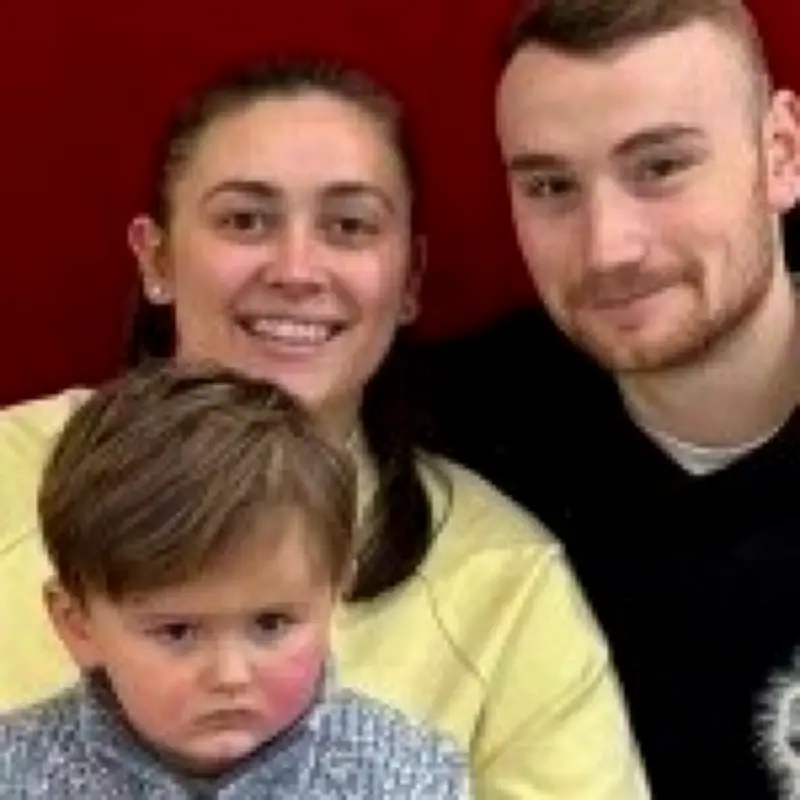
A mother from Kent says she is fighting a 'battle for equal accessibility' after her disabled two-year-old son was denied a Blue Badge three times by the local council. Charlotte Jenner, 27, and her partner Charlie Sears have been struggling to secure basic parking rights for their son Ronnie, who has a rare genetic condition called Phelan-McDermid syndrome (PMS).
Rare Condition Limits Mobility
Ronnie was diagnosed just before his first birthday with PMS, a disorder affecting only about 5,000 people worldwide. The condition causes hypotonia in 97% of cases, making his muscles tight, stiff, and resistant to movement. As a result, the toddler cannot walk, crawl, roll, or sit up independently because his brain struggles to communicate with his limbs.
Despite needing to be lifted into bulky mobility equipment, Charlotte claims the council has repeatedly ruled that Ronnie is not 'disabled enough' for a Blue Badge. She applied to Kent County Council (KCC) in June last year but was quickly declined.
'Tick-Box Exercise'
'It was basically a tick-box exercise, and all of his diagnoses have been shoved in note boxes,' Charlotte said. Although she appealed with evidence from Ronnie's GP and physiotherapist, the family was refused again. A KCC Blue Badge team member reportedly explained that children under three typically qualify only if they are on palliative care or use life-saving equipment like breathing tubes or feeding tubes.
After further argument, the council arranged an in-person assessment with an occupational therapist. Charlotte brought Ronnie and a folder of medical letters detailing over 100 appointments. The assessor was sympathetic, but a panel ultimately denied the badge for a third time.
'It basically said, we recognise Ronnie's disabled, but he's not disabled enough. That is the long and short of it,' Charlotte said. 'I'm having to fight my local council for basic accessibility for my disabled son.'
Understanding Phelan-McDermid Syndrome
PMS, also known as 22q13 deletion syndrome, is caused by a deletion on chromosome 22. It leads to developmental delay, communication difficulties, cognitive and mobility issues, and often autism spectrum disorder. Symptoms include persistent mouthing, aggressive behaviours, teeth grinding, and decreased pain perception. Treatment focuses on managing symptoms individually.
Charlotte argues that since Ronnie's condition is lifelong and incurable, he should be assessed individually rather than through a blanket policy. The denial has caused Ronnie to miss essential medical appointments and prevented him from using his walking frame at nursery, hindering his progress.
'Right now my council is preventing me from including him in everyday society, from giving him the same opportunities and from making him feel included,' she said.
Council and MP Respond
KCC advised the family to use parent and child bays, but Charlotte says these are often occupied and lack the same accessibility as Blue Badge spaces, such as parking on double yellow lines.
The family contacted their MP, Mike Martin of the Liberal Democrats, who called the situation 'deeply concerning'. He said: 'Families with disabled children shouldn't have to go through such prolonged battles simply to secure basic access and dignity for their children.'
A KCC spokesperson stated: 'We understand the council’s decision is disappointing. However, KCC must assess Blue Badge eligibility against the national Department for Transport guidance and legislation. This provides a very clear set of eligibility criteria for children under three which were not met at initial assessment, or appeal, in this case.'
The spokesperson added that under-threes may be eligible if they always need hard-to-carry medical equipment or need to be near a vehicle for urgent treatment. They noted that when children turn three, the guidance allows greater scope for assessing independent mobility, and KCC is happy to reassess at that time.
Charlotte remains determined: 'When I have to redo this assessment [when Ronnie is three], my answers will not be any different. Ronnie cannot choose whether he is disabled or not, that choice was made for him.'




