
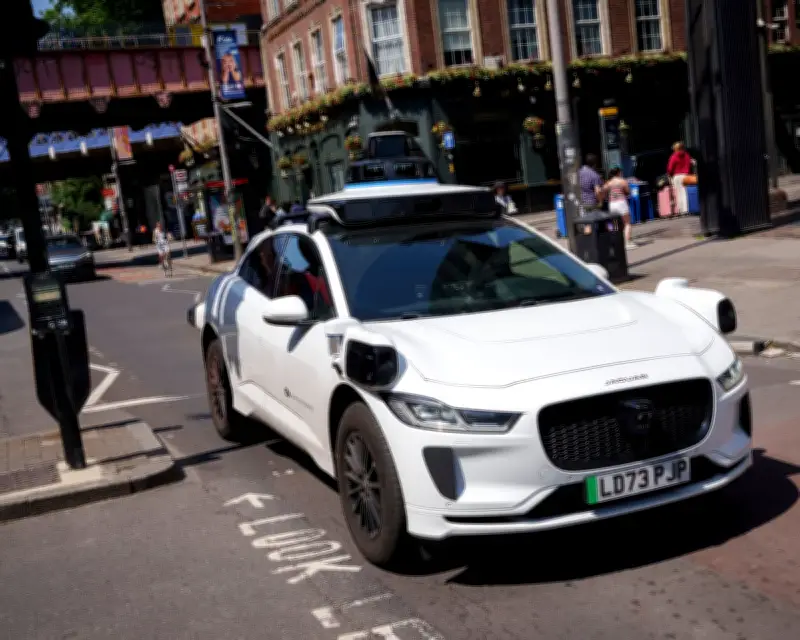
Waymo, a Silicon Valley-based company, has been testing self-driving cars on London's streets this summer, with mixed results including cars getting stuck in a cul-de-sac and one driving into a crime scene. The automated vehicles currently have trained drivers ready to take control, but Waymo and British rival Wayve aim to launch driverless minicabs in the capital this year, pending approval from the British government and Transport for London.
Accessibility benefits outweigh drawbacks
Gabriel Stewart, a freelance writer with poor vision who cannot drive, argues that autonomous vehicles offer a future of independence for disabled people. Transportation barriers limit employment and social participation for disabled individuals; only 42% of those with difficulty seeing and 54% of those with other disabilities are employed in the UK, according to a 2022 analysis by the Royal National Institute of Blind People. With about one in four people in the UK living with a disability, this technology could promote social inclusion.
Concerns about surveillance and job losses
Stewart acknowledges concerns about surveillance, as sensors in the cars record journey data and interactions, which tech firms might use to sell products. He calls for proper regulation. Job losses for taxi drivers are also a risk; a 2025 report from Gridwise found hourly pay fell for taxi drivers in cities with AVs, with drops of 5.3% in Austin and 6.9% in San Francisco, contrasting with a 1% national increase for rideshare drivers. Stewart urges the government to protect affected workers.
Safety record of driverless cars
Despite high-profile incidents, self-driving cars have fewer crashes than human drivers. Analysis by LA Reported found that over almost 38 million driverless miles in Los Angeles from March 2024 to December 2025, there were only 28 Waymo crashes with injuries, and only one where the robotaxi was at fault. Human drivers would have had about 60 such crashes, meaning Waymos had 64% fewer injury crashes. Stewart notes that while not completely safe, driverless cars could reduce deaths and injuries.
Call for inclusive conversation
Stewart emphasizes that disabled people must be part of the conversation about autonomous vehicles. He suggests the government set up an accessibility advisory panel with representation from across the disability spectrum. "The robotaxis are coming! Think what that could do for you; think what that could do for me and millions like me," he writes.




