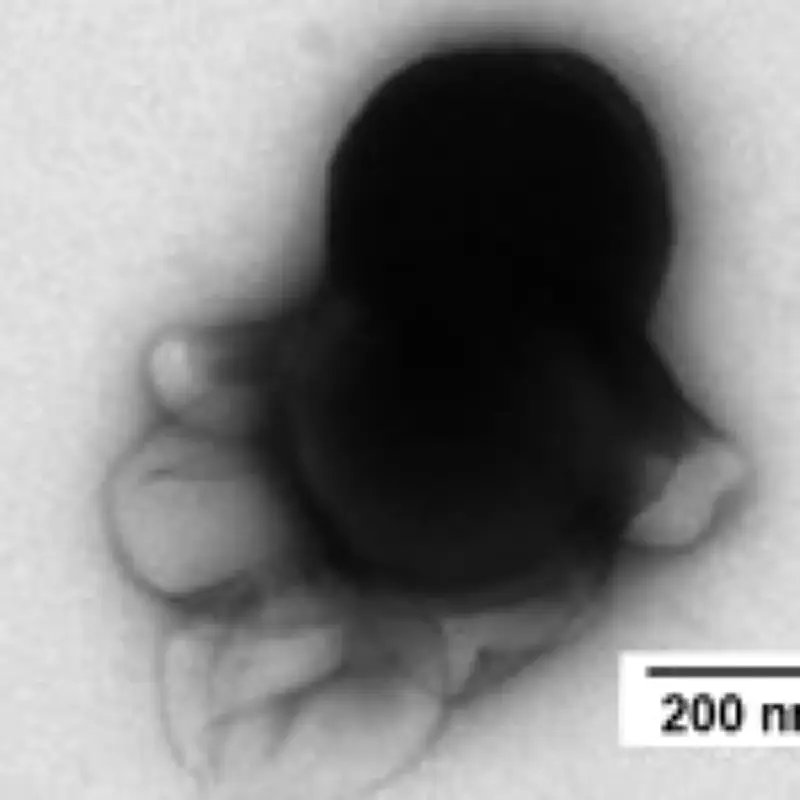
Researchers in Switzerland have developed a nanorobot that can be used to kill cancer cells. The device, created by a team at the University of Basel, consists of a magnetic propulsion unit and a separate payload capsule that can transport therapeutic compounds or enzymes to specific locations.
Modular design inspired by lunar rockets
Scientists say the technology represents an important step towards more versatile nanorobots, which are increasingly being explored for applications in medicine, environmental technology and manufacturing. Unlike conventional robots, nanorobots are not built using electronics or computer chips. Instead, they are made from biomolecules and nanoparticles and operate at a scale thousands of times smaller than the width of a human hair.
The new system was developed by researchers led by Professor Dr Cornelia Palivan and is described in the journal Advanced Functional Materials. 'Previous nanorobots are often designed for a specific task only,' Dr Cornelia Palivan said. 'Our modular system, on the other hand, can be adapted to different applications.'
The researchers liken the nanorobot's structure to a multi-stage lunar rocket. A magnetic propulsion module enables movement, while a second module acts as a payload capsule carrying functional materials. The payload capsule contains four tiny polymer vesicles (fluid-filled sacs), which are loaded with enzymes. These vesicles can process molecules entering through microscopic pores and release the resulting products into the surrounding environment. Depending on how the system is configured, the vesicles can also be selectively opened to release therapeutic substances or other bioactive compounds.
DNA-based Velcro fastener joins modules
The two modules are joined using what the researchers describe as a DNA-based 'Velcro fastener'. Complementary DNA strands on each component allow the propulsion unit and payload capsule to self-assemble and remain securely attached. Additional biomolecules can be added to help the nanorobot dock with specific cells or materials.
To test the technology, the team used HeLa cells, a widely used human cancer cell line. Nanorobots loaded with fluorescent molecules were observed accumulating on the surface of the cancer cells under laboratory conditions. When equipped with the appropriate enzymes, the nanorobots produced an anticancer drug that reduced the viability of the HeLa cells to 16% within 72 hours.
'The drug can have a concentrated local effect if we use our nanorobot to specifically target it to the cancer cells,' explains Dr. Voichita Mihali, the first author of the study.
Reusability and industrial applications
Researchers say the technology could have applications beyond healthcare. Because the propulsion module is magnetic, nanorobots can be recovered after completing their task and reused. The team was also able to separate the propulsion and payload modules, refill the payload capsules and then reassemble the system. Scientists believe this capability could prove particularly useful in industrial processes such as catalysis, where reusable microscopic machines could perform chemical reactions more efficiently.
Although the use of such nanorobots in humans remains a long-term objective, researchers say the modular design means the system can be adapted relatively easily for different purposes simply by modifying the payload capsule.