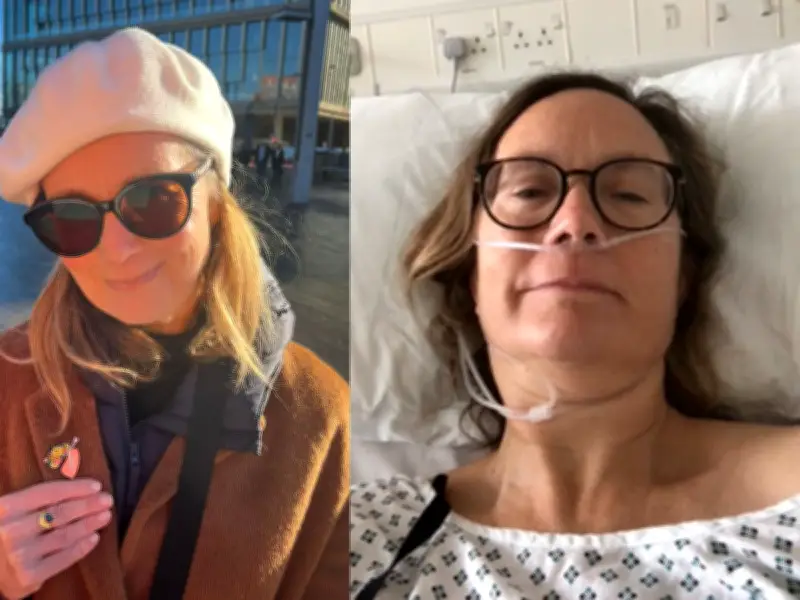
Mel Erwin, 58, a retired director of a literacy organisation in London, was diagnosed with lung cancer in 2020 at age 51. The non-smoker said a GP dismissed her symptoms during a telephone consultation, asking: "What would you like me to do about it?" After seeking a second opinion, another GP referred her for tests that revealed a mass on her left lung.
Initial symptoms and dismissal
In April 2020, Mel collapsed and paramedics suspected Covid-19, later confirmed by an antibody test. Within three months, she experienced severe fatigue, nervous system issues, and could barely walk. During a telephone consultation due to lockdown, she listed her concerns but was dismissed by the GP.
Mel decided to advocate for herself and consulted another GP, who immediately ordered blood tests and an X-ray. That same afternoon, results showed a mass on her left lung. In August 2020, she was diagnosed with non-small cell lung cancer, a common type. Mel has a mutation of the EGFR+ gene, more common in non-smokers, according to charity EGFR UK.
Treatment and progression
In September 2020, Mel underwent a lobectomy to remove half of her lung, followed by chemotherapy from November 2020 to April 2021. She described it as "the darkest of times," especially with isolation due to pandemic restrictions. "As if cancer isn't hard enough, to do it in isolation without your loved ones around you is unimaginably hard," she said.
Follow-up scans in December 2022 found 10 small nodules across both lungs, too tiny to biopsy. They were monitored until May 2024, when they had grown enough to confirm stage 4 lung cancer. Mel was told her cancer is "incurable but treatable."
Current status and advocacy
In July 2024, Mel started a targeted therapy drug. Her latest scan in April 2026 showed "no evidence of active disease." She is aware the drug may stop working in 18 months to eight years but remains hopeful. "I prefer to think of it now as not-yet-curable cancer," she said.
Reflecting on the initial dismissal, Mel said: "It's important that our symptoms are listened to and that there is action decided upon between healthcare providers and patients. The more we share our stories, the more we can raise awareness that, if you feel like something isn't right, seek help." Mel is supporting Cancer Research UK's Race for Life.