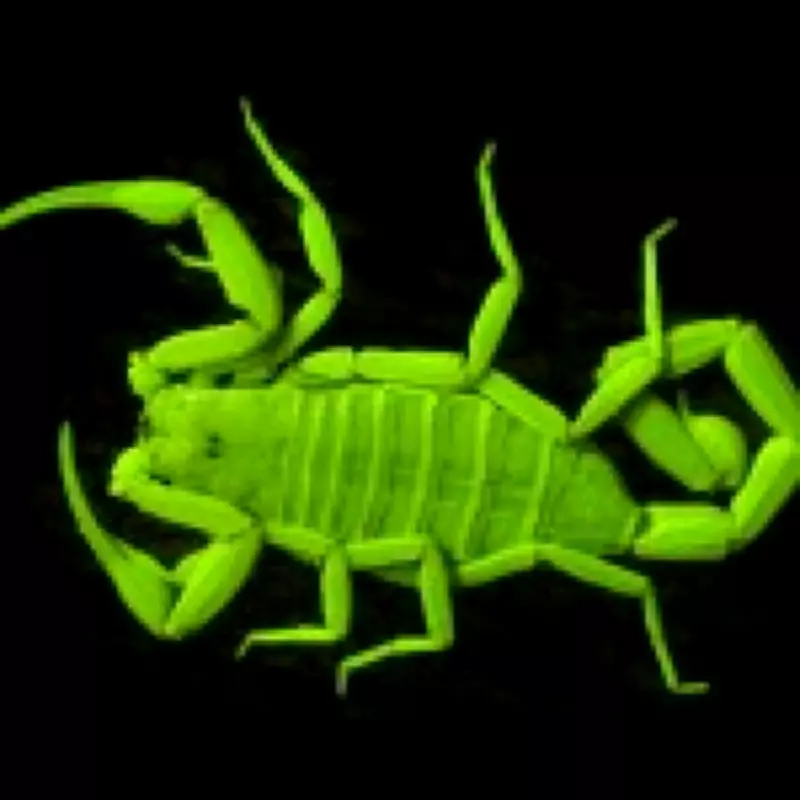
Scorpions have long been feared for their venomous sting, but new research reveals they are even more formidable: they are essentially mini cyborgs. Scientists have discovered that the claws and stingers of scorpions are reinforced with metals, making them tougher and more effective hunters.
Metal-Reinforced Exoskeleton
Most of a scorpion's outer shell is made of chitin, a tough, sugar-based material that forms a protective exoskeleton. However, a study published on April 28 in the Journal of the Royal Society Interface found that the claws and stinger contain high concentrations of metals such as zinc, manganese, and iron. These metals are not spread evenly across the body but are concentrated in key areas: the tooth-like edges of the claws and the sharp tip of the stinger.
Biologist Sam Campbell led a team that analyzed 18 scorpion species from museum collections. Using X-ray imaging, electron microscopy, and ultra-fine lasers, they mapped the presence of metals. The findings revealed that iron was found only in the claws, while manganese appeared exclusively in the stinger. Zinc was present in both but unevenly distributed.

Layered Structure Like a Popsicle
In many stingers, zinc was concentrated at the very tip, with manganese layered beneath it. Researchers likened this structure to a "layered popsicle." In contrast, metals in the claws appeared more blended. The team also discovered that smaller, weaker pincers often contained higher levels of zinc and iron than larger ones, suggesting that metals may help compensate for reduced size by increasing durability.
Scorpions even rely on different hunting strategies according to the metal they have incorporated into their bodies. Some primarily use their stinger to subdue prey, while others depend more on their pincers.
Survival Strategy Over Millions of Years
Unlike some animals, adult scorpions cannot regrow damaged body parts, making this added toughness vital for survival. Scorpions are not unique in using metals in their bodies; other arthropods, including ants, wasps, and centipedes, also incorporate metals into their structures. But scorpions appear to be an extreme case in terms of using metal as a survival strategy.
Experts say the findings offer new insight into how scorpions, which have existed for around 450 million years, have survived for so long. The study highlights the evolutionary advantage of metal reinforcement in their weapons, providing a deeper understanding of these ancient creatures.