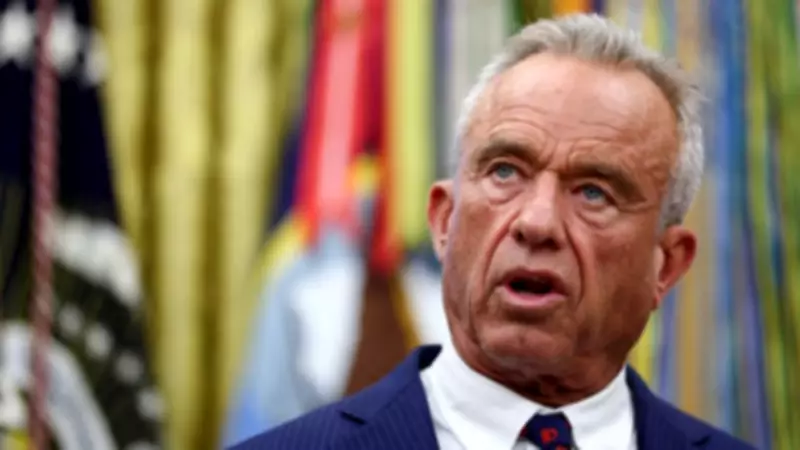
In a startling revelation that has ignited political controversy, United States Health Secretary Robert F Kennedy Jr has openly admitted to previously using cocaine in an extremely unhygienic manner. During a candid conversation on podcaster Theo Von's program, This Past Weekend, Kennedy disclosed that he once snorted cocaine directly from public toilet seats.
Confession During Podcast Interview
The confession emerged as Kennedy and Von discussed their shared history of substance abuse and their participation in recovery support meetings. These meetings were initially disrupted during the COVID-19 pandemic, leading the pair to form an informal, continuing support group. Kennedy, who has been in recovery from alcohol and drug addiction for decades, made the graphic admission while explaining his current lack of germophobia.
"I'm not scared of a germ... I used to snort cocaine off of toilet seats," Kennedy stated bluntly during the interview. He further emphasized the seriousness of his addiction, declaring, "I know this disease will kill me." Kennedy explained that his ongoing recovery requires daily attendance at support meetings, stating that neglecting this treatment would be detrimental to his life.

Immediate Calls for Resignation
The public confession from the nation's top health official prompted swift backlash. The non-profit organization Protect Our Care, which advocates for affordable healthcare, issued a strong statement demanding Kennedy's immediate resignation. The group labeled him "the most dangerous, in over his head, ill-suited person ever to lead such an important federal agency that has life-and-death power."
Brad Woodhouse, president of Protect Our Care, offered a terse, one-word public response: "Resign."
Social Media and Political Reaction
The controversy quickly spread across social media platforms, drawing criticism from various political figures. Democratic Representative Malcolm Kenyatta of Pennsylvania expressed profound distrust, posting on social media platform X: "For some reason I don't trust this guy on public health."
Policy analyst Aaron Reichlin-Melnick, a senior fellow at the American Immigration Council, highlighted a perceived double standard in political attitudes toward addiction. He pointed out that while Kennedy's past drug use is discussed in the context of recovery, the previous administration often characterized immigrants with addiction histories as "the worst of the worst" criminals, regardless of how long ago their struggles occurred.
Kennedy's History with Substance Abuse
Robert F Kennedy Jr has been transparent about his long battle with addiction, which began following the traumatic assassination of his father, Senator Robert F Kennedy, in Los Angeles in June 1968. His substance abuse led to two notable arrests: one for cannabis possession in 1970 and another for heroin possession in 1983. Kennedy has credited the latter arrest as the pivotal moment that compelled him to seek sobriety and begin his recovery journey.
Background as a Vaccine Skeptic
Prior to his appointment as Health Secretary, Kennedy gained significant public attention as a prominent vaccine skeptic during the coronavirus pandemic. He has a documented history of promoting scientifically debunked claims, most notably the thoroughly discredited link between childhood vaccinations and autism. This background in spreading medical misinformation has further fueled criticism of his fitness to lead the Department of Health and Human Services.
The combination of his admission of extreme past drug use, his history of promoting anti-vaccine rhetoric, and his current role overseeing national health policy has created a perfect storm of political and public relations challenges for the Biden administration. The episode raises serious questions about judgment, transparency, and the standards expected of individuals occupying the highest echelons of public health leadership.