
Deep in Tasmania's Takayna/Tarkine rainforest, a group of enthusiasts led by mycologist Dr. Alison Pouliot explores the hidden world of fungi. Over three days, they uncover the critical role these organisms play in sustaining life on Earth.
Fungi: The architects of the forest
Pouliot emphasizes that fungi are not merely inhabitants of the forest but its creators. “People often say that fungi grow in the forest,” she explains. “But there wouldn’t be a forest without fungi. Fungi are the ecosystem engineers that created the foundation for the forest.” This perspective reshapes the group's understanding of the ancient landscape, home to 2000-year-old Huon pines and rumored thylacines.
Fungi were finally classified into their own kingdom about 50 years ago, yet remain understudied. Researchers estimate 2-3 million species exist, with only over 205,000 identified. Mushrooms are just the visible tip of vast underground mycelium networks spanning 100 quadrillion kilometers, forming symbiotic relationships with up to 70% of plant species.
A journey through the rainforest
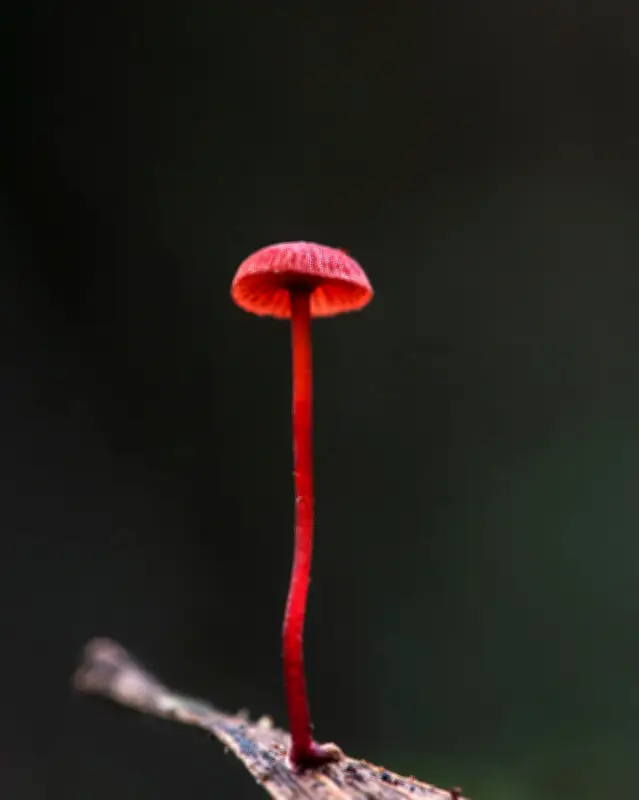
From Corinna Wilderness Village, a former mining town turned eco-retreat, the group ventures along the Pieman River. They pass giant ferns and ancient trees whose trunks are hidden under moss and lichen. The forest floor bursts with fungal diversity: delicate blue pixie’s parasols (Mycena interrupta), ruby bonnets (Cruentomycena viscidocruenta), slime-covered earth tongues, giant bracket fungi, and echidna fungi with spiky teeth.
“It’s hard to believe there’s so much diversity in a tiny space,” says Liz Davis, a forager from Orange, New South Wales, who started the Mycology May festival. The group often covers less than 200 meters an hour, captivated by each new find. Pouliot notes that because much fungal life is underground, one could visit 100 times and still find new species.
The undervalued kingdom
Fungi are essential to almost every ecosystem, yet they lack even an agreed-upon collective noun. Pouliot’s interdisciplinary approach includes sporeprints and discussions on how language shapes perception—why does love bloom, but crime mushrooms? The workshop also explores fungi's role in environmental restoration.
Globally, fungi produce over 50 million tonnes of spores annually. A single eucalyptus tree can host hundreds of fungal species. Fungi make up to 90% of the diet of some native Australian marsupials. Despite this, the kingdom remains woefully undervalued.
As the workshop concludes, participants leave with a newfound appreciation. “We shall by morning/ Inherit the earth./ Our foot’s in the door,” wrote Sylvia Plath in her poem Mushrooms. After three days in the Tarkine, built on fungal foundations, the group feels grateful for their own inheritance of fungi.



