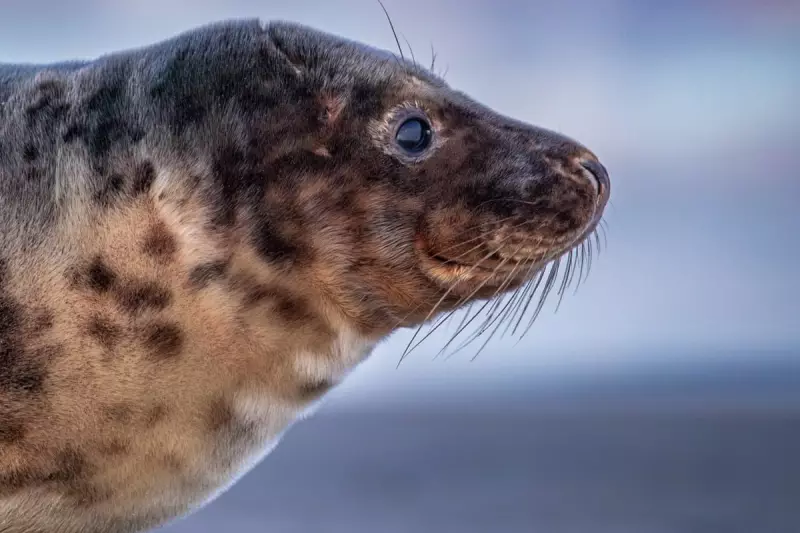
For a decade, scientist and photographer Jeroen Hoekendijk has turned his lens on the pinnipeds – the seals, sea lions and walruses – inhabiting the fragile Frisian Islands. This low-lying North Sea archipelago, stretching along the Dutch, German and Danish coastlines, serves as a stark early warning system for our warming and rising seas.
A Landscape Forged from Ancient History
The islands are remnants of Doggerland, a vast landscape drowned after the last ice age. Today, they are a vital but vulnerable habitat. The largest Dutch island, Texel, is 15 miles long and home to a fishing fleet whose nets still trawl up ancient bones from that lost world, including mammoth, rhinoceros, and even extinct Atlantic grey whales.
The island chain continues through Vlieland, Terschelling, Ameland and Schiermonnikoog. These are mortal places, exposed to the elements, where whalebone arches stand in streets and the nights are pierced by lighthouse beams and foghorns.
A Legacy of Hunting and Recovery
The islands bear witness to a complex human history intertwined with marine life. Vlieland once housed Dutch whaling crews, and the jawbones of Arctic bowhead whales mark the graves of those hunters in the Nicolaaskerk chapel. Seal hunting for food, oil and fur continued until 1962, and by 1976, combined with PCB pollution, it had pushed Wadden Sea seals to the brink of extinction.
Remarkably, seal numbers recovered in the 1980s and 90s. Grey seals have continued to increase, though harbour seals have suffered a worrying 16% decline since 2020. The islands also see stranded cetaceans, from harbour porpoises to sperm whales, which become disoriented in the shallow waters.
The Resilient Rhythm of Seal Life
Hoekendijk's work intimately captures the lifecycle of the islands' most populous marine mammals. Grey seals give birth on remote shores, weaning their pups for just 19 days before leaving them to fend for themselves. The process is arduous, and rescue centres like Ecomare on Texel frequently care for abandoned pups.
The photographs reveal bloody battles between 300kg male grey seals, eerie nocturnal vocalisations that inspired selkie folk tales, and the unique spotted patterns of each animal. They also document the islands' crucial role for birdlife and the poignant story of Freya the walrus, whose appearance in 2021, likely due to melting Arctic ice, ended tragically in Norway.
Ultimately, Hoekendijk's decade of observation presents a record of an ever-fluid, often brutal, yet always beautiful environment. The Frisian Islands stand on the brink of drastic climate breakdown, yet the resilience of their seals and wildlife offers a tentative, powerful sense of hope.