As dawn breaks over Western Port Bay, the ferry from Stony Point offers a spectacular greeting for those bound for French Island: hundreds of ibis in flight, their murmuration swelling and shifting like the sea below. This scene encapsulates the wild, undisturbed beauty of a place that remains one of Victoria's most remarkable and remote communities, just 70 kilometres from Melbourne's bustling centre.
A Refuge Defined by Isolation
French Island is twice the size of its famous neighbour, Phillip Island, yet could not be more different. While Phillip Island boasts a bridge, a grand prix, and thousands of residents, French Island is accessible only by an expensive, intermittent two-car barge from Corinella or a passenger ferry. This isolation is the very essence of its character, acting as both its primary appeal and its most significant drawback for its 139 inhabitants, all of whom live completely off-grid.
"We feel we've got the best of both worlds," explains Lois Airs, a fourth-generation island local. "We've got the quiet country life, we've got the mainland to go to, it just takes all the organising to have your nights out and your days away." The island lacks a pub, a police station, town water, mains power, and regular waste collection. The closest doctor is on the mainland, and the only general store also functions as post office, accommodation provider, and community noticeboard.
A Rich Tapestry of History and Wildlife
The traditional land of the Boon Wurrung people, used historically for hunting and foraging, the island was named by colonists after French explorers from the Baudin expedition in 1802. Its European history includes pastoralism, chicory farming, and a unique chapter as the site of McLeod's prison farm from 1915 to 1976. The heritage-listed prison site was sold to a Chinese consortium in 2018 for a proposed large-scale resort, a plan met with fierce community opposition that has since stalled, leaving the buildings fenced off and dormant.
Today, the island is a sanctuary for nature. As part of the UNESCO-listed Western Port Biosphere and a Ramsar-protected wetland, it is crucial for migratory birds. Introduced in the 1890s, koalas have thrived to the point of overpopulation, now threatening the very trees they depend on. "They've killed a lot of trees," says Sue Jenkins, president of French Island Landcare. The island's fox-free status has also allowed successful reintroductions of endangered species like the eastern-barred bandicoot, which now thrives alongside long-nosed potoroos.
The Off-Grid Life: Charm and Challenge
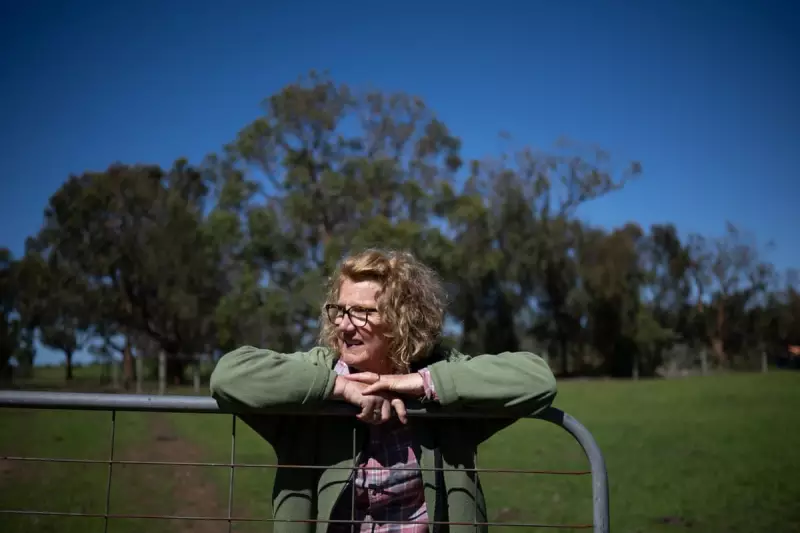
For residents like Sue Jenkins, who moved to her 100-acre farm full-time earlier this year, the connection to nature is paramount. "I love being in nature. The birds, the soil, the pasture, the cows, the beautiful views. The way you can see the weather coming in, the big skies," she describes. The learning curve was steep, involving mastering solar power, rainwater tanks, and land management, but the reward is a profound peace. "It's not for everybody," Jenkins acknowledges. "I think it would drive some people crazy to live in a place like this, but I love it."
This lifestyle attracts unique endeavours. Michael Garwood, for instance, spent a quarter of a million dollars to become the first to successfully import Nigerian dwarf goat embryos into Australia, establishing a dairy operation safe from mainland predators like foxes.
Yet, the community faces an age-old problem. The local primary school has no students, and the median age is 52, fourteen years older than the national average. Lois Airs, now 75, highlights the need for younger families. "What I feel that I can contribute to French Island is to talk to people and encourage them... to continue the island, to keep going the way it is," she says. A new community group is exploring how to help residents age in place.
French Island stands as a compelling paradox: a remote wilderness within sight of a major city, a community fiercely protective of its isolation yet conscious of its need for renewal. It is a place where the rustle of wings over the salt marsh still drowns out the modern world, and where 139 people have chosen a life dictated by tides, sunlight, and the rhythms of the natural world.