Crocodile Attacks Surge in Kenya as Rising Lake Levels Force Predators Closer to Humans
Ng’ikalei Loito was emerging from the warm waters of Lake Turkana on a sunny afternoon when she felt the crushing force of a crocodile's bite on her legs. Clinging desperately to a partially submerged tree as the predator tried to drag her underwater, the 33-year-old mother of five screamed for help while thinking about who would care for her children if she died.
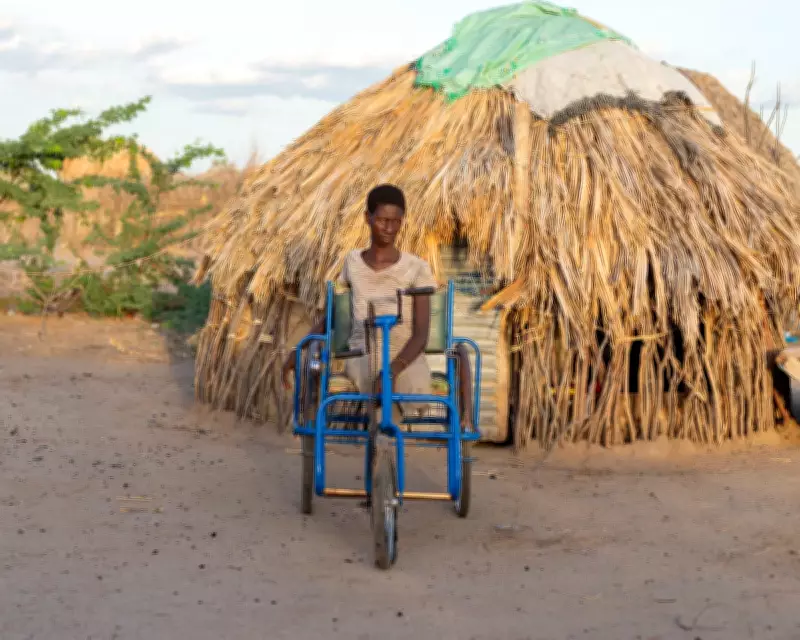
"When a crocodile attacks, it feels like death is certain," Loito recalled in an interview at her home in Kalokol town, where she now relies on a tricycle for mobility.
Villagers eventually scared the crocodile away, but Loito's legs were so badly mangled that doctors had to amputate both limbs the following day. Her story represents a growing crisis around Lake Turkana in northwest Kenya, where seven deaths and 15 injuries from crocodile attacks have been recorded in the past year alone.

Expanding Lake, Shrinking Safety
Lake Turkana, the world's largest permanent desert lake, has expanded by approximately 10% over the past decade according to a 2021 government report. This expansion, driven primarily by increased rainfall linked to climate change and tectonic movements in the Rift Valley, has displaced tens of thousands of people while bringing Nile crocodiles closer to human settlements.
These predators, which can grow up to six meters long and weigh 900 kilograms, have established new nesting and hunting grounds along altered shorelines. Elijah Chege, county warden for Turkana at the Kenya Wildlife Service, explained that traditional fishing practices using log boats further increase community vulnerability.
"We have to teach the community to coexist with these animals," Chege said. "We need to balance conservation and the safety of the community. Because the crocodiles, at the end of the day, have to be there. They are in their habitat."
Life-Altering Encounters
Just across the road from Loito's home, Ng’ispaan Long’olan sells water and charcoal with two crutches nearby. He lost his left leg to a crocodile attack in 2018, just one day after his youngest child was born. During the struggle, Long’olan poked his fingers into the crocodile's eye to force it to release him, but his leg was so badly damaged that fellow fishers had to cut it off using a traditional Turkana wrist knife.
"I was in so much pain and the leg was torn and completely damaged," said the 44-year-old, who now has a metal rod in his right leg.
The human toll extends beyond physical injuries. Ayanae Loong’orio lost her eight-year-old daughter Esther Ikimat in 2024 when a crocodile attacked the child during a school lunch break. A social media video captured the horrifying moment as the animal swam away with the girl's head and hand visible in its mouth.
"My legs failed me," Loong’orio recalled of trying to reach her daughter. "I ended up crawling towards the lakeshore, screaming for help."
Community Responses and Ongoing Risks
The Kenya Wildlife Service conducts awareness campaigns about high-risk areas and crocodile behavior while recruiting local scouts to monitor movements. The agency also relocates problematic crocodiles and, in extreme cases, kills them. Despite these efforts, attacks continue to claim lives and cause permanent disabilities.
Achiro Kephas, referrals and emergency coordinator at Turkana county's health ministry, noted that most victims are fishers, many deaths go unreported, and survivors often face lifelong disabilities. During recent awareness forums, Kephas emphasized the deadly force of crocodile bites and the importance of immediate medical attention.
"When this crocodile bites you, your chances of survival are low," Kephas warned community members while displaying an image of the predator's sharp teeth. "All of us who depend on the lake should try to avoid those behaviours that put us at risk."
Frustrated residents sometimes take matters into their own hands. Last October, people in Kalokok town killed a crocodile they said had been terrorizing the community. However, as Felisters Dapat – who lost her son to a crocodile attack – noted: "Even if people kill the crocodiles, the animals will still reproduce."

Satellite imagery reveals the dramatic expansion of Lake Turkana between 1984 and 2022, with partially submerged palm trees, electric poles, fences, and buildings now visible miles from the original shoreline. As water levels continue to rise, displacing more communities and altering crocodile habitats, the delicate balance between human survival and wildlife conservation becomes increasingly difficult to maintain in this remote region of Kenya.