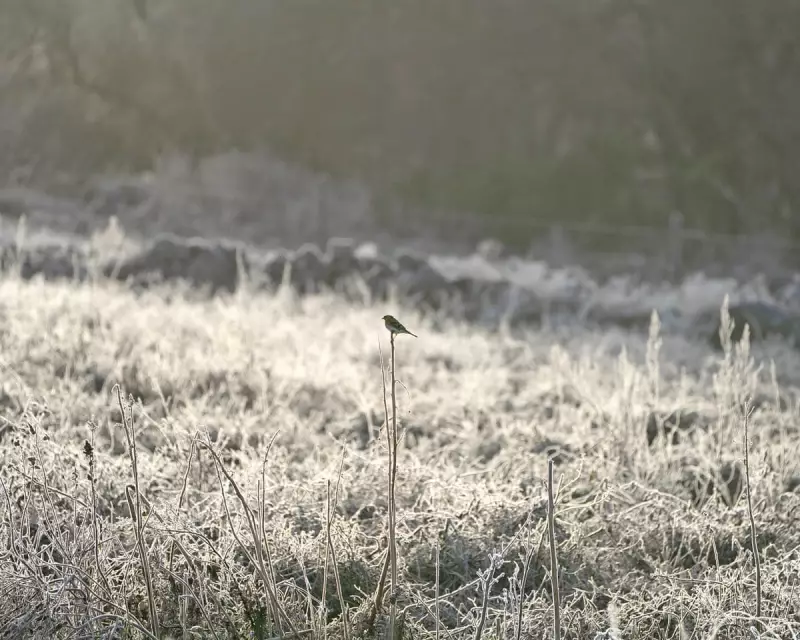
On a bitingly cold morning in the Cairngorms, where the mercury has plunged to a crisp -6C, a remarkable wildlife spectacle is unfolding. In a frost-whitened field within Abernethy Forest, vibrant flocks of finches defy the deep freeze, drawn by a lifeline sown by their human neighbours.
A Community's Lifeline for Wildlife
This vital sanctuary is the work of Speyside Fields for Wildlife, a small, community-run charity. They collaborate with local farmers and crofters to transform spare parcels of land into havens for nature. While some of their sites burst with summer colour from cornflowers and poppies, this particular hill farm field serves a crucial winter purpose.
It has been specifically planted with seed-bearing crops like black oat, barley, millet, and fodder radish to sustain birds and other creatures through the harsh autumn and winter months. On this day, every stalk and seedpod is encased in a thick, glittering layer of hoarfrost, creating a brittle, pale-gold landscape that crunches underfoot.
A Mesmerising Aerial Ballet
The air is alive with movement. A lone chaffinch pecks at a millet head, soon joined by charms of finches swooping down from the surrounding silver birch trees. They disappear into the frosty vegetation, only to erupt again in swirling groups of twenty or thirty. According to a local observer, this field has attracted flocks numbering a thousand birds or more this winter.
The assembly is not just chaffinches. The vibrant flashes of greenfinches and goldfinches add colour, while the sight of wintering bramblings – a relative of the chaffinch with a striking orange breast – offers a special thrill. It’s a powerful reminder of how these often-overlooked birds become a source of wonder when seen in such profusion.
The 'Havoc-burds' of Old Scotland
Suddenly, a new flock materialises: perhaps a hundred linnets. Their coordinated flight brings to mind a term from John Jamieson’s 1867 Dictionary of the Scottish Language: "Havoc-burds". This historical name described the large, mixed flocks of small birds, often of the linnet tribe, that would descend on fields after harvest.
Watching these linnets is mesmerising. They move as one fluid entity, flocking from treetop to field and back again, splitting into smaller squadrons before reuniting on the highest branches of a rowan tree. In the glow of the lowering winter sun, this aerial ballet repeats in an endless, captivating loop – a sight compelling enough to make one stand and watch until their feet go numb with cold.
This scene in Abernethy Forest is a potent testament to the impact of local, collaborative conservation. By creating simple, seed-rich habitats, community initiatives like Speyside Fields for Wildlife are providing essential support for UK bird populations, ensuring that even on the most frozen days, the fields can still pulse with life and joyful activity.