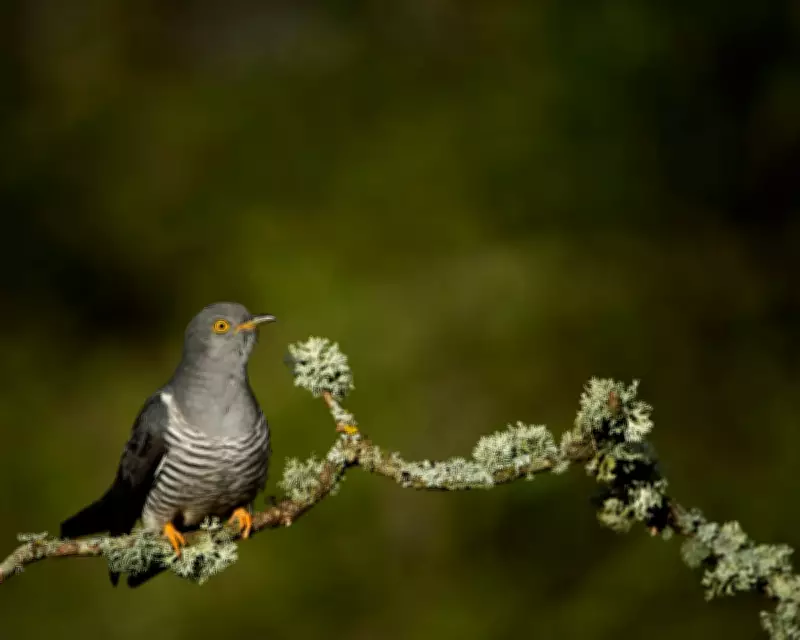
A common cuckoo adult male perched on a lichen-covered branch. Photograph: Ben Andrew/RSPB
Country diary: Charmed once again by the unscrupulous cuckoo
Murlough Nature Reserve, Dundrum, County Down: Its arrival signals the start of summer, and another cycle of its extraordinary breeding method
Sheltered from the Irish Sea by the towering white foredunes of Murlough beach, I follow a trail through the heather and scrub. In the distance, the Mourne mountains slip in and out of view, already charred by this year's wildfires. My attention turns to the season's happier signs: sand martins chittering overhead; the scratchy cries of a whitethroat deep in the gorse; a meadow pipit stuttering into song flight. And now, the chant that clinches summer's arrival.

I follow the cuckoo's call and find him perched in a stunted sycamore. Through binoculars, I meet his orange eye. As he leans into his song, his jaunty tail and drooping wings make a fin for the long torpedo of his body – the ideal form for a life lived on the move.
Despite his hawkish plumage and yellow legs, his bill's nib betrays that he is no raptor – the cuckoo feeds mainly on invertebrates. Still, he is a source of morbid curiosity for the steady stream of small passerines – pipit, stonechat, linnet, willow warbler – that pass through the twigs to get a good look at him. They sense his threat.
Murlough heath and the Mourne Mountains. Photograph: Mary Montague
Brood Parasitism: A Unique Parental Strategy
In the bird world there are many different kinds of parental care and, depending on the species, either sex, or both, may brood and raise a pair's young. However, as a brood parasite, the cuckoo takes the 'neither' option. This equal opportunity form of parental 'selfishness' is a gamble that can be highly productive.
The female cuckoo 'farms' small passerines, like the meadow pipit, by laying up to 20 eggs (one per host nest) across her large territory. If her egg deceives, her chick ejects its 'step-siblings' from the nest, so its hapless foster parents devote themselves solely to raising their enormous changeling. Meanwhile, the biological parents skive off back to Africa.
Possibly I should feel conflicted about the cuckoo but, as he keeps up the fluting metronome of his song, head bobbing with all the mechanical emphasis of the eponymous clock, I find I'm charmed. Note after note. Year after year. Hatched out of abandonment. Fledged in trust. This story of spring is so well known, but that doesn't make it any less extraordinary.
Under the Changing Skies: The Best of the Guardian's Country Diary, 2018-2024, is available now at guardianbookshop.com