Harrow Fly-Tipping Hotspot Sees Only 7 Fines in a Year Despite Daily Dumping
A North London resident has launched a scathing critique of Harrow Council's enforcement efforts at a notorious fly-tipping hotspot in Harrow Weald. Tim Creasey, a local resident, claims that the site on Weighton Road requires clearance of bulky items such as fridges, mattresses, and furniture every couple of days, yet only seven individuals have been fined over the past twelve months. This stark contrast has raised serious questions about the effectiveness of the council's anti-fly-tipping measures.
Council's Broad Enforcement Efforts Versus Local Reality
Harrow Council has publicly committed to a crackdown on illegal dumping, citing the installation of CCTV cameras and the launch of a 'Wall of Shame' campaign to publicly identify offenders caught on camera. According to council data, more than 4,000 Fixed Penalty Notices (FPNs) have been issued across the borough since 2022, with fines reaching up to £1,000 per offence. However, Mr. Creasey argues that this broader statistic masks inadequate action at specific problem locations like Weighton Road.
Speaking at a recent Harrow Council Cabinet meeting on February 19, Mr. Creasey highlighted the discrepancy. "After obtaining the figures from a Freedom of Information request, I understand that there have been zero successful prosecutions over the past month for fly-tipping at Weighton Road," he stated. "Considering that this site gets cleared of bulky items every couple of days—items that must have been transported using a vehicle—how do you consider this to be making a real attempt to address fly-tipping in the area?"

Persistent Problem Despite Surveillance Measures
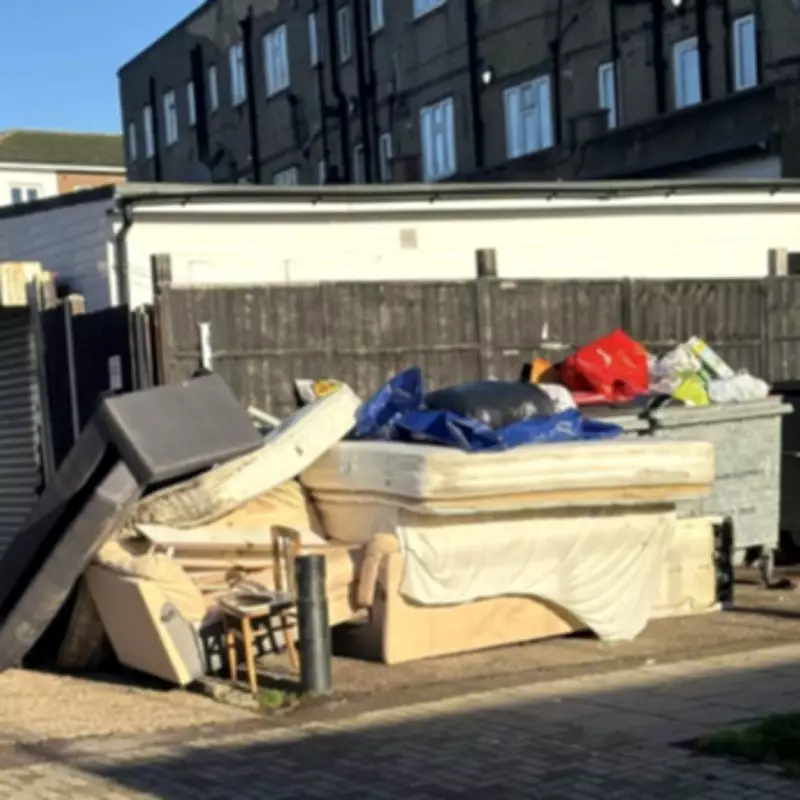
The Weighton Road site has long been plagued by fly-tipping, prompting the installation of a security camera in an effort to deter and catch culprits. In December, Mr. Creasey documented and shared images online showing furniture, including two mattresses, a chair, a chest of drawers, and a sofa, illegally dumped at the location. At the time, the council condemned the incident as "disgusting" and pledged to review CCTV footage to identify those responsible.
However, the council's response to Mr. Creasey's concerns reveals the complexities involved in enforcement. Council Leader Cllr Paul Osborn explained that while cameras have aided in identifying offenders, prosecuting fly-tipping cases is "more complicated than it seems." He emphasized the need for strong evidence that proves an offence beyond reasonable doubt to take formal action.
Challenges in Prosecution and Broader Strategy
Cllr Osborn detailed the obstacles faced by enforcement teams. "The trouble is, sometimes people either don't use the vehicles where the camera can catch them, or they take the number plates off the vehicle or use duplicate plates," he said. "In some cases, I've seen video footage where people have carried some quite heavy items for some distance and then dumped them in a particular place." He added that enforcement alone is not always a strong deterrent, which is why the council also focuses on education, prevention, and addressing related issues like nuisance vehicles and antisocial behavior.
Despite the local frustrations, Cllr Osborn pointed to a broader trend of declining fly-tipping across the borough, suggesting that the council's multifaceted approach is making a difference. "Fly-tipping across the borough is continuing to fall, showing that our wider approach is continuing to make a difference," he asserted. "We remain committed to improving the situation and will be using every available tool to make sure we enforce as effectively as we can."
Nevertheless, Mr. Creasey remains unconvinced, questioning why it isn't "just as simple" as using CCTV footage to cross-check vehicle registrations with appearances for prosecution. The ongoing dispute underscores the tension between resident expectations for swift action and the practical challenges of environmental enforcement in urban areas.