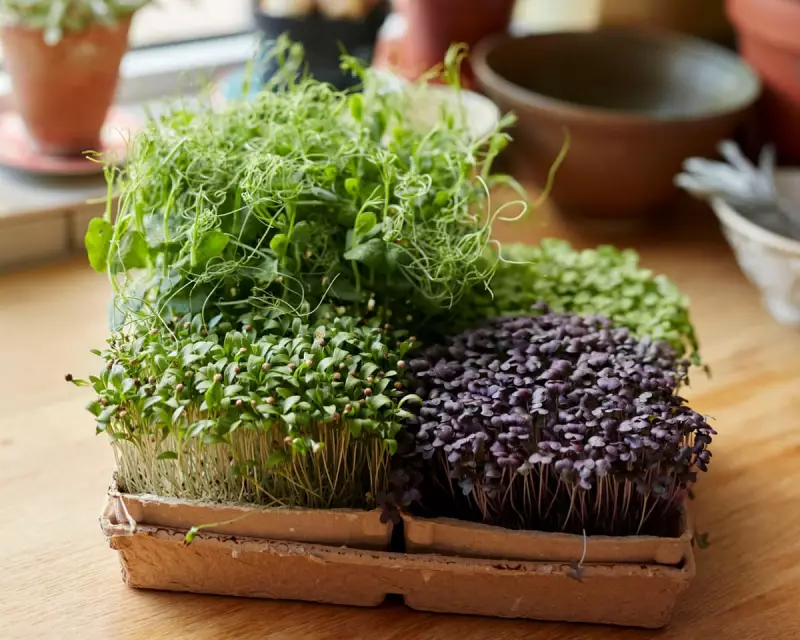
While January often paints a picture of barren gardens and dormant life across the UK, a vibrant and flavourful gardening revolution is possible right on your windowsill. The secret lies in microgreens, a simple and space-efficient method for cultivating edible plants indoors, offering an unseasonable burst of fresh taste to winter meals.
What Exactly Are Microgreens?
Microgreens are not a specific plant species but a cultivation technique. They involve sowing seeds densely in containers and harvesting the young seedlings whole, stem and leaf, well before the plant reaches maturity. This approach requires minimal space, effort, and crucially for the darker months, can thrive indoors with limited natural light. The entire plant is edible, delivering a concentrated punch of flavour.
A wide variety of plants can be grown this way. Popular choices include salad leaves like lettuce and sorrel, along with herbs such as basil, coriander, dill, and fennel. The brassica family is also excellent, offering everything from spicy rocket and mustard greens to milder broccoli and kale shoots. For more substantial textures and nutty flavours, nasturtium and sunflower seeds produce juicy shoots, while peas yield plump shoots adorned with delicate leaves and tendrils. Adventurous growers can also try amaranth, carrot tops, or perilla.

How to Grow Your Own Indoor Microgreens
Getting started is remarkably straightforward. You will need a shallow container; recycled fruit punnets are perfectly suitable. Fill your chosen tray about two-thirds full with compost, tamping it down gently to create a firm seedbed. For larger seeds like peas or sunflowers, a slightly deeper layer is beneficial.
Next, scatter a generous, single layer of seeds evenly across the compost's surface. Cover them with a very fine layer of additional compost, aiming for a depth no greater than the size of the seed itself. For tiny seeds like amaranth, this might just be a light dusting. Water the seeds carefully using a watering can with a fine rose attachment to avoid disturbing your sowing work. An alternative method is to cover the seeds with a damp piece of kitchen paper to aid germination.
Place the seed trays in a bright spot, such as a south-facing windowsill. Germination and initial growth typically take a couple of weeks. Since the plants are harvested young, low winter light levels are less of a concern compared to growing full-sized plants, though grow lights can be used if available. Even slightly leggy seedlings are perfectly good to eat.
Harvesting Your Flavourful Crop
When your microgreens have developed their first true leaves, they are ready to harvest. Use a very sharp pair of scissors or snips to cut the stems cleanly just above the compost line. This prevents snagging and dragging soil onto your harvest, ensuring your winter salads or sandwiches are compost-free.
Most microgreen varieties, including herbs and brassicas, will provide a single, bountiful harvest. However, plants like peas and nasturtiums can offer a second or even third flush of growth if you selectively pick the tips and leaves instead of cutting the whole plant down at the base.
This indoor gardening method proves that you don't need a large garden or perfect weather to enjoy homegrown produce. By embracing microgreens, UK residents can add a fresh, nutritious, and incredibly tasty element to their cooking throughout the coldest months of the year.