Climate Campaigners Urge EU to Maintain Green Agenda Amid Economic Summit
European Union leaders have been cautioned against rolling back environmental policies ahead of a crucial summit focused on reviving the bloc's struggling economy. Campaigners from the Climate Action Network, a pan-European coalition of NGOs, have issued a stark warning that industrial challenges cannot be resolved by diluting climate commitments.
Industrial Pressures Versus Environmental Commitments
The campaign group emphasised that European industry faces significant pressures from multiple directions, including high energy costs, ageing infrastructure, global overcapacity, and delayed investment decisions. However, they argue that these complex issues require strategic solutions rather than regulatory retreat.
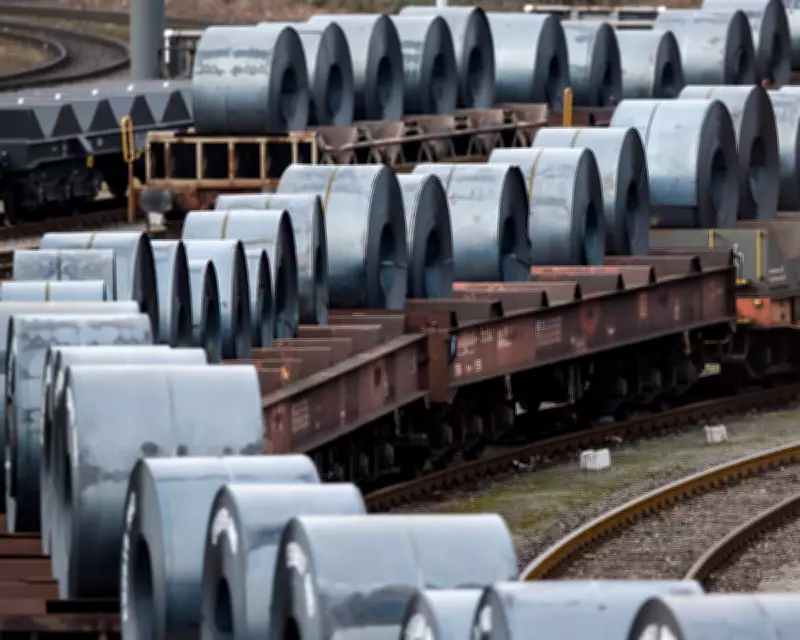
In an open letter to EU leadership, the Climate Action Network stated clearly: "Deregulation is not an industrial strategy." The organisation contends that problems affecting energy-intensive sectors such as steel, cement, and chemicals primarily stem from fossil fuel energy prices and global market dynamics, rather than environmental regulations.

Summit Focus on Economic Revival
EU leaders will convene at a chateau in eastern Belgium this Thursday to address what European Council president António Costa has described as the "urgent strategic imperative" of strengthening the single market. This gathering follows a meeting between European Commission president Ursula von der Leyen and industry leaders in Antwerp, continuing discussions that began at a 2024 summit in Flanders.
During that previous summit, business leaders called for a comprehensive European industrial deal to complement the EU's green agenda, alongside "corrective measures" on existing regulations. Since then, the commission has proposed ten omnibus measures aimed at loosening regulations across various economic sectors, including automotive, digital, defence, chemicals, and agriculture.
Carbon Pricing Concerns
Environmental campaigners express particular concern that the deregulation agenda could undermine the EU's carbon pricing mechanism and other policies supporting the energy transition. Their letter warns: "Without a strong and predictable carbon price, the business case for clean steel, green chemicals, circular materials and electrified industrial production collapses – and with it, the effectiveness of future industrial policy tools."
This intervention coincides with a thinktank report revealing Europe's slow progress in revitalising its economy. The European Policy Innovation Council found that only 15% of recommendations from Mario Draghi's landmark 2024 report have been implemented, with nearly two-thirds either still in progress or not addressed at all.
Internal Barriers to Growth
The centrist Renew group in the European Parliament has responded to the EPIC report by lamenting the sluggish implementation of Draghi's agenda. They highlight excessive internal hurdles within the EU single market, citing International Monetary Fund research indicating that EU regulatory barriers equate to a 44% tariff on goods and 110% on services.
The group's statement noted: "While we are rightly horrified by the prospects of new US tariffs, we seem to be strangely complacent about the 'internal tariffs' we self-inflict. We are in effect sanctioning our own economy."
Proposed Solutions and Future Directions
In response to Europe's economic stagnation, the European Commission plans to publish an Industrial Accelerator Act in coming weeks. This legislation is expected to include proposals for boosting clean technology and may introduce a "buy European" preference in strategic sectors.
The debate unfolds against a backdrop of broader economic uncertainty, with European Central Bank president Christine Lagarde recently describing the eurozone economy as "resilient in a challenging environment" while acknowledging an "uncertain" outlook. The EU economy has faced additional pressure from international trade tensions, particularly Donald Trump's tariff policies.

As EU leaders prepare for their crucial summit, the fundamental question remains whether economic revival can be achieved while maintaining Europe's ambitious environmental commitments, or whether these two priorities will be positioned as competing objectives requiring difficult trade-offs.