
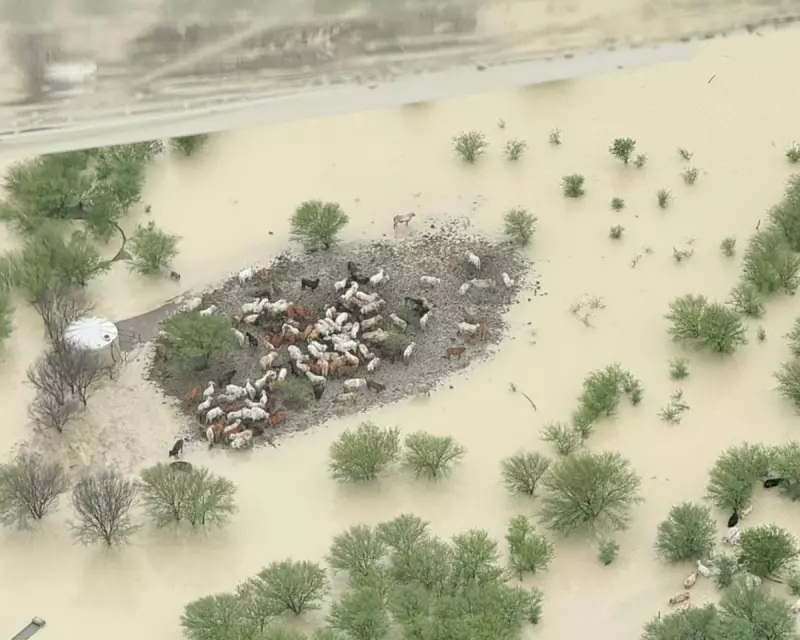
A devastating and paradoxical scene is unfolding across the flood-ravaged plains of north-west Queensland, where tens of thousands of cattle are slowly starving to death, encircled by fresh water and green grass.
A Baffling and Heartbreaking Stand-Off
Stranded on sodden islands of high ground, the livestock are refusing to wade through the surrounding floodwaters to reach sustenance. Grazier Angus Propsting, whose station is near Richmond, describes the situation as "completely absurd." He confirms the cattle are perishing from thirst despite being surrounded by fresh rainwater. The Brahman and Droughtmaster breeds on his property appear too fearful to enter the water or drink from it, a behaviour that has left experienced cattlemen baffled.
"They are not leaving their little islands, they are just starving themselves to death," said the 31-year-old. "It is like they have given up – or they are too fearful to leave." The water is not deep, and there are no crocodiles in the area to pose a threat, making the animals' refusal even more perplexing.
Echoes of a Previous Disaster
This tragic phenomenon is not without precedent. Propsting and others note the exact same behaviour occurred during the catastrophic floods of 2019. In that event, half a million head of cattle and sheep were lost across 11.4 million hectares of grazing country. While the current flooding is considered more isolated, early estimates suggest significant losses.
Richmond Shire Mayor, John Wharton, believes conservative estimates of 16,000 dead cattle are far too low. "I would hazard a guess, probably 100,000," he stated, adding that some large properties in the Gulf region could lose that many alone. He warned that the full scale of devastation may not be known for up to five months, as fences have been washed away and cattle swept onto different properties.
Exhaustion and a Looming Threat
As blue skies return, graziers are beginning the grim task of assessing losses and trying to save remaining stock. Many animals are now so weak and traumatised they cannot be mustered by helicopter and must be coaxed on foot or using buggies. Guy Keats, who runs Beefmaster cattle on the flooded black soil plains near Julia Creek, described the situation as "fairly exhausting and sickening."
He reported significant losses, especially of calves, and admitted the emotional toll is severe. "I’m doing what I can," Keats said. "Flying around and shooting them … I’m just about at the end of it, you know?"
The physical challenge is immense for both man and beast. Grazier Cody Rogers described the black soil mud as a debilitating slurry. "The best way I can explain it is: go and put a pair of jeans on and tape up the bottom and fill it with sand," he said, illustrating the exhausting conditions the cattle endure.
Despite the temporary respite, a new threat gathers. The Bureau of Meteorology forecasts a tropical low moving towards the coast, with the potential to form a cyclone and bring heavy rain inland over the weekend. If this hits the already saturated catchments, graziers fear a repeat of the 2019 disaster.
Beyond the livestock crisis, Mayor Wharton highlighted the severe impact on the community. "People are very mentally stressed and traumatised," he said. As the waters recede and reveal more carcasses, the psychological toll on those who work the land continues to grow, leaving many, in Propsting's words, "a bit mute and confused."



