Ancient Scottish Rocks Challenge Snowball Earth Theory with Climate Awakening
For decades, scientists believed that during the "snowball Earth" period approximately 700 million years ago, our planet's climate completely shut down. The prevailing theory suggested Earth was entirely encased in ice, with seasonal variations like spring, summer, autumn, and winter ceasing to exist. However, groundbreaking research from the University of Southampton has now overturned this long-standing assumption, revealing surprising evidence of climate activity during this supposed deep freeze.
Exquisite Geological Records from Remote Islands
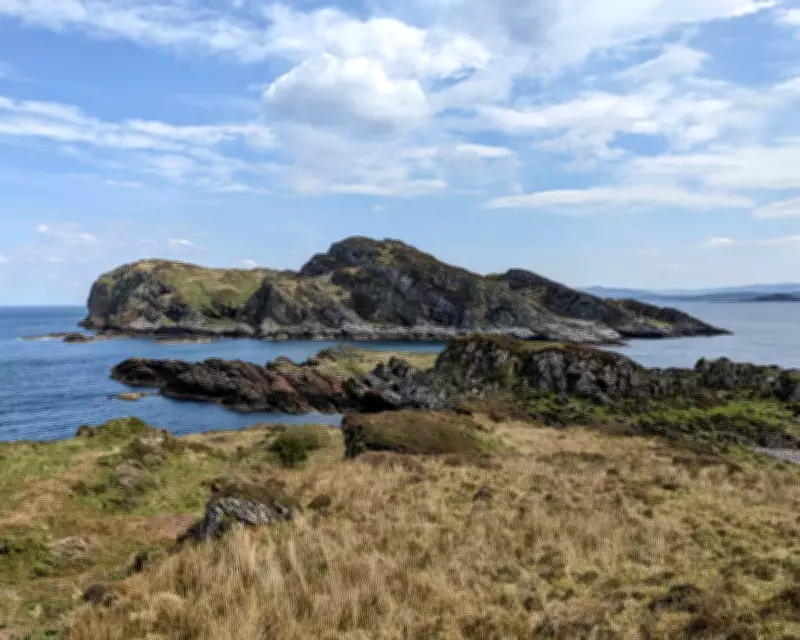
Professor Thomas Gernon and researcher Chloe Griffin, along with their colleagues, conducted an extensive study of ancient rocks from the remote Garvellach islands off Scotland's west coast. These remarkably well-preserved geological formations date back to the snowball Earth period and have provided unprecedented insights into Earth's ancient climate patterns.
Under microscopic examination, the researchers discovered 2,600 exquisitely preserved sedimentary layers, each representing a single year of deposition. These thin, repeating rock layers, known as varves, recorded year-by-year climate changes with astonishing clarity. Variations in layer thickness revealed climate cycles remarkably similar to those observed today, including solar cycles and El Niño oscillations.

Rare Climate Interludes During Global Freeze
The findings, published in the prestigious journal Earth and Planetary Science Letters, suggest that while Earth was predominantly frozen during the snowball period, there were rare intervals when the climate briefly awakened. The Scottish rocks captured evidence of a "slushy interlude" lasting several thousand years, during which a small fraction of ocean thawed and climate systems temporarily reactivated.
This discovery represents more than just a geological curiosity – it fundamentally challenges our understanding of Earth's most extreme climate period. The research indicates that even during what was thought to be a complete climate shutdown, Earth's systems maintained some level of activity and responsiveness.
Implications for Modern Climate Understanding
The significance of these findings extends far beyond historical geology. By demonstrating how Earth's climate system responded to extreme conditions in the distant past, this research provides crucial insights into climate sensitivity and resilience. The evidence from Scottish rocks offers important pointers about how our planet might respond to major climate disturbances in the future.
These geological records serve as a natural laboratory for understanding climate dynamics under extreme conditions. The discovery that climate cycles persisted even during Earth's deepest freeze suggests that our planet's climate system possesses remarkable complexity and adaptability that scientists are only beginning to comprehend.
The University of Southampton team's work continues to analyze these ancient Scottish formations, with further research planned to explore additional climate patterns and their implications for both historical geology and contemporary climate science. This discovery opens new avenues for understanding Earth's climate history and its potential responses to future environmental challenges.