
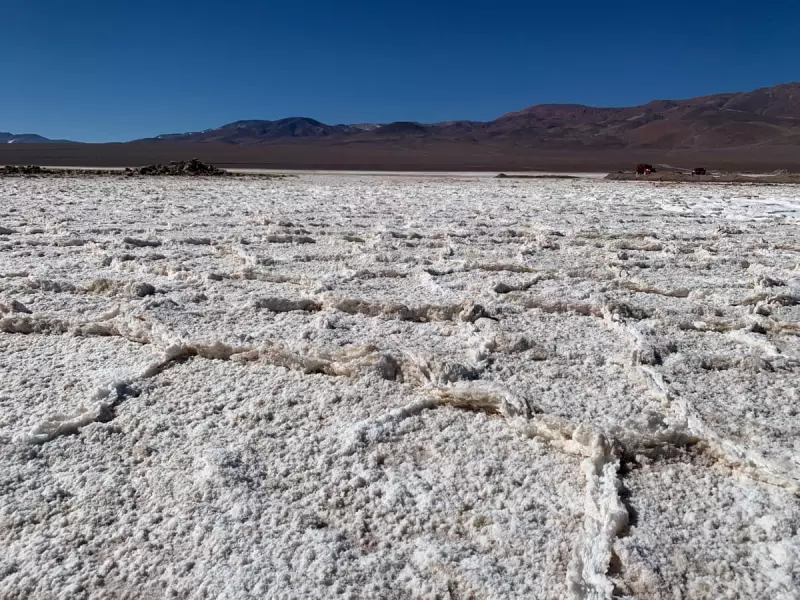
Plans by mining giant Rio Tinto to extract lithium from a pristine Chilean salt flat are meeting fierce resistance from local Indigenous communities, who warn the project threatens their water supply and a fragile, sacred ecosystem.
‘The Source of All Life’ Under Threat
High in the arid mountains of Chile's Atacama region, the Salar de Maricunga salt flat sits at 3,760 metres above sea level. For the Colla Indigenous people, this landscape is sacred. "The Maricunga salt flat is the source of all life here," explains Lesley Muñoz Rivera, secretary of the Copiapó Indigenous community. "Hydrological studies suggest it is the source of our water."
Now, the British-Australian multinational Rio Tinto has signed a joint venture with Chile's state-owned copper miner, Codelco, to exploit the area for lithium. This critical mineral, dubbed 'white gold', is essential for manufacturing electric vehicle batteries, smartphones, and renewable energy storage. However, its extraction is notoriously water-intensive.
Miriam Rivera Bordones, who tends goats and crops in the desert foothills, fears for her community's survival. "We could be left with no water," she says. "How will we plant crops or feed our animals? It will make it very hard to survive here."
A Fragile Ecosystem at Risk
All commercial lithium production in Chile currently uses a method that evaporates water in vast pools, losing between 85% and 95% of the liquid in the process. Rio Tinto states it is considering Direct Lithium Extraction (DLE) for its early-stage projects with Codelco and Enami, another state firm. This technique aims to extract lithium more quickly and reinject the brine, potentially conserving water.
Yet scientists warn that even treated brine could be catastrophic for Maricunga's unique environment. Microbiologist Cristina Dorador, who has studied Chile's salt flats for decades, calls Maricunga a "hotspot of unique flora and fauna," home to 53 animal species including Andean flamingos and prehistoric microorganisms. "The reinjected brine could have traces of chemical compounds... that could affect the whole ecosystem," she cautions.
Part of the salt flat lies within the protected Nevado Tres Cruces National Park. Dorador stresses that the northern section targeted for mining is hydrologically connected to the protected southern area, making separation unrealistic.
Indigenous Rights and a Looming Political Shift
The conflict is unfolding against a backdrop of historical injustice. Many Colla people were displaced during the Pinochet dictatorship and have spent decades reclaiming ancestral lands. Communities like Copiapó are now rebuilding, with plans for sustainable, Indigenous-run tourism.
They allege they have been sidelined in the decision-making process. Although six communities were invited to a consultation over the Maricunga project, Lesley Muñoz Rivera dismisses it as "window-dressing." "We are completely opposed to lithium extraction, but there was no opportunity to say that," she claims. The National Council of the Colla People says only 10% of the local Indigenous population has been consulted and has launched a legal challenge.
The situation may intensify under Chile's incoming ultra-conservative president, José Antonio Kast, who takes office on 11 March 2026. Kast advocates for faster, private-sector-led lithium exploitation and has announced measures to expedite permits, which ecologists fear will weaken environmental protections.
Lucio Cuenca of the Observatory of Latin American Environmental Conflicts argues that the global north's green transition is exploiting the global south. "Industrialised countries are not changing their consumption habits; instead, they are vastly increasing the scale and intensity of extraction," he says. "This is deepening the impact on ecosystems, water systems, land, and the health and livelihoods of people in Chile."
Rio Tinto and Codelco maintain they are committed to responsible practices and dialogue. Codelco states it values "respect for ancestral territories and Indigenous rights," while Rio Tinto emphasises its aim to "minimise fresh water consumption" and build "strong, respectful and enduring partnerships with local communities." For the Colla people watching over the sacred Maricunga, the promise of 'white gold' risks turning their life-giving source to dust.



