
Scientists Make Breakthrough in Solving Mystery of Volcanic Lightning
Researchers have achieved a significant step forward in understanding volcanic lightning, one of the most breathtaking atmospheric phenomena observed during eruptions. This spectacular display, often seen dancing among clouds of smoke and ash, has long puzzled scientists due to its extreme intensity. For instance, the 2022 Hunga Tonga-Hunga Ha‘apai eruption in the Tongan archipelago produced more than 2,600 lightning flashes per minute, reaching heights of up to 19 miles (31 kilometers) above sea level.
How Volcanic Plumes Become Electrically Charged
In storm clouds, electrical charging occurs through collisions between ice crystals rising in updraughts and falling graupel, or soft hail, with ice gaining positive charge and hail negative charge. However, volcanic plumes are dry and consist primarily of ash and rock fragments, raising the question of how such particles could accumulate charge. Typically, particles made from the same rocky material should not become charged during collisions.
New research published in the journal Nature by the Institute of Science and Technology Austria has uncovered the secret: a fine coating of carbon-rich molecules on silica particles. Experiments showed that perfectly clean silica particles did not tend to pick up charge, but when coated with carbon, charge transfer occurred during collisions. Remarkably, this effect can be produced simply by heating silica, as normal air contains enough carbon-containing molecules to create surface contamination.
Conditions for Spectacular Lightning Shows
The heat and updraught of a volcanic plume create ideal conditions for this charging process, leading to the dramatic lightning displays witnessed during eruptions. This breakthrough not only solves a longstanding mystery but also enhances our understanding of atmospheric physics and volcanic activity. The findings could have implications for predicting and monitoring volcanic hazards, as lightning patterns may provide clues about eruption dynamics.
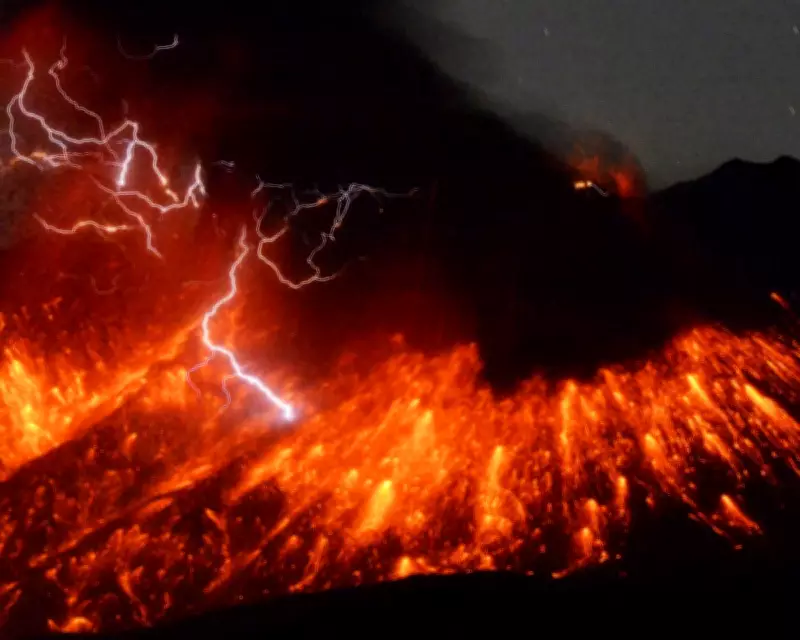
Volcanic lightning, such as that captured during a 2016 eruption of Mount Sakurajima in south-west Japan, continues to captivate observers and scientists alike. With this new insight, researchers are better equipped to study these natural wonders and their broader environmental impacts.



