
President Donald Trump has formally withdrawn the United States from the cornerstone United Nations climate treaty and its scientific panel, a move UN climate chief Simon Stiell branded a "colossal own goal" that will leave America less secure and prosperous.
An Isolated America and a Surging Global Green Economy
The decision to exit the UN Framework Convention on Climate Change (UNFCCC) and the Intergovernmental Panel on Climate Change (IPCC) severs America's formal seat at global climate negotiations. However, analysts argue it will do little to slow the worldwide transition to clean energy, which is now a major economic engine. Global investment in low-carbon energy currently dwarfs fossil fuel spending by two to one, reaching over $2 trillion annually.
"It will mean less affordable energy, food, transport and insurance for American households and businesses," warned Stiell. He pointed to the relentless fall in renewable energy costs and the escalating annual damage from climate-driven disasters to US infrastructure and agriculture.
A Familiar Pattern of US Intransigence
For international observers, the US retreat is a recurring theme. The world persevered with climate action during previous periods of American obstruction, from the delayed ratification of the Kyoto Protocol under Bill Clinton to the obstructive tactics during George W. Bush's presidency. Trump's first-term withdrawal from the Paris Agreement failed to trigger a domino effect, and a similar response is anticipated now.
Mohamed Adow of Power Shift Africa stated, "The climate movement is bigger than any one nation." He emphasised that African and Global South nations would continue to advocate for climate justice and clean energy development.
The economic momentum appears unstoppable. Renewable energy accounted for over 90% of new power capacity growth last year, while electric vehicles now represent a fifth of global new car sales. China and India both generate more than half their power from low-carbon sources, with China's monthly exports of green goods sometimes exceeding $20 billion.
Legal Uncertainties and Lasting Consequences
Trump's action, initiated via presidential memo to cease funding and participation "to the extent permitted by law," raises complex legal questions. It remains unclear whether a president can unilaterally exit a treaty ratified 92-0 by the Senate in 1992. Furthermore, should a future administration seek to rejoin, it might require a two-thirds Senate vote, potentially making the US absence permanent.
The immediate impact is diplomatic isolation. The absence of an official US delegation at last year's COP30 in Brazil will become the standard, sidelining American influence. Former US Secretary of State John Kerry described the move as a "self-inflicted wound" and a "gift to China."
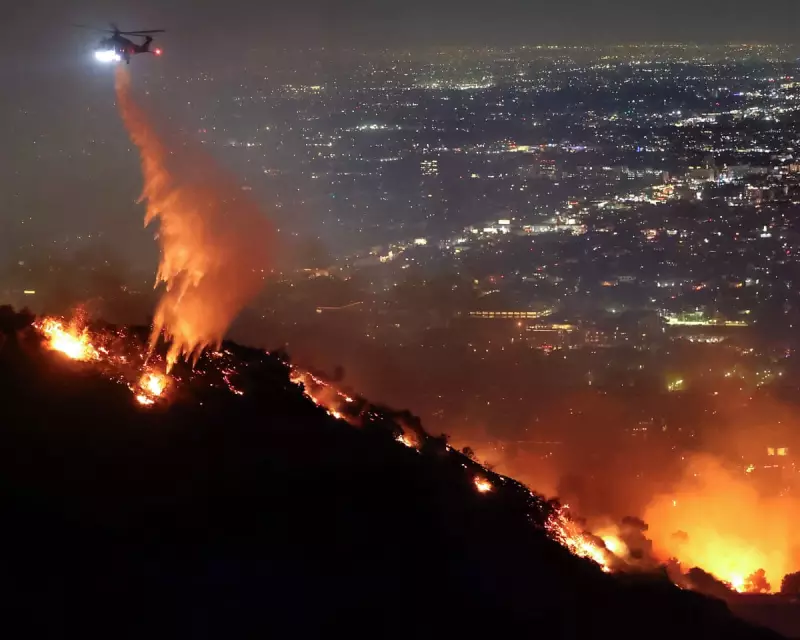
Meanwhile, the climate crisis continues to exact a heavy toll within US borders. Wildfires in California in January 2025 forced over 200,000 people to evacuate. Farmers battle pests and extreme weather, homes become uninsurable in high-risk areas, and extreme weather events cost the nation at least $115 billion last year. As former IPCC vice-chair Jean-Pascal van Ypersele noted, even Trump's Mar-a-Lago estate in Florida is highly vulnerable to sea-level rise.
While Trump cannot reverse global economic and scientific realities, his decision risks leaving the US behind in the race for the technologies of the 21st century, even as its citizens face the escalating costs of climate change.



