
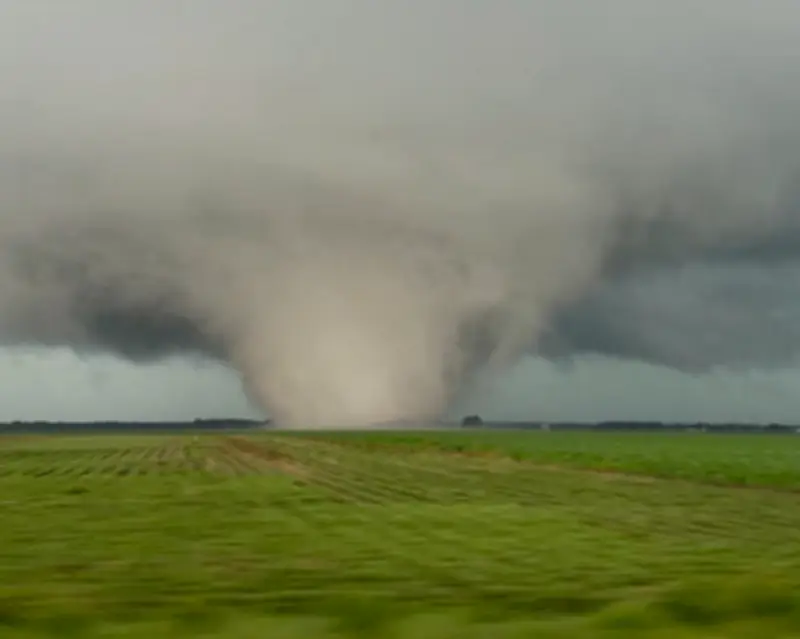
A devastating outbreak of tornadoes tore through the Midwest on Friday, leaving a trail of destruction across several states, even as a dangerous heat wave gripped the northeastern United States, underscoring the stark contrast in extreme weather events affecting the country.
Midwest Tornado Outbreak
The tornadoes, which touched down in parts of Illinois, Indiana, Ohio, and Michigan, caused significant damage to homes, businesses, and infrastructure. At least a dozen tornadoes were reported, with some packing winds exceeding 150 mph. Emergency crews are conducting search and rescue operations amid debris-strewn neighborhoods.
In Illinois, a tornado struck the town of Peoria, leveling several blocks and injuring dozens. Governor JB Pritzker declared a state of emergency, mobilizing the National Guard to assist with recovery efforts. Similar declarations were made in Indiana and Ohio, where officials warned of potential casualties as assessments continued.
The National Weather Service (NWS) issued multiple tornado warnings throughout the day, urging residents to seek shelter. Power outages affected hundreds of thousands, and many roads were impassable due to fallen trees and power lines.
Extreme Heat in the Northeast
Meanwhile, the Northeast was engulfed in an unprecedented heat wave, with temperatures soaring past 100°F (38°C) in major cities like New York, Boston, and Philadelphia. The NWS issued excessive heat warnings, cautioning that the combination of high temperatures and humidity posed life-threatening risks.
New York City opened cooling centers and urged residents to stay hydrated and check on vulnerable neighbors. In Boston, officials canceled outdoor events and extended pool hours. The heat wave is expected to persist through the weekend, straining power grids as air conditioning use surges.
Climate scientists linked both events to broader patterns of climate change, noting that warmer temperatures can intensify both tornado activity and heat waves. “We are seeing more extreme weather events across the country,” said Dr. Emily Johnson, a meteorologist at the University of Michigan. “The contrast between the Midwest tornadoes and the Northeast heat wave is a stark reminder of the challenges ahead.”
Response and Recovery
Federal and state agencies are coordinating disaster response for the Midwest. The Federal Emergency Management Agency (FEMA) has deployed teams to assess damage and provide aid. In the Northeast, health officials are monitoring heat-related illnesses and urging caution.
Residents in affected areas are advised to follow local emergency instructions and stay informed through official channels. As the nation grapples with these dual disasters, the focus remains on saving lives and beginning the long process of recovery.



