
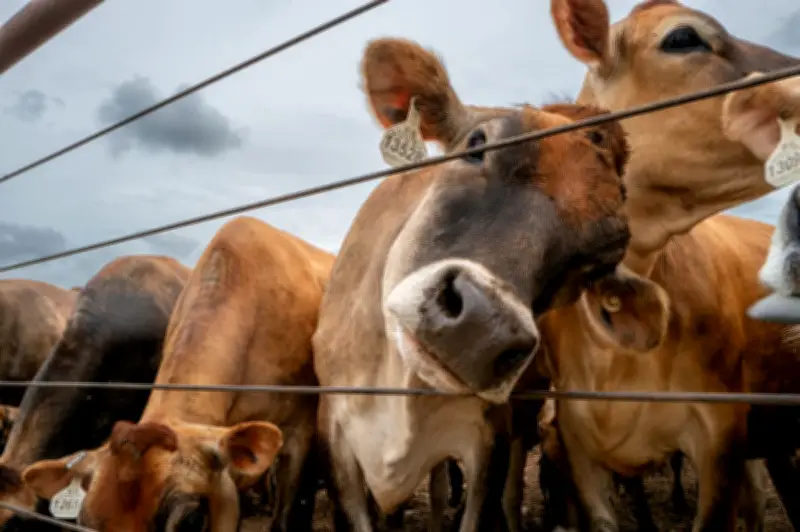
Conservationists using cameras in remote Central American forests to monitor illegal cattle movement have discovered a new threat: wildlife rapidly infected with the new world screwworm. This parasitic fly has become endemic in wildlife, signaling a potential spread into the US and new challenges for eradication, experts warn.
Wildlife Infestation Discovered
Jeremy Radachowsky, director of the Mesoamerica and Caribbean program at the Wildlife Conservation Society, explained that cameras captured jaguars, pumas, tapirs, deer, white-lipped peccaries, and porcupines with unmistakable screwworm wounds. Many of these mammals shared water sources with illegally moved cattle that lacked health checks. "We see infestations in the deepest parts of the interiors of the forest, so now it’s become endemic in wildlife, far from the cattle infestations," Radachowsky said.
Screwworm Detected in US Livestock
In the US, screwworm has been detected in 34 animals, mostly in Texas, with one case in New Mexico. So far, only livestock and pets are affected, with no wildlife detections. The US is currently dropping 100 million sterile flies in the southwest and Mexico to slow the fly's northward movement. However, experts say 500 million sterile flies are needed for eradication. "What we lack are sufficient flies in order to start pushing the population back south," said Phillip Kaufman, professor and head of entomology at Texas A&M University.
Expanding Sterile Fly Production
Officials are rushing to expand sterile fly breeding capacity. A facility opened in Mexico in late June, and another in Texas is planned for late 2027. Sterile flies are irradiated so males cannot fertilize eggs, causing population decline. New innovations, such as raising only sterile male flies or designing better bait traps, are being explored but require time to develop. "We have to have things that work," Kaufman said. "We can’t stop doing things we know work in order to try things that don’t have any data to support."
Root Cause: Illegal Cattle Trafficking
Radachowsky emphasized that current efforts focus on the fly itself, not the underlying cause—illegal cattle trafficking. "If you’re only using sterile fly technique and you have other factors that are moving beyond your efforts to blanket those areas with sterile flies, you’re never going to have the capacity to clear huge areas," he said. The livestock industry has changed significantly since screwworm was eradicated from the US in 1966. "In the 60s, we didn’t have this high density of cattle like we do now. The human population and cattle population is just incredibly different, and the [illicit] cattle movements didn’t exist before," Radachowsky added.
Rapid Northward Spread
The screwworm entered the Darién Gap in 2022 and moved north through Central America, covering thousands of kilometers in four to five months. "It basically shot northward through Central America at the speed of a truck, and exactly along those illegal cattle-trafficking routes that we had already documented," Radachowsky said. Illegal animal movement is the primary driver, as wildlife do not migrate long distances in the region. "When you see it jump 50 or 100 miles, that wasn’t an adult fly flying that far. They don’t do that. It was people," Kaufman said.
Challenges in Research and Response
In the US, screwworm is classified as a foreign animal disease pest, restricting research. "We were not permitted to have the fly in research facilities in the US for the last 50 years, because it’s such a dangerous organism," Kaufman said. Scientists lack knowledge on which odors attract the fly, hindering bait trap development. The US Department of Agriculture has started funding such research.
Conservationists are "extremely worried" about infectious disease transmission beyond screwworm, including tuberculosis, brucellosis, hoof and mouth disease, and bird flu. "It frightens me that we’re not learning the main lesson here," Radachowsky said. More disease monitoring is needed to examine wildlife populations in the Americas. "There’s a lot of wildlife that’s probably disappearing without anybody ever having any evidence of it. It’s guaranteed that we’re just scratching the surface."



