
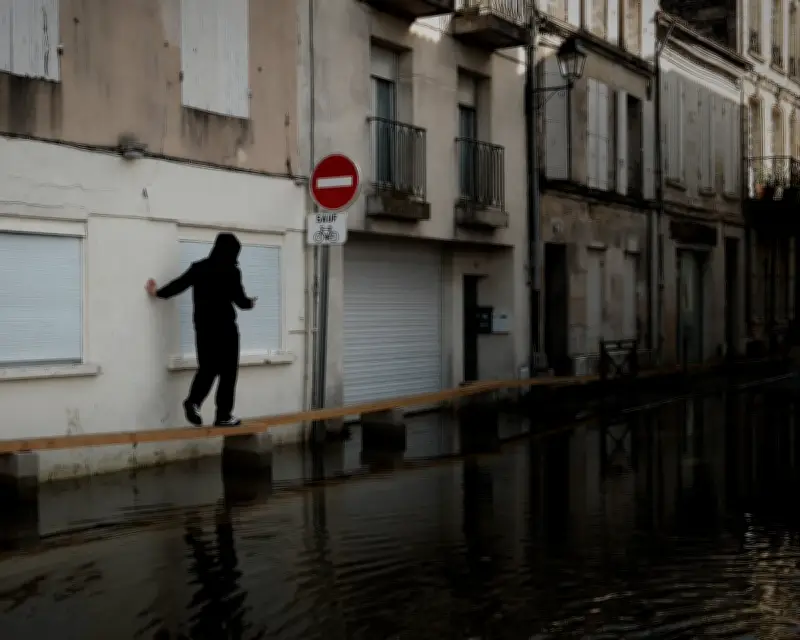
Rising temperatures may trigger a dangerous increase in "hydroclimatic whiplash" in rivers, making traditional flood and drought planning insufficient, according to a new study.
What Is Hydroclimatic Whiplash?
As the climate crisis worsens, rivers will experience increasingly rapid transitions between heavy downpours and long dry spells. This phenomenon, called hydroclimatic whiplash, occurs because a warmer atmosphere holds more moisture, intensifying rainfall extremes.
Flash Flooding Risks
Sudden swings from dry to wet conditions may increase flash flooding risks. Intense rainfall on dry, hardened soil cannot infiltrate the ground, leading to rapid runoff, local flooding, water quality deterioration, and soil erosion that flushes pollutants into rivers.
Drought Planning Challenges
Wet-to-dry shifts can make drought planning harder, as preceding wet conditions may create a false sense of security before a rapid move into drought.
Study Methodology and Findings
Published in Earth's Future, the study used climate projections and a hydrological model to simulate changes to 698 UK river catchments under 2°C and 4°C warming scenarios. Hydroclimatic whiplash was defined as monthly riverflow moving from unusually low to unusually high flows, or the reverse.
Lead author Dr. Yi He from the University of East Anglia noted that the UK is already experiencing rapid dry-to-wet and wet-to-dry shifts, making whiplash a significant concern.
The modelling found that under 2°C and 4°C warming, widespread increases in both types of whiplash events are expected. In some catchments, the number of events could rise from about four over a 30-year period (1981-2010 baseline) to up to nine under 4°C warming.
Regional Variations
For dry-to-wet whiplash, the greatest increases are projected in south Wales, Northern Ireland, northern and western England, and parts of south-east England.
Implications for Water Management
Dr. He said these rapid shifts will make water management increasingly difficult, putting pressure on flood defences and drought-response systems simultaneously. "As warming increases, traditional approaches to flood and drought planning may no longer be enough. We need to plan for sequences of extremes, not just a single event," she said.
The study authors emphasized the need for regionally tailored adaptation plans, including enhanced flood-risk management and greater capacity to store water during wetter periods.
Global Relevance
Dr. He noted that the UK modelling serves as an important test case for temperate regions worldwide, offering insights into how rising temperatures could alter river flows, flood and drought risks globally.



