
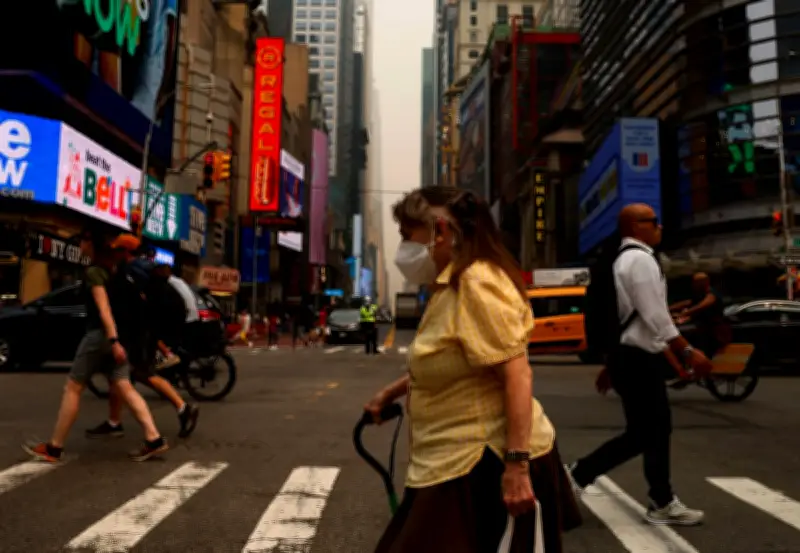
New York City experienced hazardous air quality on Thursday as smoke from Canadian wildfires drifted south, blanketing the city in a thick haze and prompting health warnings. Mayor Zohran Mamdani urged residents to take precautions, including limiting time outdoors and avoiding strenuous activity.
Air quality alert and health warnings
The National Weather Service issued an air-quality alert as pollution levels soared, with smoke from raging wildfires in Canada reaching New York City and extending into the Atlantic. The city's office of emergency management advised New Yorkers to avoid being outside for more than an hour and to listen to their bodies if they experienced watery eyes, a scratchy throat, or difficulty breathing.
Mayor Mamdani emphasized that free KN95 masks were available at hundreds of locations citywide, including libraries, police stations, and firehouses. “Every New Yorker should take precautions. Limit your time outdoors, especially strenuous activity,” Mamdani said.
Residents share experiences
John, a 31-year-old Queens resident with asthma, wore a mask while working security for a theater company at Times Square. He noted that his employer encouraged breaks indoors, but he still had to be outside. “You can taste the burnt paper in the air,” John said. He also observed that Broadway ticket sellers were outside all day without protection, remarking, “The march of capitalism keeps moving forward.”
Rachel Smalter Hall, an editor with asthma, decided to meet her therapist remotely after noticing her eyes were stinging. She ventured to a Sephora store with her daughter while wearing a face mask. “The color of the sky changing due to pollution is becoming a more common thing, and it just makes me really concerned for the future of air quality, for the future of their health, for the future of the health of our planet,” she said.
Impact on daily life
The smoky air was compounded by soaring temperatures, reaching above 90°F (32.2°C) in New York City. A “heat dome” in other parts of the U.S. helped trap the stifling air. In Detroit, closer to the Canadian fires, air quality was the worst in the world.
Jackie Bell, on maternity leave with a two-month-old, opted to keep her three-year-old home from camp rather than make 30-minute walks through the smog. Her mother drove from New Jersey to help. “I’m just very grateful. I feel very privileged knowing that some people, despite the situation, might have to go outside,” Bell said.
Aaron Freedman, a graduate student, wore an N95 mask while walking to meet his mother for lunch. The smoke reminded him of California wildfires. “Growing up, this never happened. So yeah, climate change, it sucks,” Freedman said.
The situation recalled a similar event in June 2023, when Canadian wildfires caused New York's air to become toxic and the sky to turn orange. Officials continue to monitor air quality and urge residents to stay indoors when possible.



