
North of England's Vital Role in Net Zero Economy Demands Strategic Focus
Chancellor Rachel Reeves is facing urgent calls to position the north of England as the cornerstone of the United Kingdom's net zero strategy. This demand follows compelling research indicating that the clean energy sector contributes a significantly larger share to the regional economy in the north compared to the national average. The analysis underscores a critical economic opportunity that, if mismanaged, risks exacerbating existing regional inequalities.
Economic Data Highlights Northern Strength in Clean Energy
A detailed report published by the business advocacy group Northern Powerhouse Partnership reveals striking statistics. Net zero economic activity accounts for a higher proportion of regional output in the north of England than it does across Britain as a whole. Notably, the north is responsible for just over twenty percent of the country's total net zero output. This positions the region as a powerhouse in the burgeoning green economy.
Labour peer Julie Elliott, who chairs the Northern Powerhouse Partnership, has been vocal in her advocacy. She insists that the north must be "front and centre" of the Treasury's growth strategy for clean energy. Elliott argues that without explicit Treasury instruction to prioritise northern investment, initiatives like the national wealth fund and GB Energy are unlikely to channel sufficient resources to the region, despite the clear evidence supporting such a move.
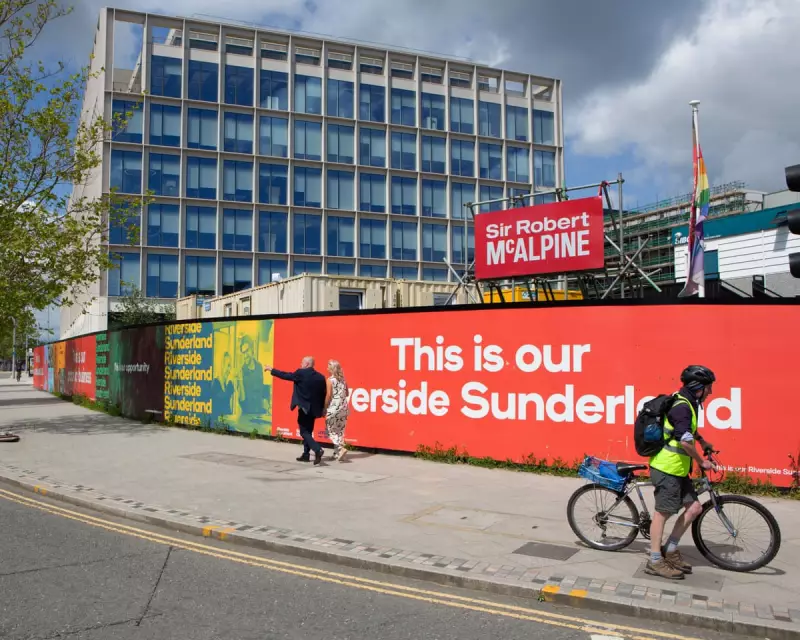
Sunderland: A Net Zero Leader Under Political Threat
The city of Sunderland exemplifies the north's net zero potential, with the strategy contributing a higher share to its economic output than anywhere else in the region. This success is built on high-value sectors including electric vehicle and battery production at plants like Nissan's, building retrofitting, and work on wind turbines and solar energy. In areas like Sunderland, Tyneside, Warrington, Darlington, and Cumberland, net zero contributes between six and seven percent of Gross Value Added (GVA).
However, this progress faces a significant political threat. Labour leaders in Sunderland have issued stark warnings about the policies of Reform UK. The party, led by Nigel Farage, has pledged to abandon what it terms "net stupid zero" policies, claiming they destroy traditional energy sector jobs. With Reform UK anticipated to gain hundreds of council seats in the north during May's local elections—potentially ending Labour's long-held control of Sunderland City Council—fears are mounting.
Michael Mordey, the Labour leader of Sunderland City Council, expressed deep concern, stating he fears Reform UK would "introduce Trump-like climate change denial policies" detrimental to the local economy. He emphasised that retaining well-paid net zero jobs for local residents is contingent on maintaining a Labour council.
The Dual Nature of the Net Zero Transition for the North
Experts characterise the shift to a net zero economy as both a monumental opportunity and a considerable risk for northern England. With robust Treasury backing, the transition could fuel a wave of reindustrialisation, boost productivity, and secure long-term investment in regions still recovering from the decline of heavy industry. It promises to anchor economic growth and create high-skilled employment.
Conversely, if net zero job creation and investment are prioritised in other parts of the UK, it would starkly "reinforce current disparities". This neglect could leave pivotal northern cities and towns, including Sunderland and Warrington, economically stranded and unable to capitalise on the green industrial revolution.
While northern leaders recently welcomed the government's renewed commitment to Northern Powerhouse Rail—a vital east-west transport upgrade—many of these infrastructure benefits will not materialise until the early 2030s. Consequently, there is a pressing call for the Treasury to commit decisively to clean energy investment in the north. Such a move is seen as essential to delivering a more immediate and substantial economic boost to the region, leveraging its existing strengths and workforce.
Chancellor Rachel Reeves has herself labelled clean energy as "the industrial opportunity of the 21st century", noting that the UK's net zero sector is expanding three times faster than the overall economy. The government projects the clean energy workforce will more than double to 800,000 jobs by 2030. The current data shows net zero supports approximately 140,000 jobs in the north of England, aligning with the UK average. The challenge now is to ensure this growth is strategically directed to where it can have the greatest transformative impact.



