
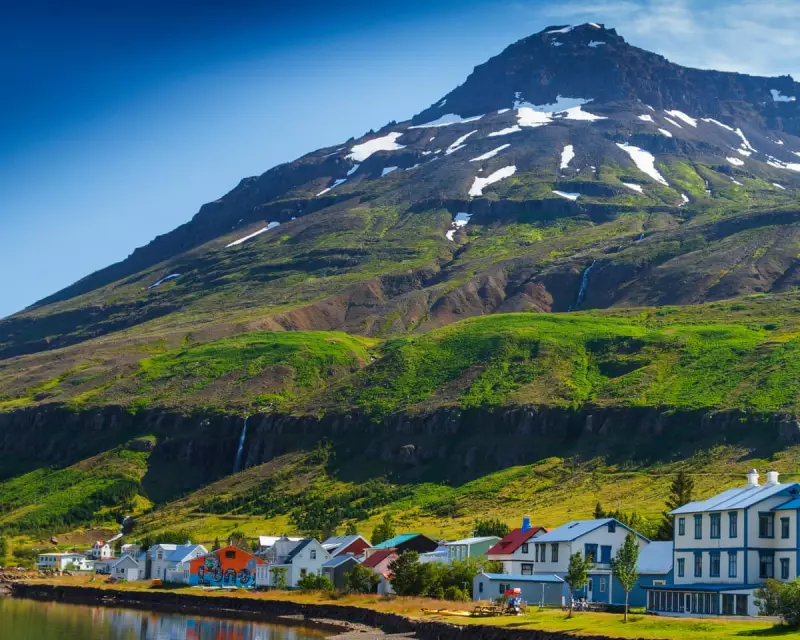
Iceland has sweltered through its warmest Christmas Eve ever documented, with a remarkable temperature of 19.8 degrees Celsius recorded in the east of the country. This unprecedented heat starkly contrasts with the nation's typical sub-zero December conditions.
Record-Breaking Heat Defies Arctic Norms
The Icelandic Meteorological Office confirmed the historic reading was taken in the small eastern town of Seyðisfjörður on 24 December. This shatters the previous national December record of 19.7C, which was set in Kvískerjar in the south-east on 2 December 2019.
This was not an isolated spike. The heat was widespread, with the village of Bakkagerði in eastern Borgarfjörður also registering a scorching 19.7C. These figures are extraordinary when compared to the average December temperature range in Iceland, which typically falls between -1C and 4C.
A Meteorological Perfect Storm
Meteorologist Birgir Örn Höskuldsson explained the phenomenon to the RÚV news agency. He stated the record was caused by a combination of two key factors:
- Warm air of tropical origin moving over the country.
- A powerful high-pressure system that pulled this warm, moist air northwards and blocked colder Arctic air from entering.
This event is part of a disturbing warming trend linked directly to global heating, driven by fossil fuel combustion and greenhouse gas emissions.
A Year of Alarming Climate Signals
The Christmas heatwave follows a pattern of record-breaking temperatures in Iceland throughout the year, underscoring the accelerated pace of Arctic warming. Studies indicate the Arctic region is heating up at about four times the global average rate.
Earlier in May, a significant heatwave saw temperatures soar 3C-4C above normal, with records broken at 94% of long-term weather stations. The peak was 26.6C at Egilsstaðir airport on 15 May.
The tangible effects of this warming are already visible and profound:
- Glaciers are collapsing at an increased rate.
- Fish from warmer southern waters, like mackerel, are now appearing in Icelandic seas.
- In a stark biological shift, mosquitoes were found in Iceland for the first time this year, leaving Antarctica as the only mosquito-free region.
This Christmas record is not merely a statistical anomaly but a clear signal of the profound and rapid environmental changes reshaping one of the planet's most fragile ecosystems.



