
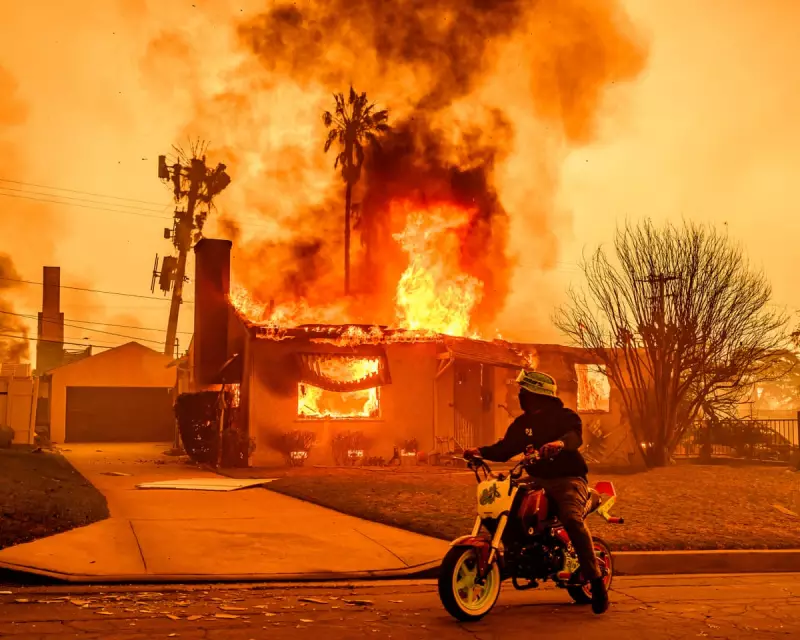
An extraordinary podcast conversation at the start of 2025 came to symbolise a year defined by misinformation, partisan division, and the stark consequences of climate inaction. In January, as actor Mel Gibson's multi-million dollar California home was being consumed by flames, he sat in a Texas studio with host Joe Rogan, merrily dismissing the established science of climate breakdown.
A Conversation Amidst the Flames
On 8 January 2025, the Palisades wildfire, part of a larger outbreak in Los Angeles County, incinerated Mel Gibson's $14 million property in the Altadena area. Scientific analysis by World Weather Attribution would later confirm that the extreme conditions fuelling these fires—including severe drought and intense winds—were made significantly more likely by human-caused global heating.
Remarkably, during the very hours the fire raged, Gibson was a guest on The Joe Rogan Experience. He told Rogan his son had sent a video showing his neighbourhood as "an inferno." Yet, this direct experience did not prompt a reconsideration of climate science. Instead, the pair doubled down on denial, reciting debunked tropes about melting ice not raising sea levels—a claim that ignores thermal expansion and land-based meltwater.
The Themes of a Turbulent Year
The interview inadvertently became a blueprint for the major issues that would dominate 2025. A key theme was the rejection of expertise and evidence. Gibson launched a detailed attack on the scientific method itself, while Rogan falsely claimed a study showed "the temperature on Earth is plummeting," despite the authors repeatedly stating it showed the opposite.
Political polarisation emerged as another dominant thread. The men wrongly blamed California Governor Gavin Newsom for the fires, asserting he spent "zero" on prevention while lavishing funds on homelessness. In reality, California tripled its wildfire resilience spending between 2016 and 2024, and the state's homelessness budget was $2.5bn, not the $24bn cited.
The discussion then turned dangerously personal, targeting former chief medical adviser Dr Anthony Fauci. Rogan labelled Fauci's actions "evil," and Gibson made a statement millions found threatening: "I don’t know why Fauci’s still walking around." This exemplified the year's trend of violent rhetoric replacing reasoned debate.
Misinformation and the Privilege of Escape
The podcast also promoted a catalogue of unproven and potentially dangerous health claims. Gibson advocated hyperbaric chambers, fish oil, and vitamin B for PTSD, while Rogan claimed such chambers could "decrease your biological age" with no mention of risks. The pair irresponsibly promoted ivermectin and other substances as cancer cures.
Perhaps the most revealing moment concerned the consequences of the fire itself. When asked what he would do if his house was lost, Gibson casually replied he had "a place in Costa Rica." For the ultra-wealthy, disaster has an escape route. Gibson has since decided to rebuild, a luxury unavailable to many poorer residents displaced by wildfires, who may face lasting homelessness.
This interview, in its jarring juxtaposition of personal loss and public denial, captured a disturbing truth about our times. As Gibson himself said while dismissing evolution, "anything left to itself without some kind of intelligence behind it will devolve into chaos." It stands as an unintentional warning of the chaos sown by rejecting evidence, spreading misinformation, and allowing the powerful to walk away from the crises they help create.



