
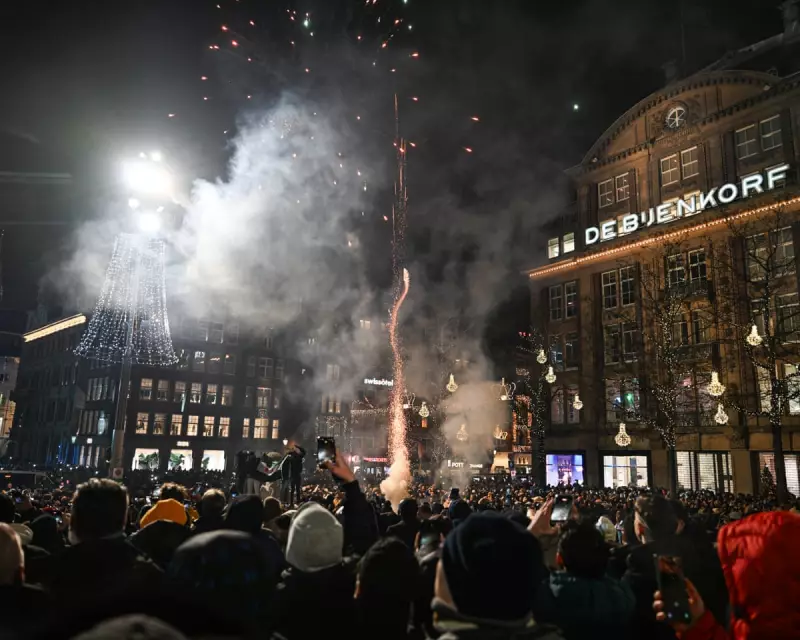
Europe's iconic New Year's Eve tradition of setting off fireworks is facing a major crackdown, with the Netherlands set to become the second country in the European Union to introduce a sweeping ban on most consumer pyrotechnics.
A Tradition Turns Toxic: Rising Injuries and Violence
The move follows yet another chaotic turn of the year, which Dutch emergency services described as being marred by unprecedented violence. Dr Yara Basta-Bos, president of the Dutch society of emergency physicians, reported that last week's revelry resulted in more than 1,200 injuries, with one-third of those victims requiring hospital treatment. The celebrations also claimed two lives.
"It feels like such a waste," said Basta-Bos, recalling a past incident where she treated a patient clutching their own eyeball after a firework explosion. "Of course, fireworks are nice to look at. But the level of damage it's causing in the Netherlands right now is just unbelievable."
The situation for first responders was particularly dire. Firefighters across the country received 4,286 fire incident reports on New Year's Eve. Jolanda Trijselaar, chair of the Dutch fire service, stated that crews were attacked with fireworks and needed riot police support. "This has to stop," she said. "Our staff are there to help, not to be targets of violence."
The Path to a Ban: Political Momentum and Public Health
The proposed prohibition, which has been approved by the Dutch parliament, is expected to take effect before the end of 2026. This would place the Netherlands alongside Ireland as the only European nations to outlaw the practice. The campaign, championed for 15 years by the Party for the Animals, has gained significant traction as awareness of the victims and strain on emergency services has grown.
Ines Kostic, an MP with the party, reflected on the cultural shift. "I used to set off fireworks myself," she said. "We all grew up with it; it was completely normalised. But I came to realise how great the societal damage is." The damage was starkly visible this year, as a 19th-century church near Amsterdam's Vondelpark burned down in a blaze linked to the festivities.
While the industry, which saw sales of €129m in 2025, is set to receive compensation, critics argue society already bears the cost through healthcare and environmental impacts. The final implementation of the ban hinges on agreeing this compensation deal.
A Continental Debate: Europe Reconsiders Fireworks
The Dutch decision is part of a wider European reckoning. In Germany, where five deaths were reported this New Year, calls for a ban on private sales are growing from medical professionals, police unions, and environmental groups.
In Finland, a citizens' initiative to ban fireworks gained the required 50,000 signatures for parliamentary debate in just days. A recent poll indicated that 70% of Finns support restrictions, with a notable gender divide: 31% of women would ban them entirely, compared to 19% of men.
Some cities are already pioneering alternatives. Athens and Nicosia ushered in 2025 with drone shows and light displays instead of explosive pyrotechnics. However, bans are not always effective, as seen in Brussels where a prohibition was flouted and emergency workers were pelted with fireworks.
Back in the Netherlands, advocates like Dr Basta-Bos stress the need for safe alternatives, such as organised public displays. "If we don't offer an alternative, I think chaos will reign," she warned. As the EU Commission begins to scrutinise the safety and environmental shortcomings of current pyrotechnics rules, the whistle and crackle of private fireworks may soon become a relic of the past across the continent.



