
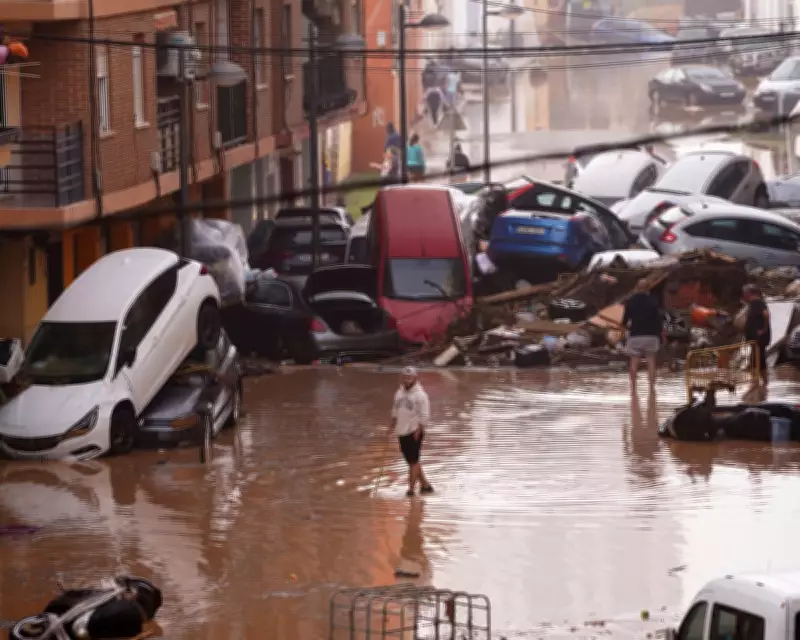
A recent study has shed light on why severe storms, such as the deadly October 2024 Valencia floods, are so difficult to predict with precision. Researchers found that climate models are underestimating changes in large-scale wind patterns, like the jet stream, which control storm tracks and rainfall distribution.
Valencia’s Deadly Floods
In October 2024, eastern Spain experienced a catastrophic storm that dumped over a year's worth of rain on Valencia in a single day. The resulting floods claimed more than 230 lives. While weather forecasts correctly predicted a major storm was approaching, they failed to pinpoint the exact location and timing of the heaviest rainfall.
This tragic event underscores the critical need for more accurate regional rainfall forecasts. Without precise warnings, communities are left vulnerable to sudden and deadly flooding.
Study Reveals Model Shortcomings
Lei Gu from the University of Oxford and colleagues analyzed winter rainfall patterns across the northern hemisphere from 1950 to 2022. They examined how a warmer atmosphere and changing circulation patterns influence precipitation. Their findings, published in the journal Nature, show that climate models accurately capture the increased moisture-holding capacity of a warmer atmosphere. However, they struggle to represent the shifts in atmospheric circulation caused by human emissions, which ultimately determine where rain falls.
This disconnect means that while models can predict that storms will be more intense, they cannot reliably forecast where the heaviest rain will occur. The study highlights that improving the ability to separate natural wind pattern variations from human-driven climate change is essential for enhancing regional rainfall forecasts and providing advance warning of extreme events.
Implications for Future Preparedness
Better forecasts could help prevent tragedies like the Valencia floods from happening again. By refining climate models to account for shifting storm tracks, meteorologists could issue more precise warnings, giving communities time to prepare and evacuate. The research underscores the urgency of addressing this gap in climate science to save lives and reduce economic losses from extreme weather.



