
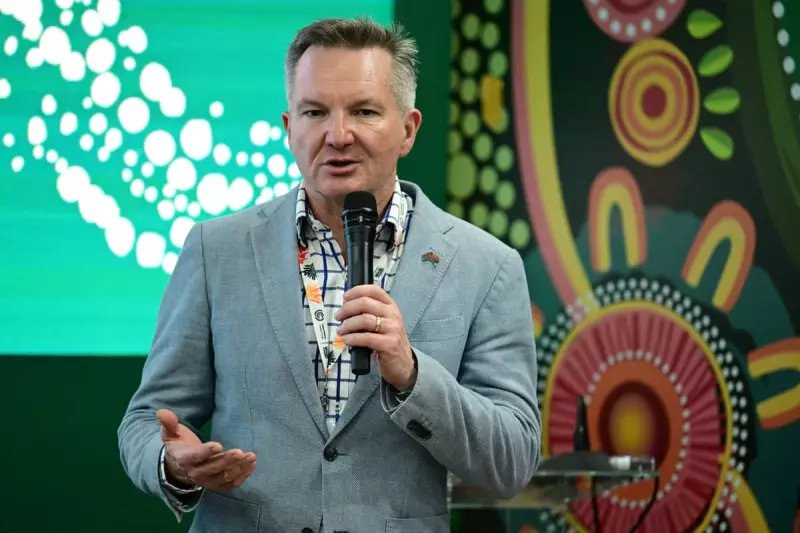
Australia's Climate Change and Energy Minister, Chris Bowen, has revealed he will adopt a direct, 'hard-nosed' strategy to confront major fossil fuel-producing nations when he leads global negotiations at the pivotal Cop31 United Nations climate summit in 2026.
Engagement Over Exclusion: Bowen's Cop31 Strategy
Appointed as the president of negotiations for Cop31 under a deal that secured Turkey's hosting rights, Bowen told Guardian Australia that the key to progress would be 'engagement, engagement, engagement' with countries traditionally at odds with climate ambitions. He specifically named Saudi Arabia, the oil-rich Gulf state frequently accused of obstructing efforts to accelerate the end of fossil fuels at UN summits.
"We won't get anywhere if we just have a jamboree of the willing," Bowen stated. "We need to have a Cop which really tries to cross some of those bridges that have been very difficult to cross in recent Cops." His comments follow an appeal from former US Secretary of State John Kerry for Australia to actively push the world's biggest emitters, including China, Russia, the US, and India, to develop a roadmap to end the fossil fuel era.
Leveraging Credibility and Pacific Focus
Bowen argued that Australia's status as a major fossil fuel exporter grants it unique credibility when lobbying other petrostates to do more. The strategy comes in the wake of Cop30 in Brazil, which concluded without a direct mention of fossil fuels in its final deal due to opposition from Saudi Arabia and its allies. In contrast, over 80 countries, including Australia, signed a separate Belém declaration committing to a "just, orderly and equitable" phaseout.
As part of the Australia-Turkey hosting agreement, a pre-conference event will be hosted in the Pacific, aiming to spotlight the existential threat the climate crisis poses to small island nations. Bowen has asked the Pacific Islands Forum to choose a host for this event, which will also encourage contributions to the region's climate resilience fund.
Domestic Pressure and Policy Reviews
While managing his international duties, Bowen must also oversee Australia's domestic energy transition. He described progress on cutting pollution as 'good, a lot done, but a lot more to do'. Government projections show Australia is on track for its 2030 target but will need to significantly ramp up policies to meet its new 2035 goal of a 62% to 70% reduction in greenhouse gas emissions below 2005 levels.
Two key upcoming policy reviews present early opportunities to accelerate action: the safeguard mechanism, designed to cut pollution at major industrial sites, and the national vehicle efficiency standard for electric car uptake. While the Productivity Commission has recommended expanding the safeguard mechanism's coverage, Bowen cautioned that simply including more businesses was not a 'slam dunk', emphasising the need for significant 'bang for buck' in emissions reduction.
Despite Australia's initial disappointment at not fully hosting Cop31, Bowen framed the negotiation presidency as a 'remarkable opportunity for Australia' to steer the global conversation towards a more meaningful outcome than the landmark but incremental agreement reached at Cop28 in Dubai.



