
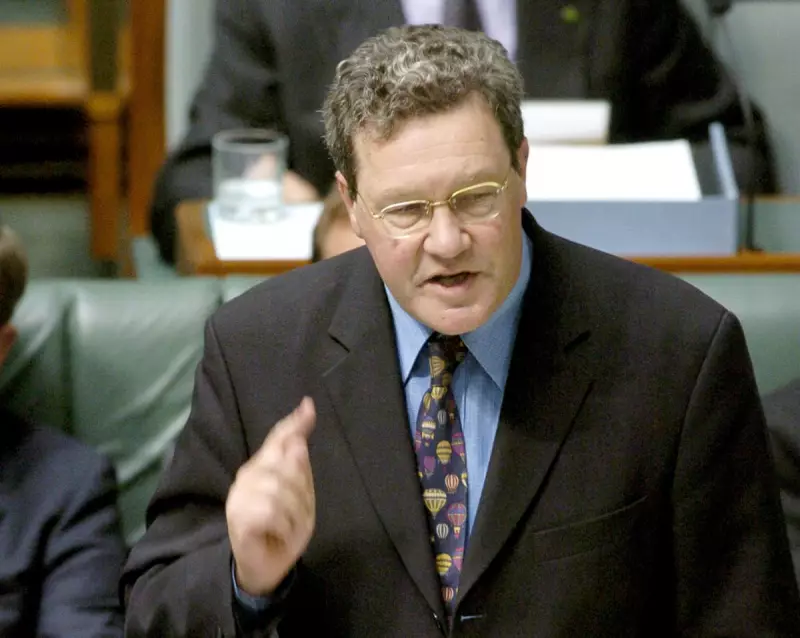
Secret government documents from 2005 have been made public, revealing that senior ministers in the Howard government were given stark warnings about Australia's acute vulnerability to the impacts of climate change.
Historic Warnings of Economic and Social Disruption
The cabinet papers, released by the National Archives, include a submission from August 2005 authored by the then foreign affairs minister, Alexander Downer, and the environment minister, Ian Campbell. They advised the cabinet that climate change was progressing faster than earlier predictions and posed a severe threat.
The ministers' report described the pace of global temperature increase as "unprecedented in human history" and noted that carbon dioxide concentrations were 30% higher than at any time in the past 400,000 years. They cautioned that Australia faced major economic, environmental and social disruption due to its specific circumstances.
"The magnitude of climate change in Australia... is likely to make Australia more vulnerable to climate change than most developed countries," the submission stated, explicitly naming the United States and many European nations as less at risk.
Specific Threats to Water, Agriculture and Infrastructure
The documents, which included scientific advice from the Bureau of Meteorology, outlined a cascade of potential damages. Key areas of concern included:
- Water resources coming under significant pressure from reduced rainfall and more severe droughts, particularly in south-western and south-eastern Australia.
- Negative impacts on agricultural production, exacerbated by existing problems like soil salinity and erosion.
- Increased frequency and intensity of bushfires.
- Risks to electricity supply, transport infrastructure, human health, coastal communities, and the tourism sector.
Officials highlighted that Australia's heavy dependence on coal exports and its marginal rainfall in key farming regions compounded these vulnerabilities. They warned that balancing climate action with economic growth would be particularly difficult for the nation.
Policy Paralysis and International Pressure
The release of these papers sheds new light on the policy environment of the time. The Howard government had decided not to ratify the Kyoto Protocol in 2002, a treaty which came into force in February 2005. This decision, the papers reveal, created anxiety among investors about long-term regulatory uncertainty, with businesses stating the lack of a clear policy framework was "inhibiting investment" in energy and heavy industry.
Further internal resistance to action was documented. In 2003, Prime Minister John Howard vetoed a proposal from ministers for an emissions trading scheme following industry objections. A year later, in 2004, the cabinet rejected recommendations to strengthen the national renewable energy target.
It was not until 2007, under increasing political pressure from Opposition Leader Kevin Rudd and following a report by his departmental secretary Peter Shergold, that Howard changed his position to support a carbon trading scheme.
Commenting on the papers' release last month, former Howard government attorney general Philip Ruddock said the administration was aware of the emerging scientific consensus. "I've always been of the view that if the world is going to address [climate change], we need to be ensuring that Australia plays its part," he said. Ruddock also called for the removal of the moratorium on domestic nuclear power.
In a notable contrast, Alexander Downer's current public stance appears more sceptical. In a November newspaper column, he questioned the settled nature of climate science, writing that the "only thing truly settled is that the planet has warmed since the Industrial Revolution." He argued for a "fair and proportionate" contribution from Australia, warning against gestures that impose "vast costs on our economy."
The Treasury's position in 2005, as shown in the papers, was to support an international climate strategy that was environmentally effective and economically efficient, but which "does not impose an unfair burden on Australia." The documents serve as a historic reminder of early official recognition of the profound risks climate change posed to the nation's future.



