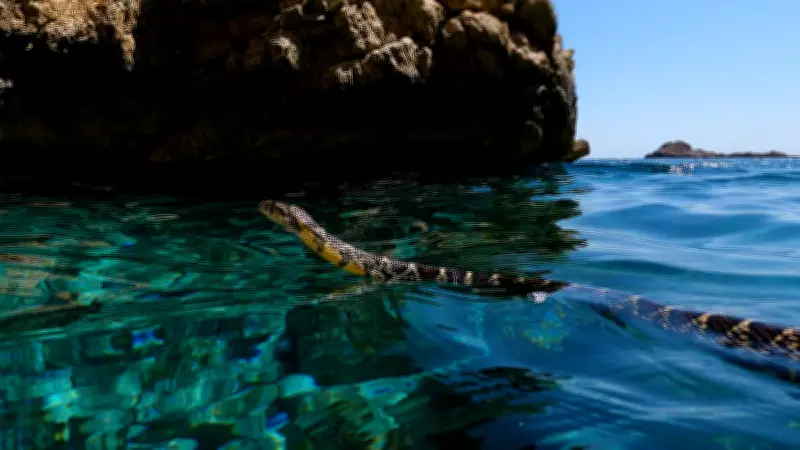
The horseshoe whip snake (Hemorrhois hippocrepis), a non-venomous reptile native to southern and eastern Spain, has become an existential threat to the Ibiza wall lizard (Podarcis pityusensis). First appearing on the island two decades ago, the snake has now spread across at least 90% of Ibiza and is even swimming to nearby islets, as confirmed by a video shot in April 2024.
How the Snakes Arrived
The rapid colonisation is attributed to the importation of ancient olive trees from mainland Spain by wealthy property owners. These trees, with their nooks and hollows, provided ideal hiding spots for hibernating snakes and their eggs, inadvertently introducing the predator to Ibiza.
Impact on the Lizard Population
The Ibiza wall lizard, a keystone species that controls insect populations and aids pollination, has seen its numbers plummet. In October 2022, the International Union for Conservation of Nature reclassified the lizard from 'near threatened' to 'endangered'. Researchers observed a decline from 72 lizards on the islet of Santa Eulària in 2016 to just three in 2023. Today, ten islets have lost their unique lizard populations, representing thousands of years of evolution.

Snake Proliferation
Over 3,500 horseshoe whip snakes were captured on Ibiza in 2023 alone, and more than 16,000 have been culled since 2016. Forecasts suggest the snakes will cover 100% of the island by 2027. On Ibiza, the snakes grow larger than on the mainland, with some exceeding 2 metres in length and weighing 2.5 times more than their peninsular counterparts.
Conservation Efforts
A captive breeding programme at Barcelona Zoo, launched in 2023, aims to safeguard the species. However, the small size of the islets and the snakes' voracity limit optimism. Interestingly, urban areas provide a refuge for lizards, as snakes are often killed by humans or run over by vehicles.
Ecological and Cultural Tragedy
Oriol Lapiedra, a biologist at Creaf, describes the loss as 'like a fire in an old church', emphasising that unique lineages are being lost to science and humanity. The situation mirrors that of Guam, where the brown tree snake caused the extinction of most native forest birds, but with the added threat of snakes swimming between islands.