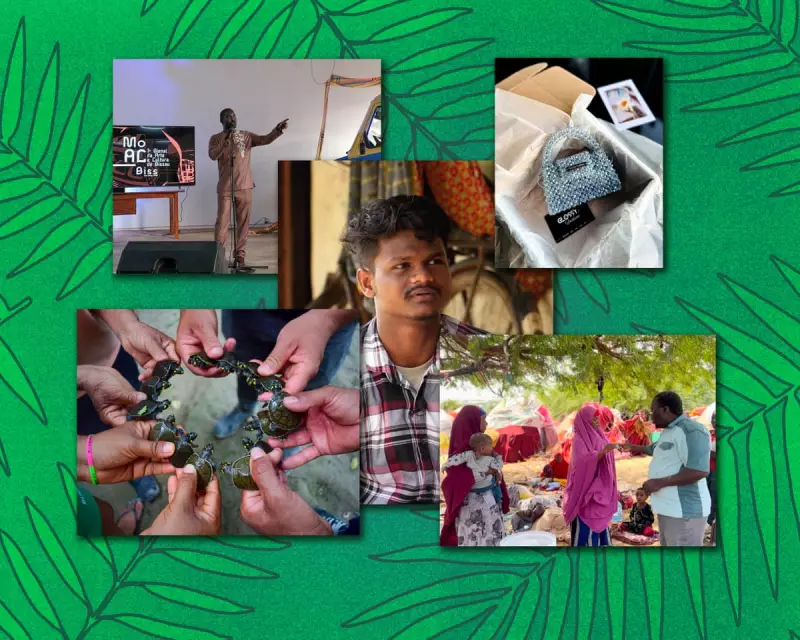
In a year often dominated by headlines of conflict and crisis, journalists from independent newsrooms across the globe have shared their most uplifting stories of 2025. These narratives, from a tribal medical student in India to women safeguarding turtles in Colombia, collectively underscore a powerful theme: the transformative force of community, determination, and hope.
Shubham Sabar: A Medical Dream Forged on a Construction Site
For 19-year-old Shubham Sabar, a life-changing phone call came while he was labouring on a construction site in Bengaluru, India. The voice on the line was his teacher from his home state of Odisha, bearing news that he had passed the gruelling National Eligibility cum Entrance Test (Neet). This exam is the gateway to medical and dental colleges in India and was sat by nearly 2.3 million applicants this year.
Born to farm workers in a tribal village in Khordha district, Sabar understood that education was his only path to helping his family and his community, where people often resort to prayer before seeking a doctor. To fund his studies, he migrated for work like tens of thousands of other Indians. His success, achieved without expensive tutors, is a testament to quiet resilience. His overjoyed parents have used savings and loans to support his admission to the Maharaja Krishna Chandra Gajapati Medical College in Berhampur, while his father continues farm labour to sustain his son's five-year degree.

Building Futures: From Displacement to Land Ownership in Somalia
On the outskirts of Mogadishu, a story of profound community solidarity unfolded. 103 families, displaced for over seven years by conflict, drought, and climate change, faced constant instability and eviction. Living in a camp with no legal tenure, they were frequently forced to flee, sometimes watching their shelters being bulldozed.
Refusing to accept perpetual uncertainty, the families started a monthly cooperative savings scheme. Pooling their scant resources, they achieved the remarkable: they bought a small piece of land together. Through a collective draw, each family was allocated a plot, transforming their hope for stability into a tangible reality. This act demonstrates how unity and shared purpose can create a foundation for the future, even amidst immense hardship.
Defiance and Creativity: Afghan Women Forge a New Path
In a small room in Kabul, 22-year-old Nargis Badr represents a quiet but powerful form of resistance. After the Taliban's ban on women's higher education shattered her dream of studying psychology, she faced months of depression. Determined to build a future, she launched an online business in October 2023 creating handmade crystal bags with a modest initial investment.
Navigating male-dominated markets to source materials, Badr's venture grew steadily. By 2025, her firm employed more than 30 people, most of them young women similarly barred from education. Her story shifts the narrative from one of pure victimhood to one of agency, creativity, and economic defiance, providing crucial income and hope where official doors have been slammed shut.
Art Against the Odds: Guinea-Bissau's Improbable Biennale
In a nation more frequently associated with political coups than canvas, the inaugural MoAC Biss art biennale in May 2025 was a radical act of cultural hope. Guinea-Bissau has no contemporary art museums, art schools, or specialised art supply shops, forcing most aspiring artists to seek opportunities abroad.
Organisers, including director Miguel de Barros, overcame immense logistical hurdles—from electricity shortages affecting video installations to international flight disruptions and constant funding gaps—to bring art home. For a month, works created in a Guinean context were finally exhibited to a Guinean audience, proving that beauty and creative expression can flourish in the most unlikely of places.
Guardians of the Earth: Indigenous Communities Protect Colombia's Amazon
In Colombia's Putumayo region, where the Andes meet the Amazon, Indigenous and local communities are engaged in a vital struggle to protect their ancestral lands. Facing threats from oil pollution, deforestation, and armed groups, they are acting as guardians of biodiversity and ancient wisdom.

Their efforts are diverse and deeply connected to their worldview. In the Sibundoy valley, farmers are restoring the endangered Colombian pine for its rain-promoting properties. In Puerto Asís, women are rescuing charapa turtles threatened by drought and hunting, while the Zápara people have voluntarily stopped hunting them. Meanwhile, Awá healers protect the 'mother of water' black land crab, and Murui Muina women plant water-regenerating palms. These actions represent a profound commitment to nurturing the spirit of water, or 'Iaku', and defending their territory through collective care.
These five dispatches from independent journalists across four continents offer more than just good news. They provide a crucial counter-narrative, highlighting the universal human capacity for resilience, innovation, and solidarity in the face of daunting challenges. They remind us that even in the darkest of circumstances, the power of hard work and hope endures.