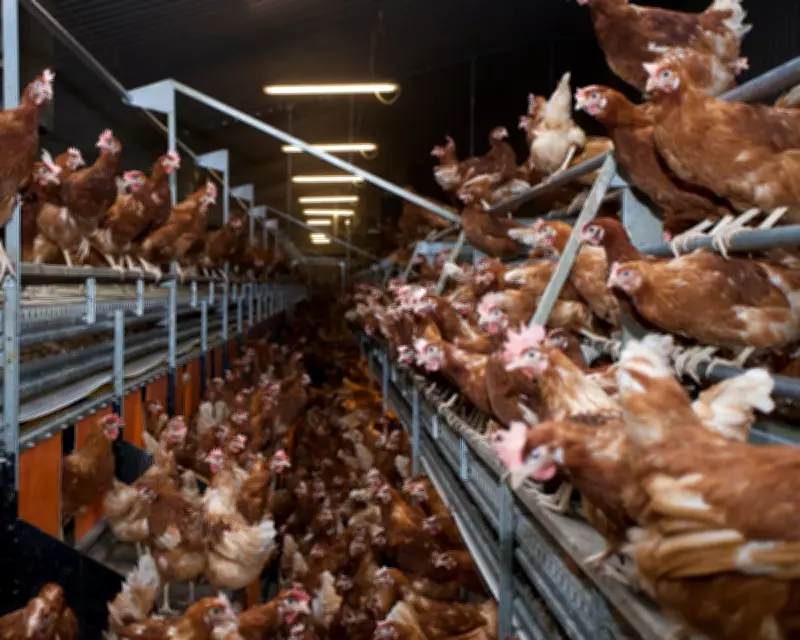
New research has identified significant ammonia pollution hotspots in regions of the United Kingdom with the highest concentrations of intensive pig and poultry farms. A comprehensive map, developed by Compassion in World Farming (CiWF) and Sustain, reveals that the most severe clusters of ammonia emissions are located in Lincolnshire, Herefordshire, and Norfolk.
Mapping the Ammonia Crisis
For the first time, this detailed map illustrates how ammonia emissions are dangerously concentrated in areas dominated by industrial livestock operations. These three counties are known for their high density of intensive poultry and pig units, which researchers confirm are primary drivers of elevated ammonia levels. The findings come at a critical time, as the government considers revising planning rules to facilitate the construction of more intensive livestock farms, despite growing concerns about water pollution, air quality, and local opposition.
Health and Environmental Impacts
Ammonia emissions represent a severe threat to both human health and the environment. In the UK, agriculture accounts for a staggering 89% of national emissions of this nitrogen-based gas, which is used in fertilisers and released from livestock manure. Industrial intensive animal farming significantly exacerbates the environmental and health burdens associated with ammonia, according to the CiWF report published alongside the map.

Once released into the atmosphere, ammonia reacts with other pollutants to form particulate matter, specifically PM2.5, recognized as one of the most dangerous forms of air pollution. The Committee on the Medical Effects of Air Pollutants (COMEAP) estimated that exposure to human-made PM2.5 was responsible for between 28,861 and 29,000 premature deaths in the UK in 2010. Recent modelling indicates that reducing agricultural emissions could lead to a dramatic decrease in mortality rates.
Voices from the Frontlines
Dr Amir Khan, a general practitioner and patron of CiWF, emphasized the health implications, stating, "As a GP, I witness firsthand the toll that air pollution takes on people's health. Ammonia from intensive farming is a major, yet often overlooked, component of this problem. The fine particulate matter formed from ammonia exposure contributes to heart disease, stroke, asthma, and chronic lung conditions, disproportionately affecting our most vulnerable patients."
Beyond health, excess nitrogen from ammonia deposition acidifies soils and pollutes rivers. In Shropshire, campaigners recently successfully blocked permission for a poultry megafarm by arguing that the council had failed to consider all environmental impacts of an industrial unit housing 230,000 chickens at any given time. The proliferation of large intensive poultry units (IPUs) in the valleys of the Rivers Wye and Severn is a key factor in river pollution, as chicken droppings contain higher levels of phosphates than any other animal manure, which deplete oxygen and harm aquatic life.
Personal Accounts of Pollution
Michele Franks, a resident living near a poultry megafarm in Lincolnshire, described how emissions regularly force her indoors, triggering chest tightness, eye irritation, and breathing difficulties during shed clean-outs that can last up to five days. "When the chicken sheds are cleaned out, the smell and polluted air hit me immediately. My chest tightens, my eyes sting, and I have to shut every window in my house just to cope," she explained. "As an asthmatic, for days I cannot even step into my own garden. People talk about escaping to the country for cleaner air, but no one should have to live sandwiched between industrial units that make them gasp for breath."
Calls for Action
CiWF and Sustain are advocating for an immediate halt to the expansion of factory farming. Anthony Field, head of Compassion in World Farming UK, asserted, "Factory farming is at the core of the UK's ammonia crisis. By confining large numbers of animals in cramped spaces and relying heavily on fertilisers, these intensive systems release far more ammonia than the environment or our bodies can handle. The result is a cascade of harm affecting the animals living in these conditions, the people breathing polluted air, and the ecosystems overwhelmed by excess nitrogen."

The map published is an estimation of ammonia produced by industrial livestock units, derived from permitted stocking numbers and average ammonia production factors for different livestock categories, such as broiler chickens, indoor eggs, and pigs. This research underscores the urgent need for policy changes to address the intertwined issues of industrial agriculture, public health, and environmental sustainability.