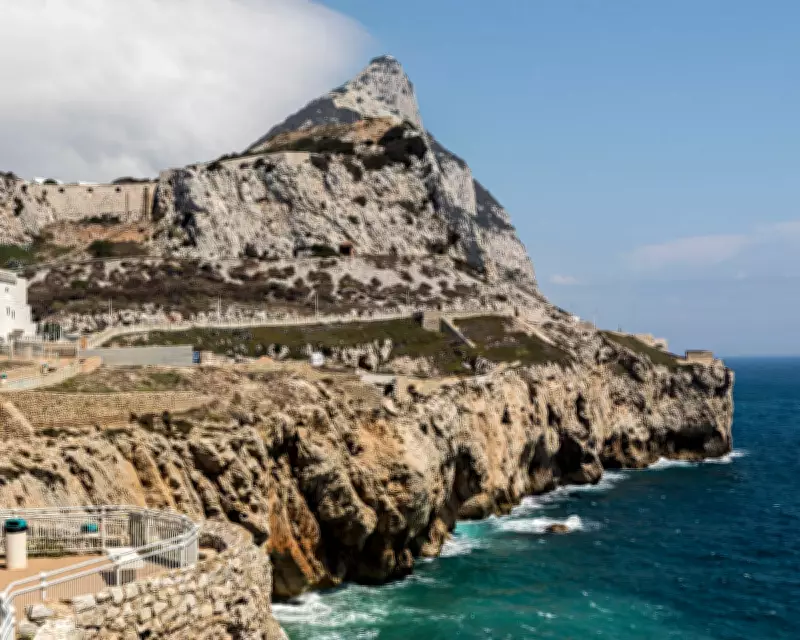
Gibraltar is discharging all of its raw sewage from nearly 40,000 residents and businesses directly into the Mediterranean Sea, as the British overseas territory has never possessed a wastewater treatment plant.
For decades, untreated sewage has flowed into the sea from Europa Point at the southern tip of the peninsula. The Gibraltar government claims there are "high levels of natural dispersion" at this location, which is supposed to be a protected wildlife area. However, Lewis Stagnetto of the Nautilus Project, a local environmental charity, reports frequent sightings of "wet wipes and plastic pollution entangled in algae and all over the rocks."
Raw sewage pollution can trigger toxic algal blooms that deplete oxygen from the water, suffocating aquatic life. It exposes fish and mammals to a mixture of chemicals and plastics that can disrupt reproduction and harm health, and it poses risks to humans by spreading pathogens and antibiotic-resistant genes.
Unlike the UK, Gibraltar's sewerage system uses seawater, and drinking water comes from desalination. The Gibraltar government states that the salinity "historically created challenges that are not present in other wastewater treatment plants around the world." It also claims that wet wipes appearing on its beaches may originate from "outlets in nearby Spain."
In 2017, the European Court of Justice ruled that the UK was in breach of wastewater law for failing to treat Gibraltar's sewage, but the European Commission lost enforcement power after Brexit. Attempts to resolve the issue have repeatedly failed. In 2018, the government awarded a contract to a joint venture between NWG Commercial Services (Northumbrian Water) and Modern Water to design, build, and operate a treatment plant, but the deal collapsed after a Modern Water subsidiary went into liquidation.
A Gibraltar government spokesperson said this "had a significant impact on the delivery of this vital project." Preliminary talks with the European Investment Bank also "fell through as a direct result of the UK leaving the European Union."
In June 2025, the Gibraltar government awarded a 25-year contract to Eco Waters to build a wastewater treatment plant at Europa Point. Advanced works on design and geotechnical aspects have begun, and a planning application was submitted in March 2026.
Northumbrian Water, which partnered with the government from 2003 to 2024 through a joint venture called AquaGib, distanced itself from the sewage failures. It said its operations "centred on the provision of drinking water" and that it was not responsible for daily operations. A spokesperson stated, "Northumbrian Water was never responsible in any way for wastewater operations in Gibraltar. Its involvement was as a shareholder and strategic partner, not as the operator or regulator. All decisions in relation to wastewater management were taken by the government of Gibraltar."
AquaGib said it operated pumping stations that move sewage from low-lying areas into Gibraltar's main sewer but is "not responsible for the main sewer or any wastewater treatment." The sewer itself appears to be in poor condition. Last year, the opposition Gibraltar Social Democrats party described "popular tourist hotspot areas embarrassingly subjected to the stench of raw sewage," with waste "directly seeping through the city walls, causing damage to the marine ecosystem." The government blamed decades of underinvestment, including years when the GSD held power.
The government stated there is an "ongoing major project to lay new sewerage mains in phases: a £15m investment in Gibraltar's sewer infrastructure," as well as "various relining projects which have resulted in the main sewer being reinforced and improved within the city walls." Regarding beaches, the government said bacteriological water quality is routinely measured, and "the latest results indicate that all bathing areas in Gibraltar attain excellent bathing water quality."
In comparison, last year England's water companies released untreated sewage into rivers, lakes, and seas nearly 300,000 times, despite having wastewater treatment plants. Hugo Tagholm, director of Oceana UK, commented, "The public are outraged that our rivers and seas are treated as a dumping ground. It's an environmental and economic injustice, with the fingerprints of big business all over it. The government must get its act together at home and abroad – our seas need proper protection from sewage and plastic pollution. It's high time they end the outrage and stop the pumping of untreated sewage into the Mediterranean Sea."