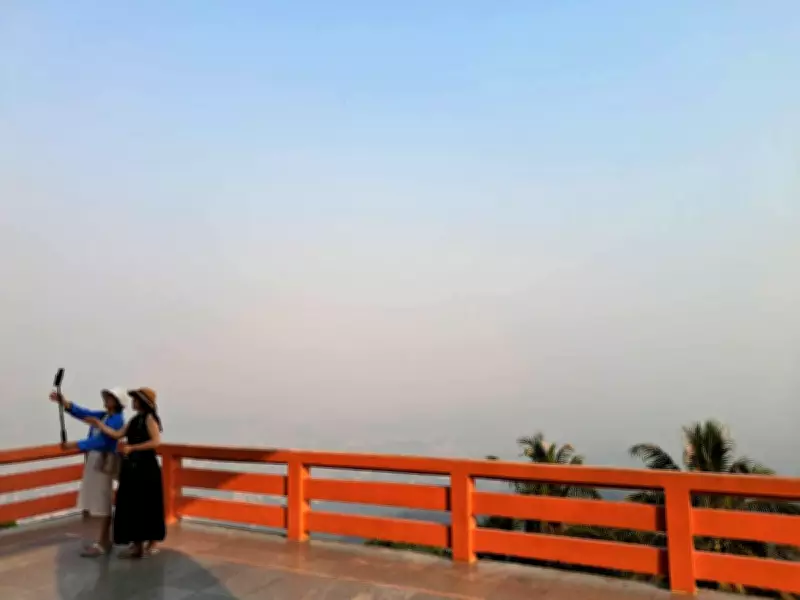
Chiang Mai's Iconic Temple Vanishes in Toxic Haze as Tourism Industry Reels
The Doi Suthep temple, renowned across northern Thailand for its breathtaking panoramic views of Chiang Mai and the surrounding forested mountains, has become nearly invisible in recent weeks. Visitors now encounter only a dense, grey cloud of haze instead of the spectacular scenery that typically draws thousands of tourists annually.
Wildfires Trigger Emergency Declarations and Health Crises
Persistent wildfires have created intense air pollution across northern Thailand, prompting three provinces to declare emergencies. This environmental disaster has led to significant spikes in pollution-related illnesses, overwhelming local healthcare facilities. On Monday alone, Thailand's Geo-Informatics and Space Technology Development Agency reported 4,579 wildfire hotspots nationwide, with Chiang Mai consistently ranking among the world's five most polluted cities according to IQAir monitoring data.
Tourism Industry Faces Dual Threat from Pollution and Global Conflict
The haze represents another devastating blow to tourism businesses already struggling with the economic fallout from the US-Israel war on Iran. Flight disruptions and soaring operating costs have forced Thailand's tourism authority to revise downward its national target for international arrivals by up to 18%. Business groups report significant slowdowns in bookings ahead of Songkran, Thailand's crucial New Year holiday that began this week.
"Chiang Mai's primary attraction has always been the opportunity to experience mountain living with clean, fresh air," explains Pitsamai Tuprit, 37, owner of Kai Rider travel company. "When this toxic dust arrives, it completely undermines everything we offer." Pitsamai has canceled most tours during the Songkran holiday, noting that half her customers have withdrawn bookings in recent weeks due to pollution concerns.
Annual Agricultural Practices Fuel Recurring Crisis
The air pollution represents a recurring annual problem caused by both natural wildfires and farmers illegally setting fire to fields to quickly clear land after harvests. "This practice continues because farmers, often contracted by large agribusinesses, lack access to expensive machinery," says Weenarin Lulitanonda, co-founder of the Thailand Clean Air Network. "For those under financial strain, what could be cheaper than a simple matchstick to manage their land?"
Human Health Consequences Become Increasingly Dire
High-profile cases have shaken public confidence in Chiang Mai, particularly the 2023 death of 29-year-old doctor and clean-air campaigner Krittai Tanasombatkul from lung cancer despite his healthy, non-smoking lifestyle. Pathanika Poonchai, a school food vendor, expresses widespread concern: "I don't drink or smoke, so why should I face lung cancer risks? Everyone deserves clean air." Her five-year-old daughter Aerin has suffered daily nosebleeds since March—a common symptom among children exposed to severe air pollution.
Dr. Atikun Limsukon, a chest and lung specialist running a private clinic, reports his patient caseload has more than doubled recently. "Even typically healthy individuals experience acute effects from this heavily polluted air," he notes, listing symptoms ranging from blurry vision and corneal ulcers to chronic rhinitis and nosebleeds. Patients with pre-existing conditions prove especially vulnerable, with many requiring readmission and oxygen support after coughing up blood.
Families Adopt Extreme Measures for Protection
Growing up in picturesque Chiang Mai, Pathanika remembers camping with family and enjoying evening conversations outdoors—activities now impossible during haze season. Her children remain indoors with air purifiers constantly running, while the family saves money specifically for annual seaside escapes from the dust. Some families send children to other provinces, while those with sufficient means install costly positive pressure systems to filter home air.
Legislative Solutions Face Political Challenges
The Thailand Clean Air Network advocates for passage of a Thai Clean Air bill that would fine major polluters and establish a Clean Air Fund to help businesses transition to cleaner technologies. However, the legislation faces multiple political hurdles and opposition from groups labeling it anti-business. Weenarin argues that inaction will prove economically catastrophic: "Even if environmental concerns don't move you, this is the goose that lays your golden egg. Tourists come specifically for Thailand's natural beauty and landscapes."
Long-Term Health Impacts Extend Beyond Respiratory Systems
Dr. Limsukon emphasizes that mounting evidence links air pollution not only to cancer but also to strokes, metabolic disorders like diabetes, and even neurocognitive problems including dementia. "Greater pollution levels and longer exposure times inevitably lead to more health impacts, both immediate and long-term," he warns, describing the situation as profoundly depressing for medical professionals witnessing preventable suffering.
As artificial rain efforts fail to clear the haze and Songkran celebrations proceed amid plastic water guns and buckets lining Chiang Mai's streets, residents and businesses alike confront a dual crisis threatening both public health and economic survival in one of Thailand's most cherished regions.